

Jackson Granted Bail amid Probe-High profile death sparks questions, justice system faces credibility test
MONROVIA – Liberia’s justice system is once again under the microscope as a high-profile death involving a foreign national unfolds with complex legal, emotional, and diplomatic undertones. The release on bail of a prominent economist accused in the controversial death of his wife has intensified scrutiny over investigative procedures, prosecutorial conduct, and the broader question of accountability in sensitive cases. With international attention mounting and unanswered questions surrounding the circumstances of the death, the case is fast becoming a litmus test for public confidence in the rule of law. As legal processes continue to unfold, both transparency and restraint will be critical in ensuring justice is served, THE ANALYST reports.
A case that has rapidly evolved into one of the most closely watched legal proceedings in recent Liberian history took another dramatic turn with the release on bail of Samuel P. Jackson, the central figure in the ongoing investigation into the death of his wife, South African national Ntombikayise Innocentia Khumalo.
The development, while procedural in nature, has amplified public interest and intensified debate over the conduct of the investigation, the handling of evidence, and the broader implications for Liberia’s justice system.
The late Khumalo, widely known as Toni Khumalo or Toni Jackson, was a legal professional and entrepreneur whose death on March 12, 2026, in Monrovia sent shockwaves through both local and international communities.
The circumstances surrounding her death were immediately deemed suspicious, prompting a thorough investigation by the Liberia National Police. The case quickly gained prominence not only because of the profile of those involved but also due to the sensitive nature of the allegations and the unanswered questions surrounding the events leading to her death.
At the center of the investigation is Samuel P. Jackson, a prominent Liberian economist and political commentator who was identified by authorities as the prime suspect.
Following weeks of inquiry, the Liberia National Police formally charged him on April 2, 2026, with multiple serious offenses, including manslaughter, negligent homicide, aggravated assault, and reckless endangerment of another person. The charges reflect the gravity of the allegations and underscore the complexity of the case.
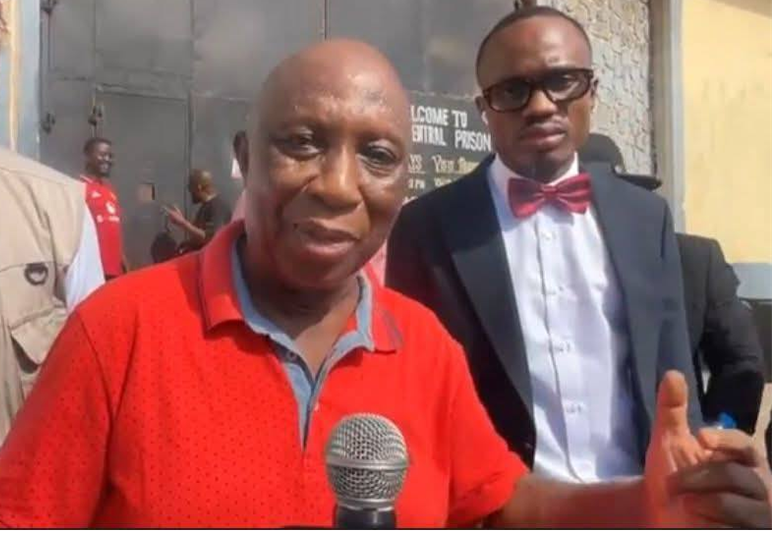
In the immediate aftermath of the charges, Jackson was remanded to the Monrovia Central Prison, widely known as South Beach Prison, where he remained in custody pending further legal proceedings.
His detention, while expected in cases of this nature, added another layer of public attention, with many observers closely monitoring the developments for signs of due process and institutional integrity.
The narrative surrounding the case has been shaped by a series of troubling details. According to reports, Khumalo died in a secured residence in Monrovia, where Jackson was reportedly the last person seen with her and the first to discover her unconscious in a pool of blood.
These circumstances have fueled speculation and heightened the urgency of the investigation, as both the Liberian public and international observers seek clarity on what transpired.
Against this backdrop, the announcement of Jackson’s release on US$20,000 bail marks a significant procedural milestone.
The decision to grant bail, while consistent with legal provisions that allow for pre-trial release under certain conditions, has nonetheless sparked renewed debate about the balance between the rights of the accused and the expectations of justice for the victim.
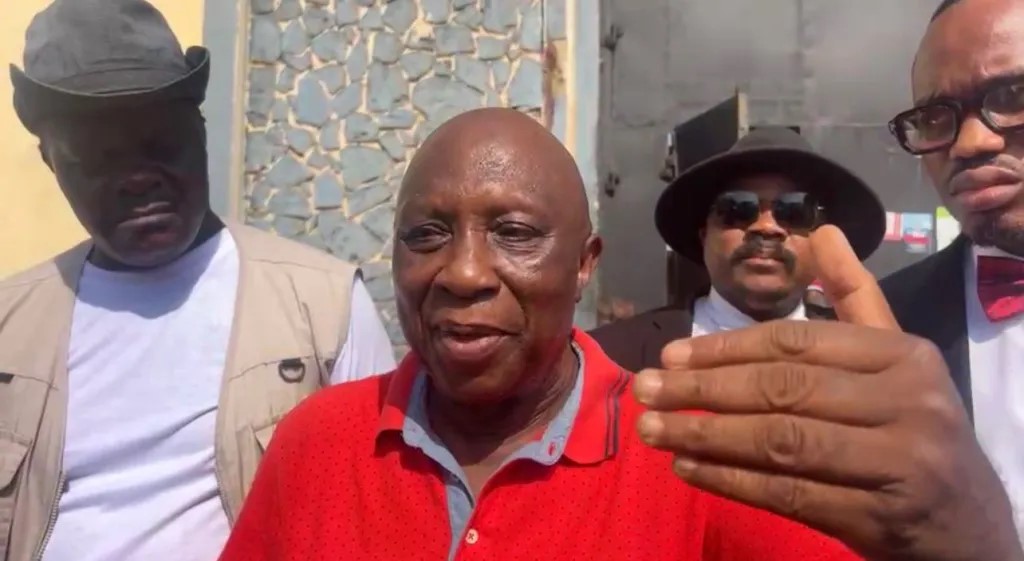
Speaking briefly to reporters at the prison’s main entrance following his release, Jackson struck a tone that was both subdued and reflective. “I’m still down,” he said, signaling the emotional weight of the situation.
“This is not about me getting freedom. It’s about the young woman whose body is still in the morgue and there’s no plan yet to give her a final rest.”
His remarks, while measured, also conveyed a deliberate effort to shift the focus away from his own legal predicament and toward the unresolved status of his late wife’s remains.
“So I’m not here to boast about my freedom or to express any outrage about that matter. All I want is for her to have a faithful send-off, and everything else is secondary,” he added.
At the same time, Jackson refrained from engaging in detailed commentary on the allegations against him or the conduct of the investigation. “I’m not going to talk about what happened to me or didn’t happen to me — the injustices and all of that,” he stated, maintaining a cautious posture that is typical in cases where legal proceedings are ongoing.
When pressed by reporters on whether he believed there had been any injustice in the handling of his case, Jackson offered a more pointed observation.
He suggested that investigators may have approached the case with preconceived assumptions, particularly regarding the nature of his relationship with his wife and the circumstances of her presence in Liberia.
According to Jackson, there appeared to be an underlying narrative that his wife had come to Liberia for love and subsequently met her untimely death at the hands of her husband.
This assertion introduces a critical dimension to the case, raising questions about investigative objectivity and the potential influence of assumptions on the direction of the inquiry. While such claims remain unverified, they underscore the importance of maintaining impartiality and adherence to evidentiary standards in high-profile cases.
Jackson also used the opportunity to express gratitude to his network of supporters, both within Liberia and abroad. “They should beat their chests — I’m not the cause of my wife’s death,” he declared, a statement that reflects both his assertion of innocence and his reliance on the support of family and friends during what he described as a deeply challenging period.
Despite his release, the legal process is far from concluded. The investigation remains active, with several critical elements still unresolved. Notably, the autopsy results have not yet been made public, leaving a significant gap in the evidentiary record. The findings of the autopsy are expected to play a central role in determining the cause of death and, by extension, the direction of the prosecution’s case.
Additionally, Jackson’s travel documents have been seized by authorities, indicating that restrictions remain in place to ensure his availability for future court proceedings. Such measures are standard in cases involving serious charges and reflect the judiciary’s effort to balance the rights of the accused with the need to maintain the integrity of the legal process.
The unresolved status of Khumalo’s body adds another layer of complexity and emotional weight to the case. With no clear plan yet announced for her final rites, concerns have been raised about the treatment of the deceased and the impact on her family, particularly in South Africa.
The international dimension of the case has heightened expectations for transparency and sensitivity, as stakeholders in both countries seek assurance that the matter will be handled with the utmost care and respect.
The broader implications of the case extend beyond the individuals directly involved. For Liberia, the proceedings represent a critical test of the justice system’s capacity to handle complex, high-profile cases in a manner that is both fair and credible. Public confidence in the rule of law is often shaped by how such cases are managed, particularly when they involve allegations of serious wrongdoing and attract widespread attention.
Legal experts and civil society observers have emphasized the need for due process, urging authorities to ensure that the investigation is thorough, impartial, and guided by evidence rather than speculation. At the same time, there have been calls for greater transparency, particularly with regard to the release of autopsy findings and the communication of key developments in the case.
The involvement of a foreign national has also introduced a diplomatic dimension, with potential implications for Liberia’s international reputation. Cases of this nature are often closely watched by foreign governments and international organizations, making it imperative for the Liberian authorities to demonstrate adherence to established legal standards and respect for human rights.
As the case continues to unfold, the focus will increasingly shift to the courtroom, where evidence will be presented, challenged, and scrutinized in accordance with the law. The outcome of these proceedings will not only determine the fate of the accused but also shape public perceptions of justice and accountability in Liberia.
For now, the release on bail represents a moment of transition in a case that is far from resolved. It is a reminder that while legal processes may move in stages, the pursuit of truth and justice remains ongoing.
In the weeks and months ahead, the actions of investigators, prosecutors, and the judiciary will be closely watched, both at home and abroad, as Liberia navigates one of the most sensitive legal challenges in recent memory.
The stakes, as many observers have noted, are high—not only for the individuals involved but for the integrity of the justice system itself.
Comments are closed.