
GSA to Intensify Nationwide Enforcement-Govt. plates under crackdown, strict enforcement
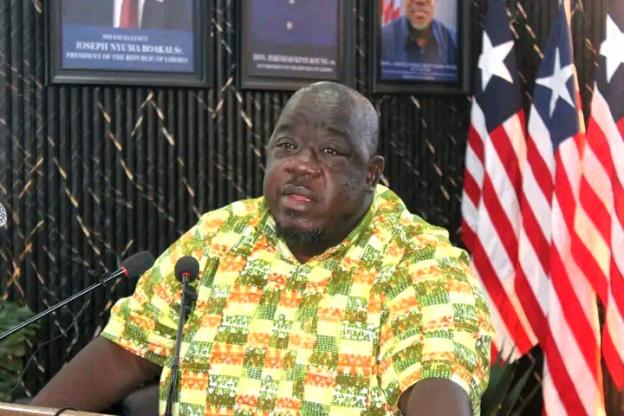
MONROVIA – The Government of Liberia has launched what appears to be one of its most aggressive enforcement campaigns yet against the illegal use of government vehicles and license plates, amid growing concerns over abuse of state property, weak accountability and mounting revenue losses linked to unauthorized plate transfers. The warning, issued by the General Services Agency through Deputy Director General for Operations Robert Wilson, signals a broader institutional push by the Boakai administration to restore order within government asset management systems. As THE ANALYST’s reports, officials say the practice of mounting government plates on private vehicles has become deeply entrenched over the years, undermining transparency and encouraging impunity within sections of the public sector.
GSA Escalates Fight Against Illegal Government Plates
Liberia’s government transportation and asset management system is coming under intensified scrutiny as the General Services Agency moves aggressively to clamp down on the widespread and often controversial practice involving the illegal use of government vehicles and license plates across the country.
The warning, delivered Tuesday during the regular press briefing organized by the Ministry of Information, Cultural Affairs and Tourism, came from Deputy Director General for Operations, Robert Wilson, who signaled that the era of casually mounting government plates on private vehicles may soon face unprecedented enforcement pressure.
The announcement reflects growing concern within government circles that the abuse of state plates and transportation assets has become deeply normalized over the years, creating accountability gaps, undermining institutional discipline and depriving the government of legitimate revenue streams.
Wilson’s message was direct, forceful and unusually uncompromising.
The government, he insisted, has now decided to act.
“Government Plates Belong To Government Cars”
Throughout his remarks, Wilson repeatedly emphasized what he described as a simple but routinely violated principle:
“Government plates belong to government cars.”
The statement may appear straightforward. But according to the GSA Operations Boss, widespread disregard for that principle has evolved into a serious governance and enforcement problem.
Wilson disclosed that authorities have already begun identifying unauthorized government plates currently mounted on private vehicles throughout Monrovia and other parts of Liberia.
According to him, many of the plates being used illegally today are “decommissioned” government plates that should have been surrendered or retired from circulation long ago.
Instead, some individuals allegedly continue using them unlawfully for convenience, influence or financial avoidance.
“The streets of Monrovia are filled with decommissioned government plates,” Wilson warned.
For government officials now pushing stricter accountability measures, the situation represents more than a transportation issue. It has become a governance issue.
Temporary Arrangements Now Ending
Wilson acknowledged that in previous years, certain temporary arrangements had been authorized under controlled conditions.
In some instances, appointed government officials who had not yet received assigned official vehicles were temporarily permitted to use decommissioned government plates on private vehicles while awaiting allocation through the Executive Order System (EOS).
However, Wilson stressed that such arrangements were tightly regulated and accompanied by official identification stickers intended to distinguish authorized users from illegal operators.
Even so, he emphasized that those temporary concessions are now being discontinued.
“As soon as you receive a government vehicle, the decommissioned plate must be removed from your private car,” he stated firmly.
The clarification appears aimed partly at government officials who may still believe old practices remain acceptable under the current administration.
According to Wilson, they are not.
Enforcement To Begin Immediately
The GSA official disclosed that enforcement operations will begin aggressively, with even government ministries themselves not exempted.
Interestingly, Wilson specifically named the Ministry of Information as one of the first institutions where compliance inspections and enforcement actions would commence.
The announcement carried symbolic significance.
It suggested that the campaign would not be limited merely to ordinary citizens or lower-level public workers, but could potentially extend into senior government circles as well.
Wilson warned that one of the most common violations discovered by authorities involves the practice of using a single government plate interchangeably on multiple vehicles.
“It is not acceptable for one plate to be used on different cars,” he stressed. “If we discover such vehicles, they will be impounded immediately.”
The language reflected growing institutional frustration within the GSA over what officials increasingly view as open abuse of government transportation systems.
Vehicles Face Impoundment And Financial Penalties
Under the enforcement framework outlined Tuesday, vehicles discovered violating government plate regulations will reportedly face immediate towing and impoundment.
Owners will then be required to pay both towing charges and accumulated parking fees before reclaiming the vehicles.
Wilson indicated that authorities intend to make the penalties sufficiently uncomfortable to discourage continued violations.
The approach signals a shift from informal warnings toward direct operational enforcement.
Observers say the government may now be attempting to send a broader message about accountability and institutional discipline under the administration of President Joseph Nyuma Boakai.
Police Already Positioned For Operations
Importantly, Wilson disclosed that the Liberia National Police has already been formally informed and positioned to support enforcement operations nationwide.
That revelation suggests the campaign is expected to move beyond administrative warnings into coordinated field operations involving vehicle stops, inspections and impoundments.
The involvement of police authorities significantly increases the seriousness of the initiative.
It also raises expectations that enforcement may soon become highly visible across Monrovia and major urban centers.
Judiciary Plates Temporarily Exempted
Wilson also touched on a separate controversy involving newly produced government license plates introduced during the previous Ministry of Transport administration.
According to him, the Judiciary rejected some of the new plate designs, arguing that judicial vehicles should retain the traditional blue-and-white plate format historically associated with the courts.
As a result, the Judiciary has temporarily been exempted from portions of the ongoing enforcement campaign pending resolution of the design disagreement.
The disclosure revealed the complexity surrounding government plate standardization efforts and the institutional sensitivities involved.
Senior Officials Also Implicated
Perhaps most strikingly, Wilson acknowledged that even senior government officials have allegedly participated in improper plate transfers.
According to him, the GSA has observed instances where government plates were removed from official state vehicles and mounted onto private cars belonging to officials.
He described the practice as a direct violation of national policy and state asset management regulations.
The statement hinted at a deeper culture of entitlement and weak enforcement that may have existed within portions of government for years.
Wilson’s remarks therefore appeared aimed not only at ordinary citizens but also at powerful insiders accustomed to operating above regulatory scrutiny.
Revenue Losses And Accountability Concerns
Beyond administrative violations, Wilson argued that the illegal use of government plates is contributing directly to revenue losses for the Liberian government.
According to him, some individuals deliberately avoid registering private vehicles properly by illegally attaching government plates removed from broken-down or retired state vehicles.
Such practices deprive the government of legitimate registration and licensing revenue while simultaneously undermining accountability within national transportation systems.
Officials increasingly view the issue as part of a broader pattern involving weak state asset management and institutional leakage.
A Warning To Voluntarily Comply
Wilson used the occasion to issue what amounted to a final warning to violators.
“I encourage those listening to voluntarily remove those plates from their vehicles before enforcement reaches your doorstep,” he cautioned.
The statement carried both administrative and political undertones.
It suggested authorities may initially provide room for voluntary compliance before intensifying public enforcement actions.
Still, the warning was unmistakable—the grace period is ending.
Government Seeking Institutional Order
Underlying the enforcement campaign is a broader attempt by the Boakai administration to project discipline, accountability and institutional control across government systems.
Wilson repeatedly framed the initiative as part of efforts to restore order within state transportation and asset management structures.
“The era of carrying government plates on private cars is over,” he declared emphatically.
Whether the enforcement drive ultimately succeeds may depend heavily on one critical factor, which is consistency.
Because in Liberia, critics often argue that enforcement campaigns collapse once politically connected individuals become affected.
For now, however, the GSA appears determined to signal seriousness.
And across Monrovia, where government plates mounted on private vehicles have long become a familiar sight, many motorists may now be watching nervously to see whether the promised crackdown truly materializes.
Comments are closed.