

‘Whistleblower incentives need stronger protections’-Cllr. Toe Pushes Amendments, Coordinated Strengthening
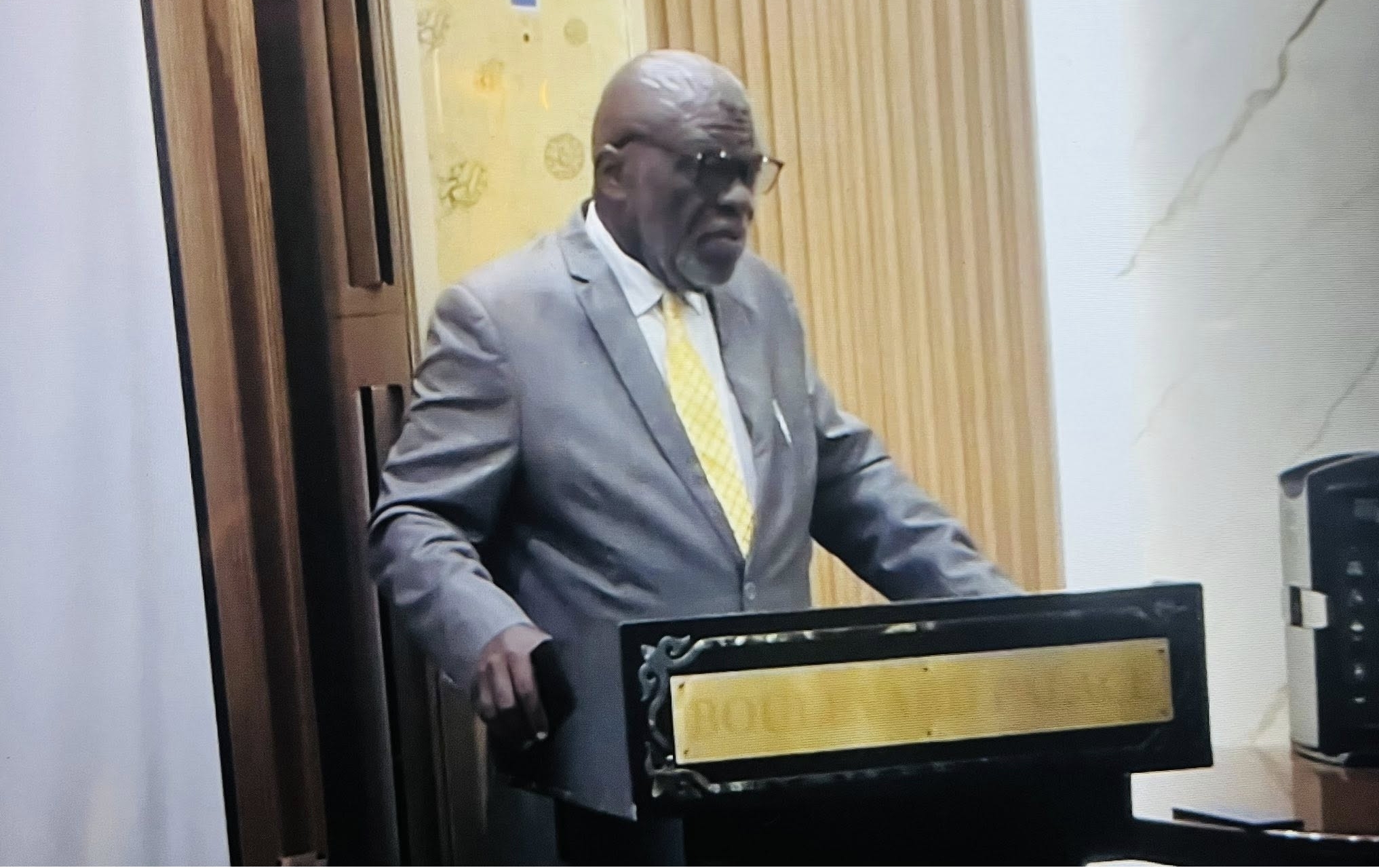
MONROVIA – Liberia’s justice reform agenda sharpened further as the Ministry of Justice formally advanced a policy position linking whistleblower incentives to stronger, enforceable protection mechanisms within the country’s legal framework. Delivering a keynote at a high-level technical review in Monrovia, Deputy Minister for Codification Cllr. J. Augustine Toe underscored a critical gap: rewards alone cannot compel disclosure if the system fails to guarantee safety. His intervention reframed the ongoing legislative review as a structural correction, one that must integrate protection, punishment, and coordination into a unified national response against corruption, smuggling, and organized crime, while aligning Liberia’s laws with evolving global standards and emerging security threats. THE ANALYST reports.
Liberia’s push to recalibrate its anti-corruption and justice delivery architecture gained sharper policy clarity Tuesday as the Ministry of Justice, through its Deputy Minister for Codification, Cllr. J. Augustine Toe, outlined a comprehensive framework for strengthening the country’s witness and whistleblower protection regime.
Speaking at a One-Day High-Level Technical Review Meeting on proposed amendments to the Witness Protection Act of 2021 and the Whistleblower Act of 2021, Toe delivered what many participants described as a decisive intervention—one that moves the national conversation beyond abstract reform toward a more integrated, enforceable system of protection and accountability.
The gathering, which convened senior officials from across the justice sector—including representatives of the Supreme Court, Ministry of Finance, Liberia Anti-Corruption Commission, Governance Commission, Liberia National Bar Association, and international partners—served as a strategic platform to interrogate the strengths and weaknesses of Liberia’s existing legal framework.
But it was Toe’s central argument that resonated most forcefully: incentives without protection are insufficient—and potentially dangerous.
Incentives Without Protection: A Risky Equation
At the heart of the Ministry’s position lies a fundamental recalibration of policy logic.
The government, Toe explained, is responding to a presidential directive to amend the Whistleblower Act to include motivational incentives—rewards and bounties designed to encourage citizens to report corruption, smuggling, and other serious crimes.
Yet, he cautioned, such incentives cannot stand alone.
Without robust legal protections, they risk exposing whistleblowers to retaliation, intimidation, and even loss of life.
“Motivational incentives are insufficient,” Toe emphasized, stressing that any legislative amendment must simultaneously address punitive measures for retaliation, concealment, and exposure of whistleblower identities.
The implication is clear: the State cannot invite disclosure without guaranteeing safety.
Toward an Integrated Protection Framework
The Ministry of Justice is therefore advocating for a synchronized reform of both the Whistleblower Act and the Witness Protection Act—two legal instruments that must now operate in tandem rather than in isolation.
Toe outlined key reform priorities that, taken together, form the backbone of this integrated approach:
First, the expansion of the Witness Protection Program to explicitly cover whistleblowers—ensuring that individuals who report wrongdoing receive the same level of protection as witnesses in criminal proceedings.
Second, the strengthening of the Witness Protection Agency’s mandate, positioning it as the lead institution responsible for coordinating national protection efforts.
Third, the introduction of severe penalties for retaliatory actions, suppression of information, and unauthorized disclosure of whistleblower identities.
These measures, Toe argued, are not optional enhancements. They are essential safeguards that must underpin any credible incentive system.
Institutional Mandate and Legal Authority
Toe also used the platform to reaffirm the Ministry of Justice’s constitutional and statutory responsibilities, particularly its mandate to provide legal advice to the President and government institutions, and to draft and review legislative instruments.
This authority, grounded in the Executive Law of 1972, positions the Ministry as the central architect of the proposed reforms.
The current review process, he noted, is not an isolated initiative but part of a broader governmental effort to strengthen public safety, uphold the rule of law, and protect national interests.
Building on Legislative Milestones
Liberia’s enactment of the Witness Protection Act and the Whistleblower Act in 2021 represented significant progress in the fight against corruption and organized crime.
These laws established, for the first time, a legal framework to protect individuals who provide critical information to authorities.
However, as Toe acknowledged, implementation has revealed gaps—gaps that now demand urgent attention.
The review process is therefore designed to build on these foundational achievements while addressing their limitations.
Five Imperatives Driving Reform
Toe identified five core imperatives guiding the reform agenda:
Alignment with international obligations, including the United Nations Convention Against Corruption (UNCAC) and the International Covenant on Civil and Political Rights (ICCPR);
Strengthening both incentives and protections, ensuring that whistleblowers—and potentially their families and associates—are adequately covered;
Enhancing institutional coordination among key actors, including the Ministry of Justice, WPA, LACC, Liberia National Police, and the Judiciary;
Addressing emerging technological risks, particularly those related to digital surveillance and cyber threats;
And promoting public confidence, ensuring that citizens trust the system enough to come forward.
Each of these imperatives reflects a recognition that legal reform must be both comprehensive and forward-looking.
The Coordination Challenge
One of the most persistent challenges identified is the fragmentation of institutional roles.
Effective witness and whistleblower protection requires seamless coordination across multiple agencies—each with distinct mandates but overlapping responsibilities.
Without clear lines of authority and communication, gaps emerge, undermining the system’s effectiveness.
Toe’s proposal to expand the WPA’s mandate is therefore aimed at addressing this fragmentation—creating a central coordinating body capable of delivering coherent protection services.
Technology and the New Risk Environment
Like other speakers at the forum, Toe highlighted the growing importance of technology in shaping the risk landscape.
Digital surveillance, data breaches, and cyber threats have introduced new vulnerabilities that existing laws were not designed to address.
Witnesses and whistleblowers can now be exposed through digital footprints, making traditional protection measures insufficient.
The proposed amendments, he indicated, must therefore incorporate provisions that respond to these evolving threats—ensuring that protection systems remain effective in a digital age.
From Reform to Action
While the technical review meeting serves as a forum for discussion, its ultimate objective is action.
Toe emphasized that the process must produce concrete, actionable proposals—recommendations that can be submitted to the President for Cabinet review and eventual legislative action.
The goal is to move beyond diagnosis to implementation.
A Broader Vision for Justice
Underlying Toe’s intervention is a broader vision of justice—one in which accountability is not hindered by fear, and where citizens can engage with the system without risking their safety.
This vision, he suggested, is central to Liberia’s democratic development.
Corruption and organized crime thrive in environments where silence is safer than disclosure.
Breaking that cycle requires not only laws, but trust—trust that the State will protect those who come forward.
A Call to Collective Resolve
In closing, Toe called on participants to approach the review process with urgency and purpose.
The stakes, he emphasized, extend beyond legal reform.
They touch on the credibility of Liberia’s institutions, the effectiveness of its anti-corruption efforts, and the confidence of its citizens.
“With stronger frameworks,” he concluded, “Liberia can move toward a future where justice is not aspirational, but assured.”
As deliberations continue, the challenge will be translating this vision into a system that works—not just on paper, but in practice.
Comments are closed.