
Baccus Legacy Still Echoes Loudly-Liberia remembers him at 78th heavenly birthday today
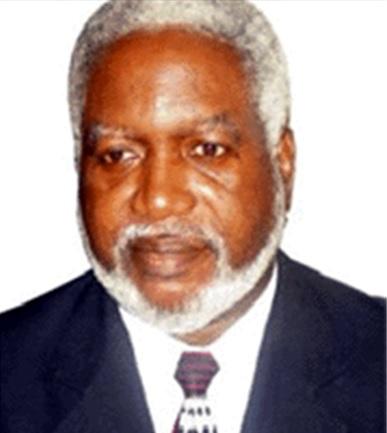
MONROVIA – If Gabriel Baccus Matthews were alive today, Liberia’s most controversial and charismatic progressive firebrand would have turned 78 years old Thursday, May 8, 2026 — a milestone that has reignited reflection about the unfinished democratic struggles he helped unleash nearly five decades ago. Across political circles, among surviving progressives and within segments of Liberia’s intellectual class, the annual remembrance of “G. Bac” has increasingly evolved beyond ceremonial nostalgia into a broader examination of whether the ideals he championed — multiparty democracy, mass participation, political courage and resistance to authoritarianism — have truly survived the passage of time. For many admirers, Matthews remains less a memory than a continuing national political argument, as THE ANALYST reflects in reverence to an adorable icon.
A Revolutionary Figure Returns to National Conversation
Long after his death and nearly half a century after he first shook the political foundations of Liberia’s old ruling order, Gabriel Baccus Matthews is once again dominating conversations among progressives, historians, political veterans and ordinary Liberians reflecting on the country’s democratic journey.
Thursday, May 8, 2026, marks what would have been the 78th birthday anniversary of the late progressive icon whose political activism, street mobilization and ideological defiance helped transform Liberia from a rigid one-party political structure into a modern multiparty democracy.
For his admirers and surviving political disciples, the annual remembrance has become far more than a birthday tribute. It has evolved into a political meditation on Liberia itself.
What has the country become? What has democracy achieved? And what would “G. Bac” be saying today if he were alive to witness Liberia’s current political atmosphere?
Those questions echoed quietly Thursday as old speeches, historical writings and commemorative tributes circulated heavily among progressives and political veterans determined to preserve Matthews’ legacy.
To many of them, Matthews remains one of the most consequential political mobilizers in modern Liberian history.
The Man Who Challenged One-Party Rule
Born on May 8, 1948, Gabriel Baccus Matthews emerged during one of Liberia’s most politically restrictive periods — an era dominated almost exclusively by the century-old True Whig Party establishment. At the time, political opposition was virtually nonexistent. State power revolved around a closed political elite. Public dissent carried consequences.
Yet Matthews, driven by what supporters describe as an uncompromising belief in inclusion and democratic participation, became increasingly convinced that Liberia’s political future depended on dismantling the monopoly of one-party governance.
Historical accounts revisited Thursday show that Matthews viewed the old political order as exclusionary, elitist and fundamentally unsustainable.
In one of the speeches now being republished by supporters, Matthews recalled how he warned officials of the ruling establishment as early as 1978 that Liberia was “a disaster waiting to happen.”
He openly challenged the notion that one political party should dominate Liberia indefinitely.
“I notified them that the continuance of a one-party state was unacceptable,” Matthews declared in the speech.
That defiance would eventually place him directly at the center of Liberia’s most explosive political upheaval.
The Progressive Alliance And Political Awakening
In 1975, Matthews and fellow activists established the Progressive Alliance of Liberia (PAL), one of the first organized opposition movements to openly confront the ruling True Whig Party structure.
The organization later evolved into the Progressive People’s Party and eventually the United People’s Party.
According to supporters, Matthews quickly distinguished himself from other opposition voices through his unusual blend of political strategy, direct public engagement and fearless confrontation with state authority.
One tribute released Thursday argued that before anyone questions Matthews’ role in Liberia’s democratic transformation, they must ask “which Liberian was more tactical, more direct, more forceful and more clinical in the engagement, preparation and mobilization of the masses against the moribund establishment.”
Among many progressives, the answer remains simple: Only Gabriel.
Rice Riot Legacy Still Reverberates
Perhaps no event defines Matthews’ political legacy more powerfully than the famous Rice Demonstration of April 14, 1979.
That protest, triggered by government’s proposed increase in the price of rice, fundamentally altered Liberia’s political direction.
In his own reflections, Matthews argued that the proposed increase would have devastated ordinary Liberians while enriching politically connected rice importers tied to the ruling establishment.
“The plan of taking the price to $30.00 USD… was pushing it too far,” Matthews stated in his famous address commemorating the 25th anniversary of the Rice Riot.
The protest turned deadly after government security forces opened fire on demonstrators in Monrovia. Dozens were killed. The political consequences proved historic.
The violence shattered public fear surrounding the ruling order and accelerated organized resistance against the establishment. Even decades later, Matthews remained unapologetic about the demonstration.
“If I say it, I must mean it; and if I mean it, I must do it,” he famously declared.
To many progressives, those words became a political doctrine of courage and resistance.
The Midnight March And Coup Tensions
Another extraordinary chapter of Matthews’ political life resurfaced Thursday through republication of his dramatic account of the so-called “Midnight March” to the Executive Mansion in March 1980.
Matthews claimed he received information suggesting that elements within government were planning a palace coup against President William R. Tolbert Jr. while the President was away in Nimba County.
Acting on the intelligence, Matthews reportedly mobilized hundreds of supporters and marched to the Executive Mansion in the middle of the night to frustrate the alleged conspiracy.
The story has long occupied a near-mythical place within progressive political circles.
Whether viewed as political intervention, strategic maneuvering or dramatic symbolism, the episode reinforced Matthews’ image as a fearless actor willing to directly confront state power.
Only weeks later, Liberia experienced the April 12, 1980 military coup that ended 133 years of True Whig Party political dominance.
From Revolutionary To Statesman
Following the coup, Matthews briefly served as Foreign Minister under Samuel Doe before later becoming one of Doe’s fiercest political critics as the military regime itself descended into authoritarianism.
Throughout the 1980s, Matthews remained among Liberia’s most visible opposition figures.
Even during the civil war years, he consistently defended democratic processes while criticizing armed rebellion as a dangerous substitute for organized political struggle.
“We have been teaching our people that change is possible through peaceful means,” Matthews stated in one of his later speeches.
Still, he expressed visible frustration that sections of the progressive movement gradually embraced militarized politics.
Using one of his most famous metaphors, Matthews described himself as a goose watching his “ducklings” abandon peaceful activism to follow armed factions.
“Some of my ducklings have increasingly left to follow whoever brandished a rifle before them,” he lamented.
The metaphor continues to resonate powerfully in Liberia’s postwar political environment.
What Would G. Bac Say Today?
That question quietly dominated many of Thursday’s reflections. What would Gabriel Baccus Matthews say about Liberia’s current democracy? Would he celebrate the existence of multiple political parties and open elections? Or would he condemn what many progressives now describe as democratic stagnation, elite capture and weakening public trust?
Among younger activists especially, Matthews’ old speeches are increasingly being revisited not as historical relics but as contemporary warnings.
In one of his later reflections, Matthews warned that Liberia had become polluted by “lawlessness, corruption, dangerous drugs, sexual exploitation and abuse.”
To many of his admirers, those warnings now appear disturbingly current. And perhaps that explains why his annual remembrance no longer feels confined to history alone.
The Progressive Legacy Remains Divided
Still, Matthews’ legacy remains complicated. Admired by many. Questioned by others.
Romanticized by some. Blamed by others for forces unleashed during Liberia’s turbulent political evolution.
Critics argue that the radicalization of political activism during the late 1970s contributed indirectly to the instability that later consumed Liberia.
Supporters reject that interpretation entirely. They insist Matthews sought democratic reform, not violent collapse. Indeed, in several speeches revisited Thursday, Matthews repeatedly condemned armed rebellion and insisted Liberia’s democratic gains must never again be overturned by force.
“We publicly declared that nobody would ascend to power by force of arms,” he recalled.
A Legacy That Refuses To Fade
Gabriel Baccus Matthews died on September 7, 2007.
But seventeen years later, his political presence remains unusually alive within Liberia’s democratic imagination. Perhaps because the issues he confronted — exclusion, abuse of power, political courage, state accountability and democratic participation — remain unresolved national debates.
Or perhaps because Liberia itself is still wrestling with many of the same contradictions that first produced the progressive struggle Matthews helped ignite decades ago.
Either way, one reality remains undeniable: At 78 years old — had he still been alive — Gabriel Baccus Matthews would almost certainly still be provoking arguments, unsettling power and forcing Liberia to confront uncomfortable political truths.
Comments are closed.