

Media Partnership Talks Gain Momentum-PUL, UNDP deepen collaboration at World Press Freedom Day
MONROVIA – Efforts to strengthen Liberia’s media landscape have taken a significant step forward as key stakeholders move to deepen collaboration around journalism, governance, and development. At a time when misinformation, institutional distrust, and democratic fragility continue to challenge public discourse, renewed engagement between the Press Union of Liberia and the United Nations Development Programme signals a strategic alignment of priorities. The talks underscore a growing recognition that a professional, independent media is not merely a democratic ideal but a functional necessity for national progress. As THE ANALYST reports, Liberia is seemingly navigating complex political and socio-economic transitions, and the outcome of such partnerships could shape the credibility, resilience, and influence of the country’s information ecosystem.
In a development that underscores the growing recognition of the media’s central role in democratic governance and national development, the Press Union of Liberia and the United Nations Development Programme have initiated discussions aimed at forging and deepening a strategic partnership to strengthen journalism and media institutions across Liberia.
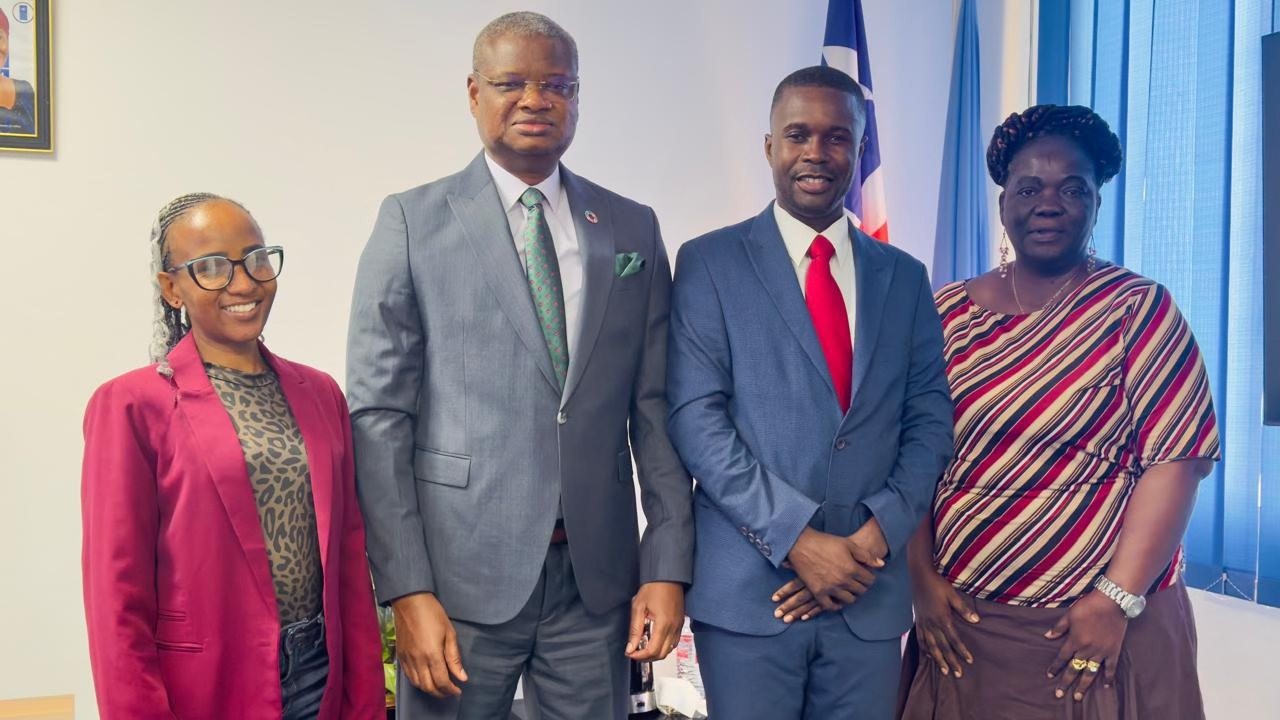
The high-level engagement, held on Thursday, April 2, 2026, at the United Nations Headquarters in Monrovia, brought together leadership from both institutions in what observers describe as a timely and forward-looking dialogue.
The meeting served as a platform to explore areas of mutual interest and cooperation, with a focus on building a more resilient, professional, and impactful media sector capable of supporting Liberia’s democratic and developmental aspirations.
At the center of the discussions was the acknowledgment that a free, independent, and professional media is indispensable to the functioning of any democratic society.
President of the Press Union of Liberia, Julius Kanubah, articulated this position with clarity, emphasizing that the sustainability of freedom of expression depends on deliberate and sustained investment in institutional capacity, ethical journalism, and the safety and welfare of journalists.
Kanubah noted that Liberia’s media landscape is evolving within an increasingly complex information environment, where the proliferation of digital platforms has both expanded access to information and introduced new challenges related to misinformation and credibility.
In this context, he argued, strengthening credible journalism is essential not only for maintaining public trust but also for ensuring that citizens have access to accurate, balanced, and reliable information.
He further stressed that the media must be empowered to effectively fulfill its watchdog role, serving as a critical check on power while promoting transparency, accountability, and inclusive public discourse.
This function, he observed, is particularly important in a country like Liberia, where democratic institutions continue to consolidate and where public confidence in governance structures remains a work in progress.
The PUL President also highlighted the importance of strategic partnerships with development actors such as UNDP, noting that such collaborations can provide the resources, expertise, and institutional support needed to address existing gaps within the media sector.
These gaps, he suggested, include limited capacity for investigative journalism, insufficient training opportunities for emerging journalists, and challenges related to the financial sustainability of media institutions.
In outlining the areas of potential collaboration, Kanubah pointed to several key priorities. These include capacity building initiatives aimed at enhancing the skills and professionalism of journalists, programs designed to strengthen media institutions and improve their operational resilience, efforts to promote ethical standards and accountability within the profession, and initiatives to expand opportunities for young and emerging journalists across Liberia.
Responding to the PUL’s proposals, UNDP Resident Representative Aliou Mamadou Dia expressed strong support for the prospects of collaboration.
He reaffirmed UNDP’s openness to partnerships that align with its broader mandate of supporting capacity development and fostering inclusive growth.
Dia underscored the critical role that the media plays in advancing the Sustainable Development Goals (SDGs), noting that responsible and impactful reporting can contribute significantly to public awareness, policy dialogue, and accountability.
A strong media sector, he emphasized, is not only a pillar of democracy but also a driver of development, as it facilitates informed decision-making and encourages citizen engagement.
The discussions also highlighted the broader framework within which UNDP operates in Liberia. As part of the “One UN” system, UNDP collaborates with other United Nations agencies under the United Nations Cooperation Framework, a five-year strategic plan that focuses on three core priority areas: human capital development, good governance and the rule of law, and economic development and sustainability.
Within this framework, the media is increasingly recognized as a cross-cutting enabler of progress, capable of influencing outcomes across multiple sectors. By strengthening journalism and media institutions, stakeholders aim to enhance transparency in governance, support evidence-based policymaking, and foster a more informed and engaged citizenry.
The historical role of the Press Union of Liberia further contextualizes the significance of the proposed partnership. Founded in 1964, the PUL has long served as the umbrella organization for journalists and media institutions in the country. Over the decades, it has been at the forefront of efforts to champion press freedom, protect journalists’ rights, promote professional standards, and facilitate dialogue among stakeholders in the media and governance sectors.
Despite these efforts, the media sector continues to face a range of challenges, including limited financial resources, threats to press freedom, and the need for continuous professional development. The partnership discussions with UNDP are therefore seen as an opportunity to address these challenges in a more coordinated and sustainable manner.
For Liberia, the implications of a strengthened media sector are far-reaching. In a context where governance reforms, economic development initiatives, and social transformation efforts are ongoing, the availability of accurate and reliable information is critical. A robust media can help bridge the gap between policymakers and citizens, ensuring that public discourse is informed, inclusive, and constructive.
Moreover, the emphasis on ethical journalism and professional standards is particularly relevant in an era where misinformation can spread rapidly and undermine public trust. By investing in training and capacity building, stakeholders aim to equip journalists with the tools and knowledge needed to navigate this complex landscape and uphold the integrity of their profession.
The engagement between PUL and UNDP also reflects a broader trend toward multi-stakeholder collaboration in addressing development challenges. Recognizing that no single institution can address these challenges alone, there is a growing emphasis on partnerships that leverage the strengths and resources of different actors.
As the discussions progress, attention will likely turn to the practical aspects of the partnership, including the design and implementation of specific programs, the mobilization of resources, and the establishment of mechanisms for monitoring and evaluation. These elements will be critical in ensuring that the partnership delivers tangible results and contributes to the long-term sustainability of the media sector.
For now, the dialogue between the Press Union of Liberia and the United Nations Development Programme represents a promising step toward a more coordinated and strategic approach to media development. It signals a shared commitment to strengthening the foundations of journalism in Liberia and to harnessing the power of the media as a force for positive change.
In a country where the stakes of governance, development, and public trust remain high, the outcome of this partnership could have a lasting impact on the trajectory of the nation’s democratic journey.
Comments are closed.