

LBNM Targets Illegal Schools-Health regulators intensify nationwide crackdown
MONROVIA – Liberia’s healthcare regulatory authorities are escalating efforts to confront what officials now describe as a dangerous proliferation of illegal and substandard nursing and midwifery schools operating outside national accreditation standards. The crackdown, led by the Liberian Board for Nursing and Midwifery, reflects growing concern that unregulated institutions are producing unqualified graduates who pose serious risks to public health, professional credibility and national healthcare delivery systems. Beyond institutional enforcement, the campaign signals a broader push to modernize healthcare workforce regulation through stricter accreditation, digital licensing systems and enhanced professional oversight. As THE ANALYST’S George C Flomo Reports, health officials are arguing that strengthening nursing and midwifery standards has become critical to rebuilding confidence in Liberia’s healthcare system and protecting vulnerable patients nationwide.
LBNM Escalates Crackdown On Illegal Institutions
MONROVIA — Liberia’s healthcare regulatory environment is entering a far more aggressive enforcement phase as the Liberian Board for Nursing and Midwifery intensifies efforts to shut down illegal and unaccredited nursing and midwifery schools operating across the country.
The move, which officials describe as urgent and necessary, follows growing alarm within the healthcare sector over the continued emergence of substandard institutions allegedly producing unqualified graduates and exposing the public to dangerous healthcare risks.
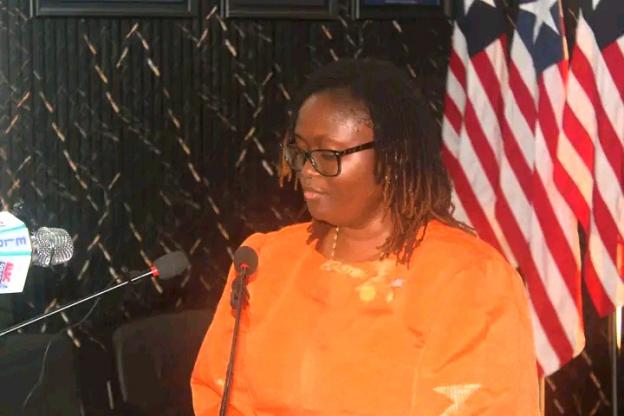
Speaking Thursday during the regular press briefing of the Ministry of Information, Cultural Affairs and Tourism, Registrar of the Liberian Board for Nursing and Midwifery, Cecelia C. Kpangbala-Flomo, warned that the Board is now preparing coordinated enforcement actions alongside the Ministry of Justice of Liberia to physically shut down institutions operating outside nationally approved accreditation standards.
The announcement immediately signaled a significant escalation in Liberia’s healthcare regulatory posture.
For years, concerns surrounding illegal nursing and midwifery institutions circulated quietly within professional and educational circles. Now, regulators appear prepared to move decisively.
“A Threat To Public Health”
Madam Kpangbala-Flomo used unusually strong language in describing the dangers posed by unaccredited schools.
“These unaccredited schools operate without authorization, produce unqualified graduates and pose a threat to public health and national security,” she declared firmly during the briefing.
The statement reflected deepening anxiety within Liberia’s healthcare oversight community regarding the long-term consequences of poorly trained medical personnel entering hospitals, clinics and healthcare facilities nationwide.
Health sector observers note that nursing and midwifery professionals often serve as the first and most direct point of care for many Liberians, particularly within rural and underserved communities.
Weak training standards therefore carry potentially devastating implications. In practical terms, poorly trained personnel can lead to misdiagnosis, unsafe procedures, compromised maternal care, medication errors and weakened patient outcomes. The Board now appears determined to confront the problem aggressively.
Board Strengthens Legal Enforcement Framework
According to the Registrar, the Board is currently reinforcing policy and legal documentation intended to support stronger enforcement actions against institutions deliberately violating accreditation requirements and professional training standards.
The effort, officials say, is designed to ensure that future enforcement actions withstand legal scrutiny while strengthening the Board’s authority to intervene against noncompliant institutions.
Kpangbala-Flomo emphasized that regulation of nursing and midwifery education remains central to protecting the health and safety of ordinary Liberians.
She reminded the public that the Liberian Board for Nursing and Midwifery was originally established in 1948 and formally enacted into law in 1949 before later receiving expanded authority under the amended 2016 Nursing and Midwifery Act.
Under that law, the Board possesses exclusive legal authority to regulate and monitor nursing and midwifery education and practice throughout Liberia.
Growing Concerns Over Substandard Training
The crackdown comes amid wider national concern surrounding the rapid growth of loosely regulated training institutions across multiple sectors of Liberia’s educational landscape.
Within healthcare education, however, regulators argue the risks are especially severe because human lives are directly involved.
Madam Kpangbala-Flomo stressed that accreditation is not a symbolic exercise.
Rather, it serves as a critical quality assurance mechanism intended to ensure that students receive proper professional preparation before entering healthcare practice.
According to her, accreditation assessments evaluate institutional governance, infrastructure, classrooms, practical instruction systems and clinical laboratories under standards established within the revised 2025 Nursing and Midwifery Education Policy.
Only institutions meeting those standards receive official recognition.
“Any school not on the official list is operating illegally, and graduates from such institutions are not recognized,” she cautioned.
The warning was blunt—and deliberate.
National Exams Restricted To Accredited Graduates
One of the most important implications of accreditation status involves eligibility for Liberia’s National State Board Examination.
Kpangbala-Flomo explained that only graduates emerging from officially accredited institutions recognized by the Board are permitted to sit the examination required for professional licensing.
Graduates from illegal institutions therefore face exclusion from legitimate professional practice pathways.
The Registrar urged students and parents to verify accreditation status carefully before enrolling in any nursing or midwifery institution.
Education observers say many students unknowingly enroll in questionable institutions only to later discover that their qualifications are not professionally recognized.
The consequences can be devastating both financially and professionally.
Board Expands Digital Oversight Systems
As part of broader modernization efforts, the Board has increasingly transitioned many of its operations into digital systems designed to improve transparency, efficiency and regulatory monitoring.
Among the most important reforms highlighted Thursday was the Board’s student indexing system.
Under the mechanism, students admitted into accredited nursing and midwifery institutions are assigned unique identification numbers tracked throughout their educational and professional progression.
According to the Registrar, the system helps prevent admissions from unauthorized institutions while also generating national workforce data essential for healthcare planning.
Since 2023, the Board has indexed 4,625 nursing and midwifery students nationwide.
The numbers reveal both the scale of Liberia’s healthcare training sector and the importance regulators now place on centralized oversight.
Thousands Already Registered Nationwide
Providing broader workforce statistics, Madam Kpangbala-Flomo disclosed that Liberia currently has 16,774 registered nurses and 6,923 registered midwives operating through twenty-six nursing and midwifery schools across the country.
The figures underscore the enormous responsibility carried by the Board in maintaining professional standards.
All practicing nurses and midwives, she explained, are required to obtain professional licenses after successfully completing accredited programs and passing the National State Board Examination.
Those licenses must then be renewed every two years.
To improve efficiency, renewed licenses are now reportedly issued within seventy-two hours through the Board’s digitized online platform.
International Midwife And Nurses Celebrations Highlighted
The Registrar’s remarks also coincided with global observances marking the International Day of the Midwife celebrated on May 5 and International Nurses Day commemorated annually on May 12.
Kpangbala-Flomo praised nurses and midwives as the largest group of healthcare providers globally and emphasized their critical role within Liberia’s healthcare system.
“The celebrations remind us of our collective responsibility to ensure that the regulation, education and practice of these noble professions meet national, regional and global standards,” she stated.
Her comments reflected broader international conversations regarding healthcare workforce strengthening and professional regulation.
Board Pursuing Wider Institutional Reforms
Beyond enforcement actions, the Board is simultaneously implementing broader reforms aimed at strengthening healthcare education systems nationwide.
The Registrar highlighted several ongoing initiatives including: revision of nursing and midwifery education policies, modernization of practice standards, faculty development programs, continuing professional development systems, and construction of the Board’s first permanent nursing and midwifery complex.
She additionally announced the recent launch of a revised Reproductive Maternal Midwifery Curriculum developed in partnership with the Ambassador of France and Expertise France.
The reforms form part of wider efforts to align Liberia’s nursing and midwifery systems with international best practices and regional standards.
Public Asked To Report Illegal Institutions
Kpangbala-Flomo also appealed directly to the public, urging citizens to report illegal schools and unauthorized healthcare practitioners to the Board or law enforcement authorities.
She encouraged employers to verify licensing status carefully before hiring healthcare workers while advising students and parents to confirm accreditation before enrollment decisions.
The Registrar further called upon practicing nurses and midwives to pursue continuous professional development and maintain active licensing status.
The message was clear: Professional regulation will become stricter.
Healthcare Regulation Becoming More Aggressive
Thursday’s briefing revealed a healthcare regulatory environment growing increasingly assertive and institutionally confident.
For years, Liberia’s health workforce challenges centered largely around shortages. Now, regulators are increasingly focusing on quality, standards and accountability. That shift carries enormous implications for the country’s broader healthcare system.
Because ultimately, healthcare outcomes depend not merely on the number of practitioners available—but on the competence, ethics and training quality of those entrusted with human lives.
And for the Liberian Board for Nursing and Midwifery, the battle against illegal institutions is now being framed not simply as administrative enforcement, but as a direct fight to protect public health itself.
Comments are closed.