
‘Bad Governance Fuels Conflict’-Gongloe Says, as Ombudsman Forum urges Reform Urgency
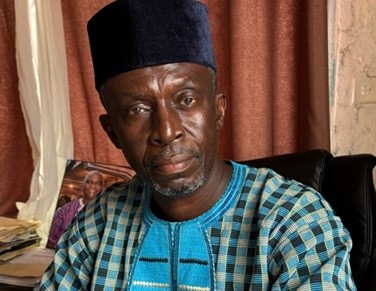
MONROVIA – In Liberia’s long search for peace and stability, debates often center on ethnic rivalry or historical grievances, yet many legal scholars argue that deeper economic injustices and governance failures tell the real story. Speaking at the close of an Ombudsman stakeholders’ conference, human rights lawyer Tiawan Saye Gongloe revived a familiar but uncomfortable thesis: that corruption, inequality, and exclusion from national wealth have repeatedly pushed Liberia toward crisis. His remarks arrive at a time when concession disputes, rising living costs, and public distrust in institutions are again testing social cohesion. By linking conflict prevention to ethical governance and equitable distribution of resources, the conference underscored a central challenge facing Liberia—can reform come before unrest returns? THE ANALYST reports.
Prominent human rights lawyer Cllr. Tiawan Saye Gongloe said Liberia’s history of violent conflict stems not from ethnic or religious divisions, but from systemic bad governance that deprives citizens of income and fuels mass poverty.
Speaking at the climax of a three-day Stakeholder Conference and Technical Workshop organized by the Office of the Ombudsman over the weekend, Cllr. Gongloe noted that unless national resources are equitably distributed and governance is reformed to benefit the majority, the country risks repeating the mistakes that led to its devastating civil crisis.
“We are not talking about tribal or religious differences; we are talking about bad governance that led to the violent deprivation of income and ultimately to mass hunger and famine.”
Cllr. Gongloe stressed that Liberia’s past conflict was fundamentally driven by economic injustice and corruption, adding that when a small minority controls wealth while the majority suffers deprivation, instability becomes inevitable. “Governance is for the people, not for pockets,” he averred.
He warned that concentrating national wealth in the hands of one percent of the population, even amid abundant natural resources, would continue to produce poverty and social unrest.
“We have fertile land, vast forests, and mineral resources; we have no desert, no savannah. When you plant, things grow, yet these resources are not being activated to bring growth,” he said.
He cautioned that without transparency and accountability, even the discovery of oil or gold would fail to uplift ordinary Liberians; instead, corruption could once again divert wealth away from national development.
While critical of past governance failures, Gongloe also pointed to what he described as encouraging signs under the current administration.
He commended the President for acting on recommendations presented by the Office of the Ombudsman, noting that decisive executive leadership is critical in a presidential system.
“In a presidential system, when the President acts, everyone follows,” he said. “We hope the President will continue to act on your recommendations; that is the only way to save this country.”
Making official closing remarks, the Chairperson of the Office of the Ombudsman, Cllr. Findley Kangar, hailed the Stakeholders Conference and Technical Workshop as a decisive step toward strengthening accountability and ethical governance in Liberia.
Cllr. Kangar applauded participants for what he described as their “active participation, insightful contributions, and unwavering commitment” to reinforcing integrity in public service.
“This landmark conference reflects our shared dedication to the constitutional mandate of preventing conflict of interest and promoting ethical standards across government,” Kangar said.
According to Cllr. Kangar, discussions during the conference moved beyond identifying problems to proposing practical reforms aimed at strengthening the institution’s credibility, independence, and public trust.
He stressed that effective oversight requires strong listening skills and meaningful engagement with citizens to improve case intake and processing. “Our goal is to ensure that the Ombudsman truly serves as a pillar of justice and fairness for everyone,” he said.
The conference drew support from international partners, including the European Union Delegation to Liberia, particularly through its technical assistance and information exchange initiatives.
He indicated that participants also engaged in comparative reviews of Ombudsman institutions in Denmark, the Netherlands, and the United Kingdom, gaining insights into best practices in mediation, reconciliation, and public sector oversight.
Kangar noted that integrity is a shared global agenda and that learning from established models strengthens Liberia’s reform efforts.
The Chairperson, in his closing remarks, extended appreciation to government institutions, development partners, civil society organizations, media practitioners, and technical teams that ensured the success of the conference, including those who facilitated virtual participation.
He also recognized pioneers and advocates who have championed Liberia’s Code of Conduct, emphasizing the importance of honoring individuals who uphold ethical standards and inspire democratic accountability.
“The success of this conference reflects not only commitment, but a shared vision for strengthening governance in Liberia,” Kangar declared.
The conference brought together several Liberians, including legal practitioners, students, civil society actors, as well as experts from the Netherlands and Denmark.
Comments are closed.