
Lawyers Demand Evidence In Kolubah Case -Defense pushes for due process and fairness
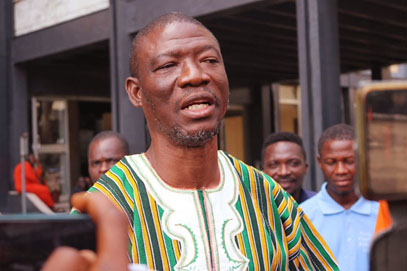
Representative Yekeh Kolubah
Lawyers Demand Evidence In Kolubah Case -Defense pushes for due process and fairness
MONROVIA – The legal battle surrounding Representative Yekeh Kolubah has taken a decisive procedural turn as his legal team formally demands full disclosure of evidence ahead of disciplinary proceedings before the House Committee on Rules, Order and Administration. In a communication addressed to Committee Chair James Kolleh, counsel argues that the current process lacks the basic elements required for a fair hearing, raising concerns about transparency, preparation, and legal sufficiency. The request signals a deepening dispute over due process within the Legislature, with implications extending beyond one case to the broader integrity of quasi-judicial proceedings within Liberia’s democratic institutions. THE ANALYST reports.
The legal proceedings involving Montserrado County District #10 Representative Yekeh Kolubah have entered a critical phase, as his legal team formally challenges the adequacy of the process and demands full disclosure of evidence ahead of a scheduled disciplinary hearing before the House Committee on Rules, Order and Administration.
In a letter addressed to Committee Chair James Kolleh, counsel from TOUN-YA Legal Chambers, LLC—led by Cllr. Kabineh J’aneh and supported by Cllrs. Jonathan T. Massaquoi and Morlah Yeakula-Korkpor—argued that the citation issued to their client is fundamentally deficient, lacking sufficient detail to enable proper legal representation.
Demand for Evidence and Clarity
At the core of the legal team’s position is a straightforward but critical demand: access to all evidence upon which the Committee intends to rely.
The lawyers specifically requested a comprehensive set of materials, including any statements—whether audio, video, or written—attributed to their client, the official position of the Government referenced in the citation, and documentation relating to the alleged dissemination of statements by Guinean authorities.
They also requested access to the House Rules governing the proceedings, underscoring the necessity of understanding the procedural framework within which the hearing is to be conducted.
For the legal team, these are not optional requests but essential prerequisites for any credible defense.
Due Process as a Legal Imperative
Central to the lawyers’ argument is the principle of due process, which requires that any individual subject to proceedings—particularly those with potential reputational or legal consequences—be afforded adequate notice of the case against them and sufficient time to prepare a response.
“Having adequate notice of the evidence against him is a requirement under the principle of due process,” the letter emphasized.
This position aligns with established legal norms and constitutional safeguards, reinforcing the argument that legislative disciplinary proceedings, while internal in nature, must still adhere to basic standards of fairness and transparency.
Request for Time to Prepare Defense
In addition to requesting evidence, the legal team sought a period of five to seven business days to review the materials and prepare an adequate defense.
This request reflects a broader concern that the current timeline may not allow for meaningful engagement with the case, potentially undermining the integrity of the proceedings.
Legal observers note that the adequacy of preparation time is a critical component of fair hearing standards, particularly in quasi-judicial settings where the stakes include both reputational damage and potential disciplinary action.
A Broader Procedural Dispute
The lawyers’ intervention comes against the backdrop of a growing dispute within the House of Representatives over the handling of the Kolubah matter.
As previously raised by Representative Musa Hassan Bility, concerns about due process, clarity of charges, and the role of legal counsel have already placed the Committee’s procedures under scrutiny.
The legal team’s letter effectively reinforces and formalizes those concerns, adding a professional legal dimension to what is increasingly becoming a constitutional and institutional debate.
Expectation of Fairness and Compliance
In their communication, the lawyers expressed confidence that the Committee would act in accordance with legal standards and grant their requests.
“It is our reasonable belief that your committee is committed to ensuring that due process is upheld,” the letter stated, signaling both a challenge and an expectation.
This framing places the Committee in a position where its response will be closely watched—not only for its immediate impact on the Kolubah case, but for what it reveals about the Legislature’s commitment to fairness and procedural integrity.
Implications for Legislative Credibility
The unfolding situation is rapidly evolving beyond a single disciplinary matter into a broader test of institutional credibility.
At stake is whether the House of Representatives can effectively balance its authority to regulate its internal affairs with its obligation to uphold constitutional principles and protect the rights of its members.
Failure to meet these standards, analysts warn, could erode confidence in the Legislature and set precedents that may have long-term implications for governance and the rule of law.
As the Committee prepares to proceed, the focus will now shift to whether it accommodates the legal team’s requests or maintains its current course—an outcome that will likely shape both the trajectory of the Kolubah case and the broader debate over due process within Liberia’s legislative system.
Comments are closed.