

Exclusive interview with Liberia’s Finance and Development Planning Minister, Augustine Kpehe Ngafuan on OK FM April 7, 2026
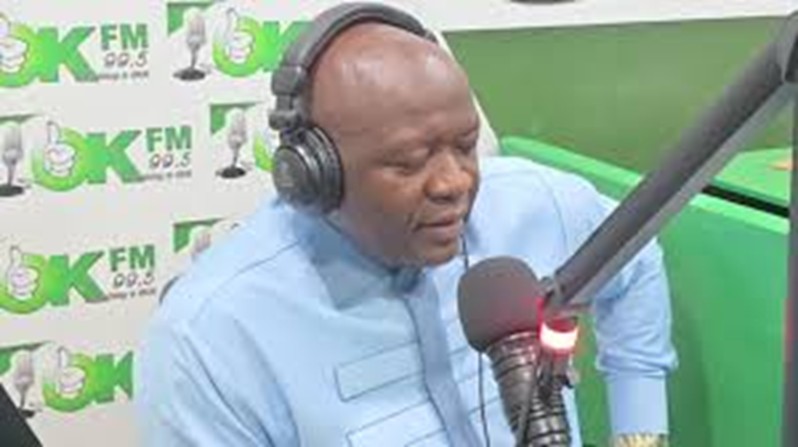
Voice Behind Power-Ngafuan’s Unscripted Leadership Moments
In an era where public officials often speak through prepared statements and carefully curated appearances, the decision to publish a full, unfiltered interview carries both journalistic weight and public value. In this extended exchange, Liberia’s Finance and Development Planning Minister, Augustine Kpehe Ngafuan, moves beyond official talking points to engage questions of personal history, economic management, leadership philosophy, and political memory with unusual candor. The conversation, conducted by OK FM’s Clarence Jackson, offers readers a rare opportunity to encounter the man behind the office—his doubts, convictions, and defining experiences—presented in his own words, without interruption or reinterpretation. See full interview on pages 6 and 7 of this edition of THE ANALYST.
On the observation of his 56th birth anniversary, Finance and Development Planning Minister Augustine Kpehe Ngafuan granted a no-holds-barred interview with OK FM, where he spoke candidly on resilience, economic gains, his personal journey, and the rigors of student politics during Liberia’s turbulent past. As part of its public service fiduciary obligation, The Analyst has carried the entire transcript of Minister Ngafuan’s OK FM April 7, 2026 interview.
Clarence Jackson/OKFM: Mr. Minister, it’s good to hear from you. Anyway, happy, happy birthday. How does it feel today being your birthday? Normally, what do you do on birthdays?
Ngafuan: It depends on the day. If it’s a workday, I work. I go to church, interact with family. It is usually a normal day for me. I pray to God. I thank the Almighty for His grace and mercy because getting an extension on your lease of life does not come through your might or through your brilliance, because those who have transitioned from mortality into immortality, some of them were smarter, some of them were stronger. So, when you make one year, you need to genuflect and make praises to the Almighty God and ask His blessings, grace, and guidance. That’s what I do. I spend it in a somber way because it makes me reflect and take stock and plan for the new year.
OKFM: Are you a twin?
Ngafuan: No, but in a way I am because, in a set of twins, I came after twins. So, in our tradition, I am a twin. My sisters are identical twins. Unfortunately, I lost one of them in 2013, so I have only one alive now. That was a sad moment for us.
OKFM: Mr. Minister, again happy birthday. Like I said, when I sent out this invitation to you, I said I wanted to do something different. I said I wanted to go more into your person. There are people in this country who heard a lot about Doe, about Tolbert, about Taylor; some of them didn’t see them. People will hear about Ngafuan, Amara Konneh, Samuel Tweah. Take it or leave it, these are the guys on the stage. Some of the young people are not privileged to read about who these people are. Some of them think everything is rosy; it came out on a silver platter. So sometimes the opportunities are very important to explain yourself. But before we go there, you are the Minister of Finance. I can’t come and we just talk everything about you. Tell us the current state of the Liberian economy. Where are we?
Ngafuan: As you followed the President in his annual address, he stated that we recorded strong economic performance in 2025; growth was projected at 5.1%. In 2025, despite tremendous odds, we recorded Liberia’s highest domestic revenue generation, upwards of US$840 million. This exceeds what we collected in 2024, which was also historic. Domestic revenue at that time hovered around US$700 million; at that time it was record-breaking. In 2025, as a country, we crossed the historic US$1 billion mark for the national budget. In 2025, you heard about the abrupt cut of aid from USAID, which was our second-largest donor. They had about 29 projects running; almost all of them were shut down. We lost more than US$300 million of aid in agriculture, education, health, school feeding, drugs, and everything; the government had to intervene. So, it was a shock for us. But, thanks to having a good captain in President Boakai and a good team, we retreated, we restrategized, and we worked hard. I usually say that good captains don’t tell you that there will be no turbulence, but a good captain assures you that, in spite of the turbulence, he or she will pilot the plane to its destination. That’s what happened. In fact, by February and March, people predicted doom; people predicted shortfall. And I usually say that you don’t determine the result of the match after 30 minutes of the match. Wait for the full 90 minutes. In this day and age, extra time is even longer. It is at the end of the match you will know the results. Remarkably, we caught up, and it was on account of robust domestic revenue. Let me thank the Commissioner General of the LRA and his team, and all the revenue-generating entities of government, including the Ministry of Finance, which also generates revenues. Even those that are not generating revenues are passing policies, working to ensure that we hit targets. So, that was 2025. Then, in 2026, we projected a growth of 5.6%, and the fact that we could project a budget of US$1.2 billion tells you our expectation for this year. By and large, we have been on track, but now we have a big international headwind, something we economists call exogenous shocks – the war in Iran.
It is having a reverberating impact not just on our economy, but on the world economy. That’s why every day we are watching world news and we are wishing and praying for peace. A world at peace is good for the world; it’s good for the world economy. You know what is happening in the Strait of Hormuz, what has happened to oil prices. Liberia is an oil importer of petroleum products, and we are not shielded from the effects. So, we had to adjust upwards. The economic management team has been meeting since, and the LPRC, Ministry of Commerce, Transport, and others have been briefing. We have been watching all of the signals. We’ve been moving gingerly; we have approved price increases. But our key goal here is to ensure availability of the product, because in some countries—I don’t want to name some neighboring countries now—probably they have run out of products. But we have kept products around largely. We are taking some measures even on the monetary front to ensure that LPRC intentions are serviced financially.
What we are planning to do is to put in some mitigants. I wouldn’t want to let out all the details now, but we are working with the National Transit Authority. There are going to be some interventions for some critical hospitals because they are being affected. The cost of fuel is affecting power supply, and they may not be able to continue. So, there are going to be some interventions from the government. We are watching, and also hoping that the best outcome will obtain. As we usually say, we are hoping for the best, but preparing for the worst.
On the observation of his 56th birth anniversary, Finance and Development Planning Minister Augustine Kpehe Ngafuan granted a no-holds-barred interview with OK FM, where he spoke candidly on resilience, economic gains, his personal journey, and the rigors of student politics during Liberia’s turbulent past. As part of its public service fiduciary obligation, The Analyst has carried the entire transcript of Minister Ngafuan’s OK FM April 7, 2026 interview.
Clarence Jackson/OKFM: Mr. Minister, it’s good to hear from you. Anyway, happy, happy birthday. How does it feel today being your birthday? Normally, what do you do on birthdays?
Ngafuan: It depends on the day. If it’s a workday, I work. I go to church, interact with family. It is usually a normal day for me. I pray to God. I thank the Almighty for His grace and mercy because getting an extension on your lease of life does not come through your might or through your brilliance, because those who have transitioned from mortality into immortality, some of them were smarter, some of them were stronger. So, when you make one year, you need to genuflect and make praises to the Almighty God and ask His blessings, grace, and guidance. That’s what I do. I spend it in a somber way because it makes me reflect and take stock and plan for the new year.
OKFM: Are you a twin?
Ngafuan: No, but in a way I am because, in a set of twins, I came after twins. So, in our tradition, I am a twin. My sisters are identical twins. Unfortunately, I lost one of them in 2013, so I have only one alive now. That was a sad moment for us.
OKFM: Mr. Minister, again happy birthday. Like I said, when I sent out this invitation to you, I said I wanted to do something different. I said I wanted to go more into your person. There are people in this country who heard a lot about Doe, about Tolbert, about Taylor; some of them didn’t see them. People will hear about Ngafuan, Amara Konneh, Samuel Tweah. Take it or leave it, these are the guys on the stage. Some of the young people are not privileged to read about who these people are. Some of them think everything is rosy; it came out on a silver platter. So, sometimes the opportunities are very important to explain yourself. But before we go there, you are the Minister of Finance. I can’t come and we just talk everything about you. Tell us the current state of the Liberian economy. Where are we?
Ngafuan: As you followed the President in his annual address, he stated that we recorded strong economic performance in 2025; growth was projected at 5.1%. In 2025, despite tremendous odds, we recorded Liberia’s highest domestic revenue generation, upwards of US$840 million. This exceeds what we collected in 2024, which was also historic. Domestic revenue at that time hovered around US$700 million; at that time, it was record-breaking. In 2025, as a country, we crossed the historic US$1 billion mark for the national budget. In 2025, you heard about the abrupt cut of aid from USAID, which was our second-largest donor. They had about 29 projects running; almost all of them were shut down. We lost more than US$300 million of aid in agriculture, education, health, school feeding, drugs, and everything; the government had to intervene. So, it was a shock for us. But, thanks to having a good captain in President Boakai and a good team, we retreated, we restrategized, and we worked hard. I usually say that good captains don’t tell you that there will be no turbulence, but a good captain assures you that, in spite of the turbulence, he or she will pilot the plane to its destination. That’s what happened. In fact, by February and March, people predicted doom; people predicted shortfall. And I usually say that you don’t determine the result of the match after 30 minutes of the match. Wait for the full 90 minutes. In this day and age, extra time is even longer. It is at the end of the match you will know the results. Remarkably, we caught up, and it was on account of robust domestic revenue. Let me thank the Commissioner General of the LRA and his team, and all the revenue-generating entities of government, including the Ministry of Finance, which also generates revenues. Even those that are not generating revenues are passing policies, working to ensure that we hit targets. So, that was 2025. Then, in 2026, we projected growth of 5.6%, and the fact that we could project a budget of US$1.2 billion tells you our expectation for this year. By and large, we have been on track, but now we have a big international headwind, something we economists call exogenous shocks – the war in Iran.
It is having a reverberating impact not just on our economy, but on the world economy. That’s why every day we are watching world news and we are wishing and praying for peace. A world at peace is good for the world; it’s good for the world economy. You know what is happening in the Strait of Hormuz, what has happened to oil prices. Liberia is an oil importer of petroleum products, and we are not shielded from the effects. So, we had to adjust upwards. The economic management team has been meeting since, and the LPRC, Ministry of Commerce, Transport, and others have been briefing. We have been watching all of the signals. We’ve been moving gingerly; we have approved price increases. But our key goal here is to ensure availability of the product, because in some countries—I don’t want to name some neighboring countries now—probably they have run out of products. But we have kept products around largely. We are taking some measures even on the monetary front to ensure that LPRC intentions are serviced financially.
What we are planning to do is to put in some mitigants. I wouldn’t want to let out all the details now, but we are working with the National Transit Authority. There are going to be some interventions for some critical hospitals because they are being affected. The cost of fuel is affecting power supply, and they may not be able to continue. So, there are going to be some interventions from the government. We are watching, and also hoping that the best outcome will obtain. As we usually say, we are hoping for the best, but preparing for the worst.
OKFM: Where are the mitigations going to take place? For example, you just talked about the NTA. What are you contemplating? Because, at the end of the day, the totality of the Liberian population should be the beneficiary of their services. People are now getting afraid that the NTA may likely increase the price of the different transport services. I am saying NTA because they have a lot of buses.
Ngafuan: You want me to let this out of the bag. But I will give you this privilege; it’s a journalist’s privilege. It’s your benefit to take from someone something he or she wants to preserve. We’ve done the analytics; we will conclude today. Our goal is to ensure that the National Transit Authority does not increase prices, and we intend to keep it stable. The economists at the Ministry of Finance team are working on a lot of things. As soon as we have finalized all the numbers, we will put them into effect and will announce them.
OKFM: Today is your birthday—again, happy birthday. For the next four or five minutes, tell us a little bit about you—where you were born, where you grew up, who your friends are from down there—and then we can move on.
Ngafuan: I was born right here in Monrovia, right on the Bye-Pass. I think it’s in the Bassa Community or something—the Old Maternity Hospital. In fact, many persons in the 70s will tell you that’s where they were born, the Maternity Center. I was born in that facility. So, I joke with some of my Bassa colleagues that I am a Bassa man in a way, because God landed me in Bassa territory. My family was in Logan Town, in a place called Gbandi Town. That’s where I grew up. I started school at a school called A.B. Tolbert Elementary School. I started my kindergarten education.
My mother is called Kpanna Ngafuan. My late father was Dennis Gaimah Ngafuan. My mother did not go to school. My father went to school, but he did not finish high school, and he came to Monrovia and started to, in the typical Liberian way, hustle.
For a large part of his life, he was doing a local job at Ducor Palace Hotel as a supervisor of a restaurant. My father had two wives. I am the first boy in the family. When you have a family with two mothers, sometimes there are tensions, but remarkably, our family was united. In fact, my stepmother was so close to me—peace be to her ashes—that some people could consider me her son. When she would eat her food, she would give me the remaining food. That’s the kind of family I grew up in.
In Logan Town, we played football. I loved soccer—it’s a passion that I grew up with naturally. At one point, I really had the ambition to be a Lone Star player. That was my biggest ambition, and I almost got it. Some of my teammates made the National Team. You guys heard about Jonas Sarwiah? Jonas Sarwiah played when we all played for a team called Young Eagles. At the time, we had moved to Gardnersville. I played Number 10; he would play 11. We would alternate. Both of us are left-footers. Do you ever hear about Fofie Kamara? Fofie was our defender, Number 3, and he played in central defense for the Lone Star. Those are two of my teammates who made the Lone Star, and I was considered by them as one of the best players. In fact, because of soccer, I almost did not go to BWI. We had just qualified for Third Division. The tournament was on Tusa Field. My team depended on me, and my going to BWI would have impacted that. But my parents wanted me to leave.
I played soccer at Bong Mines Field—those from Logan Town would know that. Gargolor Field. D. Tweh Field. When we went to Gardnersville: Chocolate City Field, Lewis Community Field. Call all the fields around there—I could play.
I grew up in Logan Town, went to school, but at the age of six, my grandfather and my father carried us to Lofa, and I was left there. I started school here but continued K-1 in my hometown Fangonda in Lofa. In 1977, K-2 in Voinjama, and I came back to Bolahun and continued with the first grade in 1978. In 1979, I returned to Monrovia and went back to A.B. Tolbert. I was in A.B. Tolbert up to the 6th grade, and in the 6th grade, I transitioned to Botswain Junior High School. I was in Botswain for four full years, grades 6–9. After Botswain, I left in 1986 and matriculated into the Booker Washington Institute at a time you had to spend four full years to get your diploma. BWI was both an academic and a vocational institution. I graduated in 1989. In 1990, we matriculated into the University of Liberia.
OKFM: Some of the questions I may ask you might be too deeply personal, but I am doing it to get some things out of you. Do you smoke? Do you drink? Have you had a drink before? Have you smoked before?
Ngafuan: Well, let me say this, and this is quite interesting. My late elder sister, Comfort, was part of a prayer band. They used to meet on our porch in Logan Town, and they decided to have a little Bible study group for children, and I was one of those. And the Bible study teacher was a guy that we believed a whole lot. I cannot remember when last I read the Bible to that extent. At the age of 11–12, technically I became very religious. One of the things this Bible teacher told us, and I believed as a young man, was that Christians don’t drink and Christians don’t smoke. And I believed him literally. And so, I committed at the age of 12 that I would not drink and I would not smoke, because Christians don’t do that. Although later in life, I found out that the Bible study teacher went to the extreme. I started to see a lot, and I was shocked. There is something called cognitive dissonance—something you believe until you see the reality. I started to see some pastors and some preachers drinking, and each time they saw us. But I did not reverse my commitment. I made my commitment at the age of 12 that I would not drink and I would not smoke.
My father used to drink. Sometimes he would send us to buy liquor. My father used to smoke. I remember the cigarette he used to smoke was Benson and Hedges Special. I would just say that, you know what, he came from Lofa—it would be difficult to change him. But I will not drink; I will not smoke.
OKFM: But growing up, when your father sent you to buy liquor and you were carrying the empty bottles back, nothing happened?
Ngafuan: Let me give you the story—quite interesting. I told you I spent three years in my formative age in Lofa. My late cousin Garyemah was very close to me. He was a very strong guy. He would go and buy cane juice, and then he, I, and others would sleep in the same place. He would wait for the others to sleep, and then he would wake me up with a small cane juice bottle, and then he and I would drink. So I tell myself, had I not been taken from there and brought back to Monrovia, I was on that path. But even when I was brought to Monrovia, let me tell you—my stepmother used to sell cane juice at the house, and people would come there. Because I was close to my stepmother, I would be there to help. When we sold the cane juice, when the guys drank the cane juice, at the bottom of the bottle you would have some cane juice still there. So I would take all the bottles and put the content into one bottle. And this was at the age of 11 or 12. So I tell myself, some of the things you achieve in life, just give it to the grace of God. Don’t think that others who have drifted were so weak. Every one of us is weak. So, I was on this path until the study school. And I made that commitment, and since then I haven’t taken a drink.
OKFM: Your father went to school; he didn’t finish high school. Your mother, I am not sure, ever went to school. Where did the motivation come from? Right now, you are one of the names in our country, whether academically or in our professional life. Where did that motivation come from to get you this far?
Ngafuan: The fact that they didn’t go to school did not mean they never knew the value of education. My mother always tells me this story: that when she was coming up as a young lady, she used to be very strong, helping her father. And the missionaries came from Bolahun; they wanted her to go to school. What my grandfather did was to practically carry her and hide her for some time so that he would not be constrained to take one of his strongest children to send to the missionaries. He loved her so much that he deprived her of going to school—out of love. My mother tells that story. She regrets the fact that she didn’t go to school.
My father, yes, did not finish high school, but he also valued education. Let me tell you something: 1980 was a watershed moment for this country, but it was also a watershed for me as a young man. Coming up in Logan Town in 1980, I woke up one morning—this same April, April 12—and all the elders started saying, “You know, last night there was a coup d’état.” I did not understand what this meant. I had some big brothers attending Tubman High. I used to harass them to try to know what had happened. I was hearing “coup, coup,” and I thought it was “Kru.” So I said, “What did the Kru people do?” They said no, it’s not Kru, and they spelled it for me. I asked what coup meant, so they said they killed President Tolbert last night. And actually, children love presidents. I recall that when I was in Lofa, President Tolbert visited in 1978. I can vividly remember that I stood as a student and he went around shaking hands. So, I remember shaking President Tolbert’s hand. And that particular information made me cry. What does this mean?
What it did to me was that my attention to national events shot to the roof. I became very curious about what was happening in the country. I started asking questions. Why would they do this? Why would they do that? My father knew that too, so he used to buy newspapers every day because he knew that I wanted to read. When I read the papers, I would follow the news; I would ask questions above my age at the time. But what it did to me was to shock me with the reality of what was happening in my country and made me jump historical stages. It was good. And my father too—one thing he used to do when I was in school—was that he would try as much as possible to purchase the textbooks. And my mother would scrape here and there and say, “Okay, this is the textbook that they want us to use.” When you are coming up, many people will tell you that just the scent of a new textbook will push you to read. So, buying books became one of the ways they supported me, although they never had much. Sometimes we would be deprived of other things, but my father would be sure that the book I needed to read or excel, he would buy it. He would make sure that he borrowed money to do it.
OKFM: You are Augustine Kpehe Ngafuan, and Kpehe is a Gbandi name, right? Now, I am Clarence Piso Jackson. Normally, except for crucial documents like a passport where they would say, please say your middle name and then I would write it out as Clarence Piso Jackson, but most of the time I would just write Clarence P. Jackson. In all documents that you sign, why do you always spell out your name as Augustine Kpehe Ngafuan? Why don’t you say Augustine K. Ngafuan?
Ngafuan: It’s a long story, but I will try to make it short. When I was in Botswain, I shied away from participating in anything called leadership. There were opportunities to make me prefect; I would turn them down because I dreaded the opportunity or the sight of standing in front of a crowd to talk. And also, although I was the top of my class in Botswain, I wouldn’t even want to answer any question because it would bring the spotlight to me. So sometimes I would know the answer, but I would not put my hand up because I wouldn’t want that attention. I was shy, very introverted—I still am. Although, being in a public space, I usually say that you wear a mask. It shields the real person from something else and shields something else from what people see. But those who come closer will always see you for what you are.
One of the things I also dreaded, but had no control over, was when you take a test and when you score the highest, some teachers have a way of overly dramatizing it and praising you and calling you up. It was one thing that made me very uncomfortable. I didn’t like it because it would bring me out to be seen. And I really didn’t like to be seen. I wanted to be in the pack.
So when I went to BWI, I also had that pack mentality. In the freshman year, we supported folks. In the sophomore year, we supported the leaders of our class. In our junior year, the seniors would come after three months, so the juniors would be there because the seniors would be on internship. At BWI, to graduate during those years, you must have gone through six months of internship. For me, I began my professional career at Delfy House between 1988 and 1989 in the Accounts Section.
While there, my colleagues in the junior year, when it came to getting an interim student leader who could hold over, I tried to escape it, but all of them were unanimous that, no, this time around it must be this guy. And I dreaded what they were doing to me, but they pushed me. That’s how I got into leadership—I was pushed. So we started to grow in it. But in 1988, there were issues on campus regarding conditions of service. The students were complaining about many things. And so, we decided as a student leadership—because after some time the seniors came and I was elected Vice President of the Students’ Council Government—we decided to call a boycott of classes and requested that the Ministry of Education and others should come and review what was happening because we had sent letters.
Unfortunately, in the morning, two truckloads of soldiers were deployed on the campus from a military barracks called Carter High. They came, and things went out of hand, and they started to shoot. They shot a fellow who had on jeans trousers and a T-shirt and killed the person. We, the leaders, were hiding somewhere in Kakata. There is a place called Matiala, 14 Road—those from Kakata will know that place. We were holed up in a room. It was me, the president of the council, and three other folks, and a few of our colleagues knew where we were hiding. Luckily, we found a means to escape and came to Monrovia, although we were declared wanted later. Our pictures were up, but we had escaped to come to Monrovia.
We went underground for some days. At one point, behind Ashmun Street where you have the Fire Service. When we came that day, we didn’t come straight. We hid somewhere in Wood Camp terrain, at one point at Smythe Road, until we mobilized the student community—ULSU, LINSU, the Council of Churches—it became a national issue. In fact, five of our colleagues were shot, and had we not had Bong Mines Hospital, they would have died.
Forty innocent students were arrested and put in jail. There were no cell phones. My parents and my family members were concerned, and everyone came to Kakata looking for me. They went to the jail; I was not in jail. Everywhere they checked, they couldn’t find me, until someone went to them and said they knew where I was. They were very happy. And it was said that I was behind Lango Lippy School in a house in Kakata. So my parents went there, very anxious. And when they went, they actually found Augustine Ngafuan, but interestingly, it was not me. I didn’t know that person. Up to that time, I didn’t think that anyone else shared that name with me. I thought I had a monopoly over the name. So, immediately after that crisis, I decided to spell out my name fully. So, I don’t think anyone would get the full permutation. If you say Augustine K., there could be others. I have seen some versions of that. But no one actually shares with us Augustine Kpehe Ngafuan. So, I wanted to be unique because of that 1986 incident.
OKFM: At the University of Liberia, you played a key role. You were chairman of ULSU, and academically, you were the dux of your class. I don’t know how you managed the two. But tell us about your days at the UL. How involved were you in student politics? Already, you were this shy guy. Were you still shy? Did you not want to be seen again under that Palaver Hut?
Ngafuan: As I said, in these things you wear the mask. In wearing the mask, you have to play the part. I was already in the public space, and I had to do my part. Enter 1990—the war came. By May, school closed. We got displaced. We left Monrovia and went to Lofa. That experience—almost two years in Lofa—was also good for me because when I was in Lofa as a child, I was just a kid. But as an adult, going back to my county actually exposed me to many things. I call it bush science. In the interior, you have to trust your muscle, you have to trust your neck. The only thing I didn’t learn was climbing palm trees, but I did many things—brushing swamps. And my aunt would tell you that I was one of the best swamp brushers. I would take my aunt’s cane juice—she used to sell cane juice—and that’s how we survived. Although I had made the commitment, remember we used to produce cane juice. And this is a very somber story.
We would go to crush the sugarcane. Someone would send the sugarcane into the mill for grinding. This guy and I were the last persons putting the sugarcane into the mill for grinding. This guy, I think, was a little intoxicated, and he forgot. His hand went into the mill. Before we could cut the generator off, this man’s hand got mangled and had to be amputated.
Being back home helped me a whole lot. I learned a lot. Soccer was one of the ways I coped with being back home. I was being borrowed from town to town to play football.
And so, we returned back to the University. Back at the University, we had a lot of problems—Operation Octopus. After some time, April 6. I tell people, I spent almost a decade pursuing a four-year degree. All the turbulence—sometimes the government wouldn’t have the money to support the university even when there was peace—but what it did was that it groomed us. I remember when we returned, a good number of us would walk from Gardnersville to LU to go to school. And while we were walking, we were lecturing; we would reach Capitol Hill and wouldn’t even know what had happened. But that was the determination.
So, I got close to SUP from my days at BWI. When we had this crisis that I told you about, the late Wuo Tappia was elected president of ULSU. Most of the time in 1988, I would be on the campus of the University, even in the ULSU president’s office. He supported us, and I would watch debates. We had a connection already. I became a member of SUP. We supported elections. STUDA was a new party formed, and they started becoming strong. Samuel Tweah, McGill, Acarous Gray—these were STUDA veterans.
And let me tell you something about Acarous. Acarous was an academic guy, and he would always go out there to do “Meet-the-Challenge.” Acarous became very active nationally, but he was as active politically on the UL campus. These guys were on the other side, and I was on the other side, and we competed. But I was above them. I was elected President of the University of Liberia Student Union, and at the time Samuel Tweah was Chairman of STUDA. When I was leaving, he vied for the standard-bearership of STUDA, and he vied for the presidency of ULSA, which unfortunately he did not win. Fortunately, we won.
There was something very interesting about Tweah and myself. He and I shared some common passions. He came from Tubman High, like me from BWI. He came from Tubman High as valedictorian of his class. Many people don’t mix academic excellence with political activities. I was doing it, and Tweah did that too. So, in a way, we shared common passions. And when I look back at our days at the University, it was a crucible for all of us to learn. So, some others had to be on the other side for us to compete with each other in order to be groomed for the public service we became later. One of those who was in STUDA and became a student leader is now Associate Justice Boakai Kanneh. He was in STUDA. He became the student representative to the UL Council. He defeated our candidate Wilmot Paye. There is a history; there is bonding. We are one. In order to have a good game, there must be at least two teams.
OKFM: What did you do to former President Charles Taylor that they nearly ran you out of this country?
Ngafuan: President Taylor came in and was elected—75% and counting—through a popular election. In fact, during the 1997 election, I worked with the National Elections Commission, assigned to Bong County. I came for a visit back to the LU campus for two days, and I told people that for Bong County, Taylor would win the election with nothing less than 90%. People started accusing me of becoming a Taylorite. But I said, look gentlemen, from what I saw, everywhere we went in that county—I can remember somewhere in Malike—just before the election, they came out with something. They said Taylor’s picture had appeared in the cotton tree. The people idolized Taylor, including my aunt with whom we lived. My aunt was so much a Taylorite, and she would cook for us. I jokingly told one of my colleagues, don’t bring any anti-Taylor talk in this place because my aunt here will want to reduce the anti-Taylor vote by two. That was the passion.
So Taylor won. We were in the country. We expected the best, but there was some turbulence. And so, Taylor decided to call a national conference to do what he called then Vision 2024. All Liberians, even professional Liberians from the diaspora, were invited to carve a long-term vision, which was good. But they didn’t invite the youth and students, so we clamored for it. Taylor then decided to have something called Youth Understanding Day on Saturday, exclusively. They did it abruptly. This information came around 7 in the night for us to be at the Unity Conference. So we went there. I, as ULSA president, carried my leadership, including Boakai Kanneh, though he came from STUDA but was on the executive council.
I just had a few bullets to expound on when Taylor called me, but being that we were from the University, we expected to be called early. The whole day, he did not call us. So they said Monday we would have Part Two. Now, they gave me the whole Sunday to prepare a speech. So I sat and wrote a speech—a statement. Up till today, that is the most outrageous speech I have ever delivered.
I still have it, thanks to Kenneth Y. Best, because I couldn’t find that speech. But I remembered that the News Newspaper published that speech, and I didn’t have the speech. He has a very good library, the Daily Observer library. One day I was talking with the old man, and he said, “But can’t you go and check in my library?” So I said it was not published by the Daily Observer; it was published by the News Newspaper. And I went there and found that speech. I was so happy because it’s a treasure.
But what did I say in the speech? The late Samuel Dokie had just been murdered or killed under circumstances that were suspicious. The country was getting a little turbulent. ECOMOG had left in advance of their schedule because the government appeared to be not too tolerant of their presence. And the country was tottering on a difficult path. So, when I went, one of the things I told President Charles Taylor was that in this country, there are two groups of Liberians. One group considered him Jesus Christ, who should be praised. Another group considered him Lucifer, a demon who should be condemned. But I said, we, the students of the University, do not consider him to be Jesus Christ, neither do we consider him to be Lucifer. We consider him to be a human being who has his good and who has his bad. And so, we will proceed like this: if Taylor and his government do commendable things, we will commend him. If he does condemnable things, we will condemn.
And then I talked about reconciliation. One of the pillars of Vision 2024 was reconciliation. But at the time, all the military opponents of Taylor were out of the country—from Alhaji Kromah, Roosevelt Johnson, Prince Johnson—everyone. Plus, the political leaders too—from Amos Sawyer, Fahnbulleh, to Ellen Johnson Sirleaf. So, I called all their names and asked President Taylor one pointed question. I said, “Mr. President, wherever these people are, do you think they are safe to return, or would you be safe with their return?” And I said to him, if we don’t take reconciliation seriously, all of the visions that we are busy piling up here will collapse like a pile of cards.
Then I told him about his violation of the Abuja Accord. The Abuja Accord provided for a non-factional army, just as we have now. But in effect, the army we had under Taylor was just the continuation of the NPFL. But Taylor really didn’t like that one.
I can remember during the first day of the conference, Taylor told us to speak out, be loud. Maybe he was doing theatrics and he didn’t think that I would take up his offer. So I said, okay, he said we should speak, so I will speak. When I raised the issue of violation of the Abuja Accord, and I raised the issue about Dokie, unlike every other person whom Taylor would allow to return to their seat, President Taylor decided to engage me one-on-one. He didn’t allow me to return to my seat. This program was being carried live. You could drop a pin in the hall. Everybody was scared. My father was listening; he practically had a heart attack. But you know what? While I was doing all those things, I had not an inch of fear. President Taylor would engage me, and looking back, I think it was good because each time he engaged me on a question, I would give more details; then he would leave it. At the end of the day, what really got to him was about the Abuja Accord. He instructed Justice Minister Eddington Varmah to go and find the Accord. He sent me back to my seat. My colleagues were all jittery and told me that I was going to make them go to jail.
After two hours, they brought some document. President Taylor called me back on stage. Former Minister of State T. Ernest Eastman had the document and placed it on stage. But the document they brought was not the Abuja Accord. It was a communiqué President Taylor had signed with President Abacha after he became president, and Abacha was not ECOWAS. He signed a communiqué in which President Abacha was practically acquiescing to some of the things Taylor was doing. So Taylor took that as a substitute for the Abuja Accord. But I told him no. He asked me to read provisions from that document, and I said no. I read: “Respectfully, Mr. President, the argument at bar has to do with the Abuja Accord, and you promised you would have brought the Abuja Accord. But the document I see here is a communiqué between you and President Abacha. And the Abuja Accord is an ECOWAS-sponsored accord; all other presidents know about the Accord. You didn’t bring the Accord, and so I cannot read this document.”
He asked me to read the document three times, and I would respectfully tell President Taylor, “Mr. President, this is not the Abuja Accord, and I cannot read this document.” Taylor had to allow me to go back to my seat. When I went back to my seat, obviously the place was very tense.
OKFM: At that time, you were still not afraid?
NGAFUAN: I knew the place was tense, but I was normal. But let me tell you when I got afraid. So we were given a tip-off. In SUP then, we had an intelligence wing and everything; they came and said, “Look, they have to smuggle you out.” We were smuggled, and we got intelligence that I couldn’t go back to my house. So for almost eight to nine days, we went underground. But where we were, there was a repeat of the session. The only time I got scared was when I was speaking and I raised an issue that had to do with Dokie. And you know at the time people had widely speculated on Benjamin Yeaten—the TV camera person focused on Benjamin Yeaten and he twisted his mouth. He had an Uzi. And I told myself, this guy could have shot me. That’s when I really got scared. But after that, things fizzled out and we came back.
That speech was printed in the News Newspaper, and that speech linked me up with somebody very seriously.
OKFM: Even though Taylor was angry, I remember you worked with the Central Bank of Liberia. Was it an appointment position?
NGAFUAN: I usually say this—this is not my first time. People have said a lot of things about Charles Taylor, but Taylor also had a good quality. Taylor had a good eye for competence. And Taylor was an intellectual—he is an intellectual; he’s still around. Whenever he saw people with sharpness, he would want to bring them into his fold. You saw the team he had—young guys, people like Lewis Brown, the late Augustine Nyensuah, Teah Farcathy. There were a lot of times they were reaching out to me to be part of their fold, but we just refused.
So, I was hired by Elie Saleeby at the Central Bank. Taylor had established an independent Central Bank, and we have to give it to them. The National Bank of Liberia then was not independent. In fact, the Minister of Finance used to chair the board. We graduated to an independent Central Bank thanks to Taylor. There was a financial sector reform that Taylor sponsored. People like Wilson Tarpeh and others worked on that document, and Taylor practically implemented it. The revenue code of 2002 we are talking about today was largely a product of the Taylor administration. So, we had some dark things about the Taylor era, but we also had some bright things. And I have to recognize this. And Taylor had this level of tolerance, especially if he knew the person would contribute in a way.
So, when I was hired by Saleeby—because what he did was to go for honors students; I had graduated Summa Cum Laude in a class of other top students—we were hired. The news went that “an anti-Taylor radical” had been hired. And Taylor knew about it. He talked to Saleeby about it. In fact, he talked about it not with the intention to force Saleeby to sack me. Governor Saleeby told me. So, I worked and contributed at the Central Bank, and the Central Bank actually bankrolled my Master’s degree. So, one of the reasons I feel very obligated to the country is that the country did for me, and I must do for the country.
OKFM: There was a cessation of hostilities in the country. Ellen Johnson Sirleaf would now become Liberia and Africa’s first female president. The first time I heard your name was when you were Budget Director. Then you later became the Minister of Finance. How did you get in touch with Madam Sirleaf?
NGAFUAN: I told you about that 1998 speech. Ellen Johnson Sirleaf at that time had been charged with treason. She couldn’t come to Liberia; she was in Abuja. So, some assistants of hers would buy papers and DHL them to Abuja, and she would read. When Ellen Johnson Sirleaf read this speech, she was struck, and she found that the speech was courageous, forward-looking, and visionary, and she sent her assistant to find me. We got in touch, and she asked that I should serve on the board of her NGO called Measuagoon. And I recall that now Associate Justice Jamesetta Wolokollie was one of the board members, among others. I recall that now President Joseph Nyuma Boakai did a consultancy for the NGO.
In 2000, the first time I ever traveled to Nigeria was to represent Ellen Johnson Sirleaf. She had been invited; she couldn’t go, and I went there. She knew of my intention to go to school. I reached out to her. My first graduate school opportunity, she found it. She was a member of a university called Seton Hall. They offered her 50% scholarships—one at the Master’s degree level and then at the Bachelor’s degree level. The Bachelor’s degree level was a full scholarship; the Master’s was 50 percent. And her assistant, one Ms. Eva Mitchell Richardson, was admitted into the Bachelor’s program. I was admitted into the Master’s program, but we needed the 50%. She reached out to Governor Saleeby, and she had some contemporaries and good friends on the board. There was John Bestman, Dr. Clark—so the Central Bank could have bankrolled it. But Governor Saleeby was a man who knew our potential. He appreciated the fact that I wanted to go to school, but he wanted me to go to a top-tier school. He called me and said, “I know you, but wait. We will find you an opportunity. Take the GEMAP and find a better school. This school is not bad, but I want you to go to one of the top-tier schools.” I had to accept it, and he was honest. And he found the scholarship that made me go to a better school. But the drive to go to school was supported by Ellen Johnson Sirleaf.
OKFM: Did you play a particular role in her campaign?
NGAFUAN: And so we were in touch all along and built the campaign. During the campaign, I formed the largest youth auxiliary. I supported her through the Youth for Ellen’s Presidency—YEP. That’s how I recruited people like Mo Ali, Stephen Johnson, and others. When we formed the campaign team, it was not gaining traction. So she asked that I be the spokesperson of the Unity Party Campaign Team in 2005. And that’s what I did, and I brought all my people.
I was at the age of 35, going to 36, when she appointed me as Budget Director. Two and a half years later, she called me and said she would be appointing me as Minister of Finance in 2008. In fact, it was quite interesting because she told me one month in advance. She said she would do it. At that time, there was a lot of speculation.
When she first called me to ask that I be Budget Director and a member of the cabinet, I freaked out. She called me in the gardens of the Executive Mansion, and I was nervous. I was scared. But I always say this to people, especially young people. And I said, you know what—you are afraid, but this woman who is appointing you is not dumb. She is smart. She will not be making an error. So, stop doubting yourself. Just do your work. And so, that was the principle I operated on. I worked hard, I trusted myself, and I stopped doubting myself. Self-doubt is natural to people, but it’s one thing you can control: don’t spend all your time doubting. Spend your time working, preparing, and you will find out that the thing you said you couldn’t do, you will do it.
OKFM: You served under Madam President, and now under His Excellency Joe Boakai. What is it like serving in a similar capacity at the Ministry of Finance then and now?
NGAFUAN: As I said, I worked with Ellen Johnson Sirleaf, and I have been privileged to work with two presidents, now President Joseph Nyuma Boakai. They have some similarities. Ellen Johnson Sirleaf is a workaholic; everyone who knows her will tell you that. President Joseph Nyuma Boakai is also a workaholic. These people hardly sleep, both of them. One time, I remember we had a cabinet retreat in Voinjama in 2007. After the war, it was my first time going back to my county, thinking that I would find some time to move around and visit family. That woman chaired a meeting—she was sitting there practically from 9:00 a.m. We thought the activity would have ended by 4:00 p.m.; we were there up to 12:00 a.m. That’s the kind of work attitude she had.
There is one thing I would say about now-President Boakai. During the 1990s, he would either purchase or make contacts to get textbooks, and he would distribute textbooks to students, even university students. And I remember, while at the University, one of my friends told me about him giving textbooks. So I went there to get one of my accounting books that we needed to study. And when I went there, now-President Boakai gave me a textbook, which helped me a whole lot.
These people worked very hard. I, as a young person, have to learn from them. So, when I interact with President Boakai, I see his passion for the country. I supported the election, although I had to do it in a softer way because I was Country Manager for the African Development Bank in Uganda. When I came back, I took my decision not to be in government—that I would support from outside. So, when President Boakai called me to come back, I hesitated. One reason was that I had just promised my mother—every time we spoke, I used to be in Ghana; she had not come. I was planning on visiting in August. And then President Boakai called. It was the second time he asked me to be in his government. The first time we had agreed that I had to go back. So, to tell him no the second time was difficult. But also, I knew I needed to be on the home front because here we were, externally doing things from Ghana and other places, but then there was this clamor for me to come back. But public service gives you public torture. It is not as rosy as people think. But when I talked to my mom, and I was concerned about this visit, she said, “No, the president has asked you to go. I wanted to come to Uganda, but you have to go and serve your country. So, let’s just pray about it.” Usually, that’s what we do. When these opportunities come, I talk with my mom, and we pray about them.
So, coming back, I have come to work with colleagues. One thing I learned in school is that, even in the African Development Bank, you don’t hire your tribe. You don’t even hire your secretary—the bank hires everything. You’ve got to learn to work with people, and you’ve got to learn to assemble a team. Some of them will be excellent; some of them will not be too excellent. So, it is your duty to harness people’s strengths and understand their weaknesses, but harness their strengths more and create the best you can create out of circumstances.
The public service is as such. In these external organizations, you are assured that whomever is hired can do the job. But in the public service, you are not assured that the person behind that desk knows what they are doing. You are lucky if you have that situation. This is not a condemnation of public service generally. We have excellent people in the public service, but we also have some people in the public service who are not too excellent, and you still have to harness them for the common good.
OKFM: Sometimes there is the perception in the country that the likes of Samuel Tweah, Eugene Nagbe, and Ngafuan can’t see eye-to-eye. Is this really true, or is it just on the surface?
NGAFUAN: Sometimes these things are overly blown. That’s why we try to promote a lot of things for young people. It’s not only politics. Some of us, when we were coming up, our passion was not only politics—it was academics, and later on I drifted into poetry. One of the things that motivated me was having good teachers. At BWI, there was an Indian math teacher who really wanted me to top the National Exam in Math. And I tried to achieve that, but I slipped a little bit. But I pushed. I didn’t top the National Exam in Math, but I topped the National Exam in Science; I had the highest grade. I was one of three students who won a WAEC numeric award for academic excellence—two Indians from St. Patrick’s and myself. That was the passion.
So, the political space has a way of making people look like they are enemies. For me, I usually tell people that those who turn against me, oppose me, or dislike me because of political reasons—I really don’t dislike them. Because I really feel that they don’t actually dislike you, but when someone opposes you politically, that person is not really your enemy. The person just fears you; the person feels threatened by you. But if you join that person’s political party or support that person, they will like you.
You have to understand that you don’t have a birthright to whatever position you have. I usually tell my people: public service—we are all tenants. The job we have is for the Liberian people. So, don’t come with that mentality that it is your job. In fact, at the Ministry of Finance, they call their Finance Minister “FM.” I tell people, don’t come to me and call me FM. I jokingly tell them that I am not an FM radio station. Because when you start getting used to that kind of title, where they don’t call you by your name, when you leave the job, that particular thing will have a psychological effect on you. When you are a Director General, they call you DG. Nobody calls your name, and you get used to that. Tomorrow, when you are no longer DG, what happens to you? It starts to break you. I have been in government; I have been out. You’ve got to learn how to go in, and you’ve got to learn how to come out.
Comments are closed.