

UP Frontliner Defends Verdicts-Describes acquittals as proof of democratic integrity
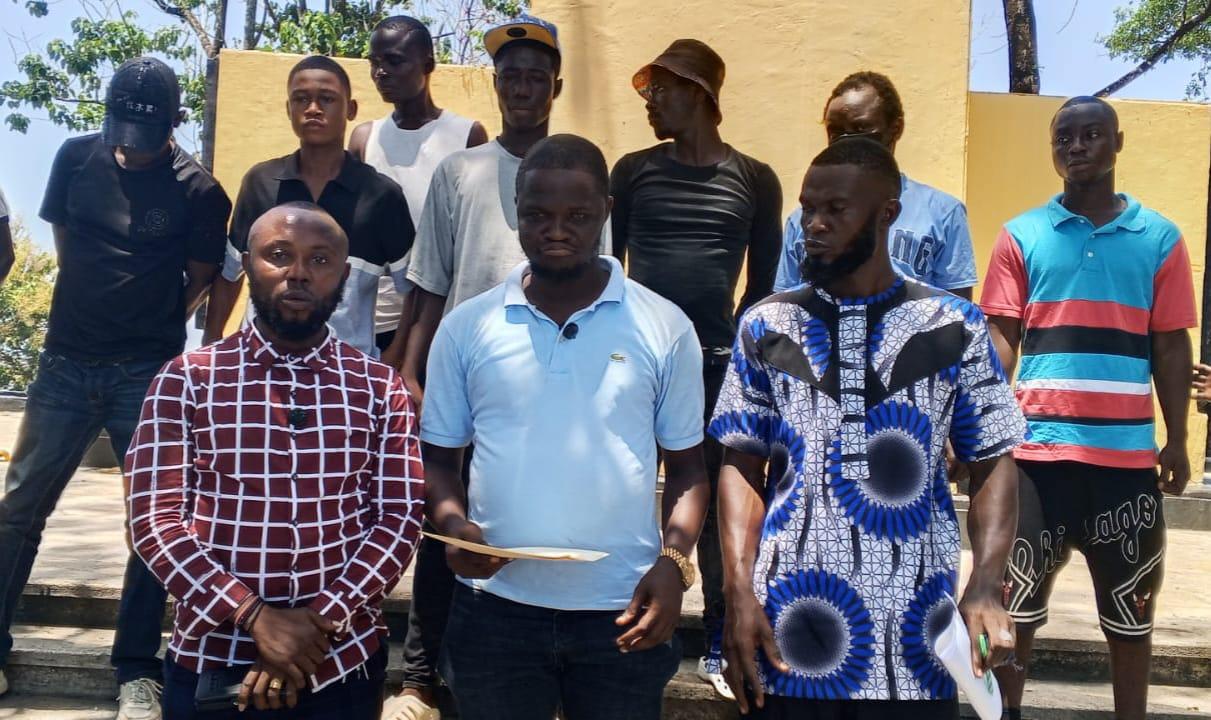
MONROVIA – Liberia’s already polarized political environment has entered another tense phase following the controversial conclusion of the widely discussed US$6.2 million financial misconduct trial involving former senior officials of the George Weah administration. While public reactions remain sharply divided over the acquittal of former Finance Minister Samuel D. Tweah and others, the ruling Unity Party’s Intellectual Frontliner has moved aggressively to frame the court’s decision as evidence that Liberia’s justice system is functioning independently rather than politically. In a strongly worded defense of the prosecution and the judiciary, the auxiliary group argues that the convictions secured against several defendants prove the state successfully established broader criminal accountability beyond the narrow public fixation surrounding Tweah himself and the politically explosive dimensions of the case nationwide today, as THE ANALYST’S H Matthew Turry reports.
UP Intellectual Frontliner Breaks Silence
The Intellectual Frontliner of Liberia’s ruling Unity Party has publicly commended the Ministry of Justice and the Liberian judicial system following the controversial conclusion of the high-profile US$6.2 million financial misconduct case involving former officials of the George Weah administration.
The statement, delivered during a press conference in Monrovia on Monday, May 11, 2026, comes amid growing public debate surrounding the acquittal of former Finance Minister Samuel D. Tweah, who had long been viewed by many Liberians as the central figure in the politically charged case.
Seeking to reshape public interpretation of the verdicts, the Unity Party auxiliary organization insisted that the outcome should be viewed not as a prosecutorial failure, but as proof of the judiciary’s independence and the Ministry of Justice’s determination to pursue accountability wherever evidence existed.
Group Praises Ministry Of Justice
According to the Frontliner, the convictions secured against three of the five defendants represent what it called a “significant milestone” in Liberia’s anti-corruption fight and a major demonstration that high-level financial misconduct cases can still produce concrete judicial outcomes within the country’s legal system.
“This outcome represents a genuine win for the Ministry of Justice, for the rule of law, and ultimately for the Liberian people,” the organization declared in its official statement.
The group argued that Liberia has historically struggled to sustain accountability in major public corruption cases, many of which, according to the organization, often collapsed quietly without meaningful legal consequences.
“For too long, high-level financial scandals have ended in whispers and forgotten files,” the group asserted, adding that the recent verdicts demonstrate that accountability can still be achieved when evidence is sufficiently established.
Samuel Tweah Narrative Firmly Challenged
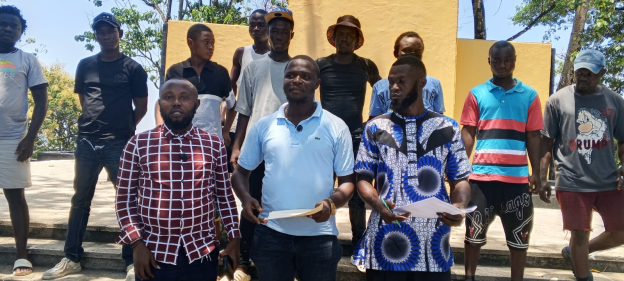
One of the central objectives of the Frontliner’s statement appeared to be confronting what it described as excessive public fixation on former Finance Minister Samuel D. Tweah throughout the lengthy legal proceedings.
Addressing journalists during the press conference, the group’s Supervisor, Alhaji Senwah, argued that from the beginning, the case involved a broader network of actors rather than a single individual.
“From the beginning, we cautioned against reducing this complex saga to a single individual,” Senwah stated during the media engagement.
According to the organization, the convictions secured against several defendants prove that the Ministry of Justice pursued what it characterized as a wider conspiracy involving multiple actors allegedly connected to the unauthorized handling of public resources.
“This was never solely one person; it was about identifying and prosecuting those who conspired to loot state resources,” Senwah emphasized.
Acquittals Presented As Democratic Strength
In one of the more politically significant portions of the statement, the Unity Party auxiliary group argued that the acquittals handed down by the court should not be interpreted as institutional weakness, but rather as evidence that Liberia’s courts remain guided by due process rather than political pressure.
“A fair trial does not require that every indicted person must be found guilty,” the group declared, insisting that justice cannot be measured merely by the number of convictions secured in politically sensitive prosecutions.
The organization further argued that the acquittals demonstrate that Liberia’s courts are still capable of independently evaluating evidence and protecting defendants where prosecutors fail to sufficiently establish criminal responsibility.
“The two defendants who were acquitted remind us that our courts are functioning as they should—weighing evidence carefully, protecting the innocent, and delivering verdicts based on facts rather than pressure or popularity,” the group stated.
According to the Frontliner, this “balanced outcome” ultimately strengthens public confidence in the judiciary instead of undermining it.
Government Accused Of Avoiding Interference
The organization additionally praised the Boakai administration for allowing the judicial proceedings to continue without political interference, describing the development as evidence of the government’s commitment to democratic governance and institutional independence.
The group specifically commended Attorney General and Minister of Justice Oswald N. Tweh for what it described as professionalism, constitutional maturity, and transparency throughout the proceedings.
According to the Frontliner, the Ministry of Justice demonstrated seriousness in pursuing the investigation and prosecution of individuals allegedly connected to the controversial financial transactions.
“The ability of state institutions to investigate, prosecute, and adjudicate matters involving former public officials is a clear sign that no individual is above the law,” the group maintained.
Origins Of The Controversial Investigation
The highly publicized case traces back to 2024 when the Liberia Anti-Corruption Commission launched an investigation into allegations involving the unauthorized transfer of more than US$6.2 million and over LD$1 billion from government accounts at the Central Bank of Liberia to accounts reportedly associated with the Financial Intelligence Agency under claims of national security operations.
Following months of investigation, a Montserrado County Grand Jury indicted five former officials linked to the previous administration.
Those indicted included former Finance Minister Samuel D. Tweah; former Acting Justice Minister and Solicitor General Nyanti Tuan; former Financial Intelligence Agency Director General Stanley S. Ford; former FIA Comptroller D. Moses P. Cooper; and former National Security Advisor Jefferson Karmoh.
The proceedings quickly evolved into one of Liberia’s most politically charged corruption cases in recent years, drawing intense public scrutiny, media attention, and partisan debate across the country.
Court Delivers Mixed Verdicts
After months of legal proceedings and arguments, the matter reached conclusion on Friday, May 8, 2026, when a twelve-member jury delivered its verdicts.
Former Finance Minister Samuel D. Tweah, widely perceived by the public as the principal defendant, was cleared of all charges brought against him.
Similarly, former FIA Comptroller D. Moses P. Cooper was found not guilty after the court reportedly concluded that prosecutors failed to sufficiently establish criminal intent or unlawful diversion of public resources on his part.
However, the jury convicted former Acting Justice Minister and Solicitor General Nyanti Tuan on charges including theft of public funds, criminal facilitation, and theft of property, although he was acquitted on economic sabotage allegations while a hung verdict reportedly emerged on money laundering accusations.
Former National Security Advisor Jefferson Karmoh was reportedly found guilty of criminal facilitation and conspiracy but acquitted on economic sabotage and theft of property charges, with portions of the verdict resulting in hung determinations.
Meanwhile, former FIA Director General Stanley S. Ford reportedly received hung verdicts across all charges brought against him.
Political Debate Likely Far From Over
Despite the Unity Party Intellectual Frontliner’s strong defense of the judicial process, political tensions surrounding the case remain far from settled.
Supporters of the former administration continue questioning aspects of the prosecution, while anti-corruption advocates insist that the convictions handed down demonstrate that state institutions can still pursue accountability against powerful former officials.
At the same time, the acquittal of Samuel D. Tweah—who had become the symbolic face of the scandal in the public imagination—has intensified political debate over whether the prosecution overreached or whether public expectations had exceeded the actual evidentiary foundation presented during trial.
What appears increasingly clear, however, is that the case has already entered Liberia’s broader political history—not only because of the money involved, but because it tested the judiciary’s ability to navigate a politically explosive corruption prosecution under intense public scrutiny.
And as competing political camps continue battling to define the meaning of the verdicts, the controversy surrounding the US$6.2 million saga appears unlikely to disappear from Liberia’s national conversation anytime soon.
Comments are closed.