

Tweah Acquittal Faces Possible Judicial Reexamination-Lawyer predicts unprecedented appellate confrontation over verdicts
MONROVIA – The dramatic acquittal of former Finance Minister Samuel D. Tweah Jr. may have delivered a temporary political and legal reprieve to one of the most prominent officials of the former George Weah administration, but influential legal voices are increasingly warning that the controversy surrounding the US$6.2 million corruption case is nowhere near conclusion. Former Temple of Justice Communications director and lawyer Darryl Ambrose Nmah says Liberia’s Supreme Court could ultimately face one of the most delicate judicial questions in modern Liberian legal history once appeals from convicted co-defendants arrive before the high court. At the center of the emerging debate is a difficult contradiction: how can multiple defendants be convicted for conspiracy and theft while the main prosecutor identified as the operation’s central architect walks away completely exonerated? THE ANALYST reports.
A Verdict That Shocked Both Camps
When jurors at Criminal Court “C” returned their long-awaited verdicts on May 8, the atmosphere inside the Temple of Justice shifted almost instantly from tension to disbelief.
For months, state prosecutors had presented former Finance Minister Samuel D. Tweah Jr. as the principal figure behind what government lawyers described as the unlawful diversion of over US$6.2 million and more than L$1 billion in public security-related funds. Prosecutors alleged the transactions were disguised under the veil of confidential national security operations while, in reality, constituting a coordinated scheme to illegally siphon public resources outside authorized channels.
The state’s case formed a central pillar in the Boakai administration’s broader anti-corruption narrative and was widely viewed as one of the most politically consequential prosecutions involving officials of the previous government.
Yet the jury delivered a fractured outcome that immediately triggered intense national debate.
Tweah was acquitted on every count. Former Financial Intelligence Agency comptroller G. Moses P. Cooper also walked free without conditions. Charges ranging from economic sabotage and theft of property to money laundering, conspiracy, and criminal facilitation all collapsed against the two men.
But the verdict did not entirely dismantle the prosecution’s case.
Former National Security Adviser Jefferson Karmoh was convicted of conspiracy and criminal facilitation, although jurors failed to reach agreement on the theft allegation. Former Solicitor General Nyanti Tuan was convicted on theft, facilitation, and conspiracy charges, while Stanley S. Ford, former head of the Financial Intelligence Agency, was similarly convicted on multiple counts.
Several charges against those defendants ended in hung verdicts, setting the stage for retrials.
That split outcome has now become the centerpiece of an increasingly complex legal discussion.
Nmah Says The Case Is Far From Finished
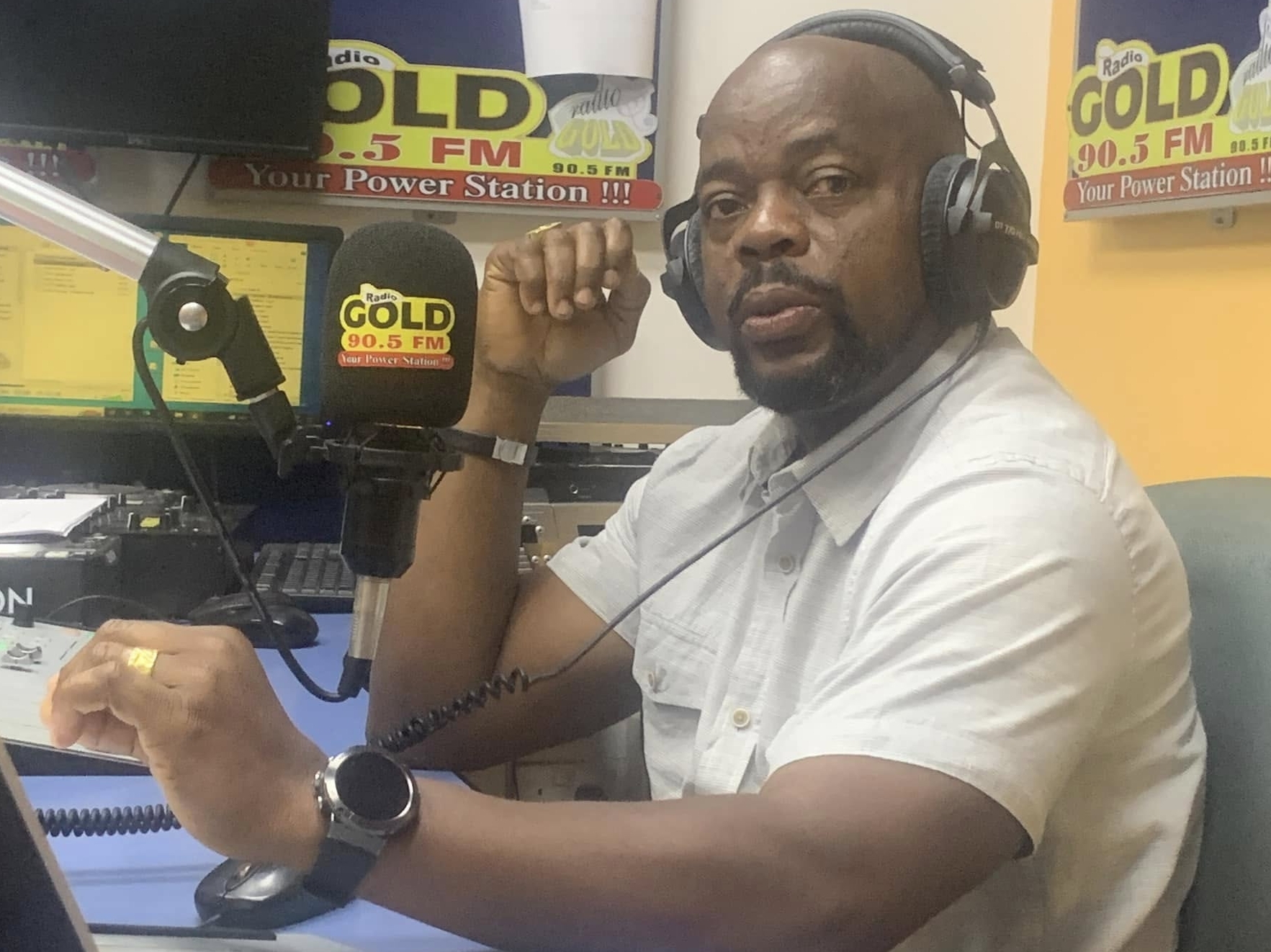
Appearing on the radio talk program “Class Reloaded,” lawyer Darryl Ambrose Nmah cautioned Liberians against assuming the matter has reached its legal endpoint.
According to him, the expected appeals from convicted defendants could pull the entire structure of the verdict before the Supreme Court for detailed examination, potentially forcing the justices to confront constitutional and procedural questions that Liberia’s judiciary has never fully tested before.
“I do not believe this matter is completely over,” Nmah asserted. “The appeal process could raise issues that have never truly appeared before our courts in this precise manner.”
Nmah repeatedly emphasized that he was not forecasting a guaranteed reversal or future conviction against Tweah. Rather, he argued that the internal logic of the verdict itself could become vulnerable under appellate scrutiny.
At the core of his argument is what he considers an unresolved contradiction.
If jurors accepted that a criminal conspiracy existed and convicted multiple participants connected to the transaction, he asked, how did they simultaneously absolve the official prosecutors accused of orchestrating the process itself?
For Nmah, the issue is not merely political. He sees it as a fundamental legal inconsistency that appellate judges may eventually be forced to reconcile.
“The Supreme Court may have to ask whether these verdicts can comfortably coexist,” he suggested during the broadcast discussion.
The Prosecution’s Narrative
Government lawyers spent months constructing a case centered on allegations that protected security funds were unlawfully withdrawn from the Central Bank of Liberia and rerouted into accounts associated with the Financial Intelligence Agency.
According to prosecutors, the movement of funds bypassed proper financial controls, lacked lawful authorization, and eventually resulted in public money disappearing without legitimate accounting.
The prosecution portrayed the transactions as part of a broader conspiracy involving senior officials operating under the cover of national security confidentiality.
Charges included economic sabotage, theft of property, money laundering, criminal facilitation, misuse of public resources, and conspiracy.
The financial magnitude of the allegations instantly transformed the proceedings into a national political spectacle. The case became one of the strongest tests yet of President Joseph Boakai’s promise to aggressively pursue accountability for alleged abuses committed under the previous administration.
Inside the courtroom, however, the prosecution encountered significant resistance.
Defense lawyers argued that the disputed expenditures were tied to legitimate election-related national security operations and were therefore protected under Liberia’s confidential security financing arrangements.
They further argued that prosecutors failed to produce direct evidence showing that Tweah or Cooper personally converted public money for private enrichment.
The defense also benefited from testimony that complicated the prosecution’s central theory.
Former National Security Adviser Jefferson Karmoh acknowledged during proceedings that the National Security Council had approved aspects of the security-related expenditures prosecutors described as unlawful.
That testimony appeared to weaken attempts to portray the transactions as entirely unauthorized.
The Testimony That May Haunt The Appeal
For Nmah, one aspect of the trial may become especially significant if the case reaches the Supreme Court: Samuel Tweah’s own testimony from the witness stand.
Unlike defendants who seek to distance themselves from disputed financial transactions, Tweah openly acknowledged authorizing the movement of funds. His defense rested not on denial, but on justification.
The former finance minister maintained that the transactions were legitimate national security expenditures conducted within the lawful authority of his office.
Nmah believes that defense strategy may now complicate the legal durability of the acquittal.
“The testimony remains permanently in the court record,” he explained. “The issue becomes how jurors treated that admission while still convicting others tied to the same operation.”
According to Nmah, appellate justices reviewing the record could eventually examine whether the jury adequately reconciled Tweah’s own acknowledgment of involvement with its decision to completely acquit him.
That possibility, he says, introduces a layer of legal uncertainty that has no straightforward precedent in Liberia.
Double Jeopardy And The Limits Of Appeal
Liberian constitutional protections create another major complication.
Under the principle of double jeopardy, the government cannot directly appeal an acquittal once a defendant has been cleared by a jury. That means prosecutors cannot simply retry Tweah or Cooper on the same charges, regardless of how strongly they disagree with the verdict.
Still, because all five defendants were prosecuted together in a joint trial, the anticipated appeal from convicted defendants could reopen broader questions surrounding the structure and consistency of the judgment itself.
Nmah believes prosecutors may attempt to use that process to challenge what they see as contradictions within the verdict.
“The government may never get another opportunity beyond this appellate process,” he warned.
Legal observers say such a development would push Liberia’s Supreme Court into largely uncharted territory.
Could The Supreme Court Modify The Verdict?
Perhaps the most controversial aspect of Nmah’s analysis involves the possibility that the Supreme Court could reinterpret or modify aspects of liability flowing from the joint prosecution.
Nmah referenced prior rulings involving collective responsibility, including the Brownie Samukai restitution case, where the Supreme Court held that co-defendants jointly liable for financial obligations could not individually separate themselves from collective accountability.
He also pointed to the Girl Scouts corruption case as another example where defendants tried together faced shared judicial consequences.
Still, even Nmah acknowledged that neither precedent directly answers the unprecedented question now emerging from the Tweah matter.
Can the Supreme Court extend criminal liability to a defendant a jury explicitly acquitted during a joint trial?
“That precise situation has never really appeared before our courts before,” he admitted.
The uncertainty surrounding that possibility has already intensified debate among lawyers, political observers, and judicial analysts across the country.
Nmah Defends The Prosecution
Despite criticism directed toward government lawyers following Tweah’s acquittal, Nmah strongly defended the prosecution’s overall performance.
In his assessment, the state successfully proved that public funds were improperly withdrawn and inadequately accounted for. He argued that the convictions secured against several defendants demonstrate that prosecutors effectively established core elements of the alleged misconduct.
“The prosecution secured convictions in a highly sensitive corruption case,” he argued. “People are focusing exclusively on one acquittal instead of looking at the broader outcome.”
Nmah further insisted that public frustration should not obscure what he considers one of the strongest corruption prosecutions mounted in Liberia in recent years.
According to him, the evidence presented by government lawyers was substantial enough that he does not foresee the Supreme Court easily overturning the convictions already secured.
A Case That May Reshape Liberian Jurisprudence
Long after the political noise surrounding the verdict fades, legal analysts believe the Tweah corruption case may leave a deeper institutional legacy inside Liberia’s judicial system.
At stake is not merely the fate of individual defendants, but potentially broader questions surrounding conspiracy law, collective criminal liability, appellate authority, and the boundaries of constitutional protection after acquittal.
Whether the Supreme Court ultimately affirms the verdicts, overturns them, or ventures into unprecedented legal interpretation, the case is already positioning itself as one of the most consequential judicial controversies in recent Liberian history.
For now, Samuel D. Tweah Jr. remains a free man.
But as appeals loom and legal arguments intensify, the battle over the meaning of that acquittal appears far from settled.
In a related development, two co-defendants convicted in the recently concluded US$6.2 million United States Dollar Economic Sabotage case have filed a motion requesting a new trial.
The motion was submitted on Monday before Criminal Court “C” presiding Judge Ousman Feika.
Cllr. Nyenati Tuan and Jefferson Karmoh are asking the court to set aside their convictions for criminal facilitation and conspiracy in the high-profile case.
The matter, prosecuted by the Liberia Anti-Corruption Commission, centers on allegations involving the alleged misuse of public funds tied to national security operations during the 2023 elections.
While Tuan and Karmoh were found guilty, two co-defendants, including former Finance Minister Samuel Tweah and FIA Comptroller Moses Cooper, were acquitted.
Their legal team argues that the mixed verdict raises serious questions about the existence of any coordinated conspiracy, saying the acquittals weaken the prosecution’s overall case.
They also insist that there is no evidence showing that either Tuan or Karmoh personally received or benefited from the funds in question.
A major point in their motion is the claim that the trial judge improperly guided the jury on the standard of proof, allegedly lowering it from “beyond a reasonable doubt” to a lesser threshold.
The defense further maintains that the actions at the center of the case were part of official government communications related to national security procedures, and not criminal activity.
The court has yet to make a ruling on the request for a new trial.
Comments are closed.