
Trump Warmth Catches Weah off Guard -USMNT star calls oval office moment awkward
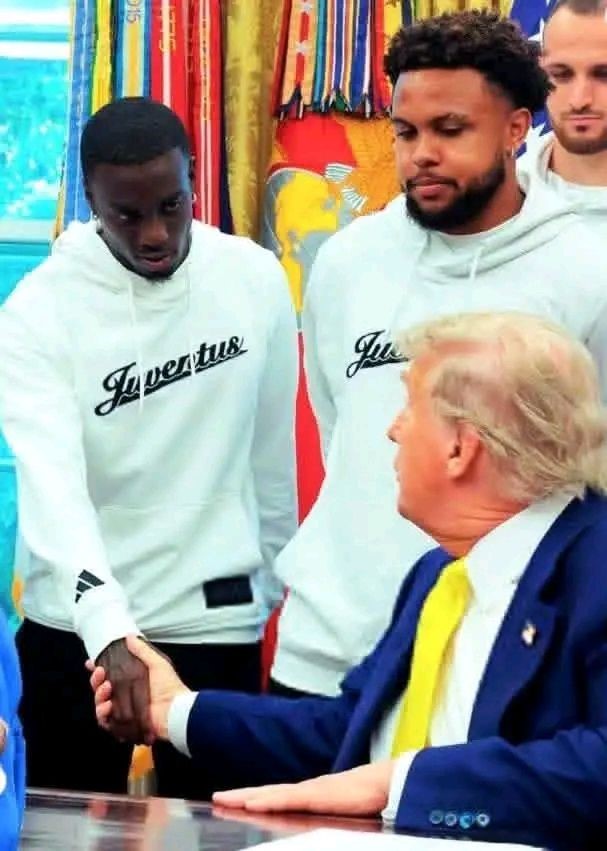
MONROVIA – When Timothy Weah walked into the Oval Office alongside his Juventus teammates ahead of their 2025 FIFA Club World Cup opener in Washington, D.C., he had not planned on the visit — and it showed. The Brooklyn-born forward, son of Liberian football legend and former president George Weah, found himself standing silently behind President Donald Trump as the Commander-in-Chief fielded questions on Iran, transgender athletes, and the border. The encounter, which lasted approximately sixteen minutes, drew global attention not only for its diplomatic optics but for what Weah said afterward — measured words from a man caught between heritage, sport, and the weight of an unwanted moment. THE ANALYST reports.
Timothy Weah did not want to be there. The statement was not made in anger or open rebellion — it was delivered with the quiet discomfort of a young professional unexpectedly thrust into the centre of a political spectacle that had nothing to do with football and everything to do with optics, ambition, and the machinery of American soft power.
Weah, a winger for Italian giants Juventus and a key member of the United States Men’s National Team, arrived at 1600 Pennsylvania Avenue on Wednesday alongside a selection of Juventus players — including fellow American Weston McKennie — as part of what was presented as a promotional appearance for the FIFA Club World Cup, then underway in the United States. FIFA President Gianni Infantino was also present, having coordinated the visit to the White House prior to Juventus’ opening group-stage match against UAE side Al Ain at Audi Field.
What the players were not adequately prepared for was the nature of what awaited them. Dressed in white hoodies and standing rigidly behind the desk of the most powerful man in the world, the Juventus delegation became an unwilling backdrop to a fifteen-minute press encounter in which President Trump addressed escalating tensions with Iran, the situation at the southern border, former President Joe Biden, and his executive order barring transgender women from women’s sport.
Weah, by multiple accounts, looked the most visibly uncomfortable among the players present. When asked about it after Juventus’ emphatic 5-0 victory over Al Ain, he chose candour over diplomacy. ‘It was all a surprise to me, honestly — they told us that we have to go and I had no choice but to go so I showed up,’ Weah told reporters. ‘I guess it was a cool experience being in the White House for the first time. It’s always wonderful but I’m not one for politics so it wasn’t that exciting.’
He went further. ‘I was caught by surprise, honestly. It was a bit weird. When he started talking about the politics with Iran and everything, it’s kind of like — I just want to play football, man.’
The significance of Timothy Weah’s presence in that room extends well beyond the personal discomfort of one footballer. His father, George Weah, is not merely a Liberian football legend. He is the only African player in history to win the FIFA World Player of the Year award, claiming the coveted honour in 1995 when the award was still regarded as the definitive measure of global football excellence. George Weah later translated that global stature into political capital, winning the Liberian presidential election in 2017 and serving as Head of State until 2024.
For Timothy, the legacy is immense, the scrutiny constant, and the expectation unrelenting.
President Trump, who has made significant political capital from America’s hosting of the 2026 FIFA World Cup, has consistently sought proximity to the tournament for publicity purposes. His suggestion during the White House press conference that a Juventus match was sold out — made before official attendance figures confirmed an 18,161 turnout at a 20,000-capacity venue — drew quiet attention from observers already monitoring the administration’s World Cup promotional campaign.
Juventus head coach Igor Tudor described the White House encounter as ‘a pleasure.’ FIFA officials, however, moved quickly to cut off further questions about the visit during the post-match press conference — a gesture that underscored the sensitivity of the optics surrounding footballer participation in political settings.
McKennie, Weah’s USMNT teammate and Juventus colleague, had a notably complicated history with Trump-era politics, having publicly criticized the President in a 2020 German media interview. His presence alongside Weah — both American, both Black, both in white hoodies behind a president whose political record on race has been deeply contested — did not go unnoticed by commentators following the story.
For Timothy Weah, the lasting image of the White House visit may prove to be less about the meeting itself than about what he chose to say when it was over. In a landscape where athletes are increasingly pressured into political performance and corporate loyalty, his plain-spoken admission that he had no choice and simply wanted to play football carries a dignity that the choreography of the event conspicuously lacked.
Comments are closed.