

Liberty Party Marks 21 Years of Struggle -Vows to reclaim future at gala dinner
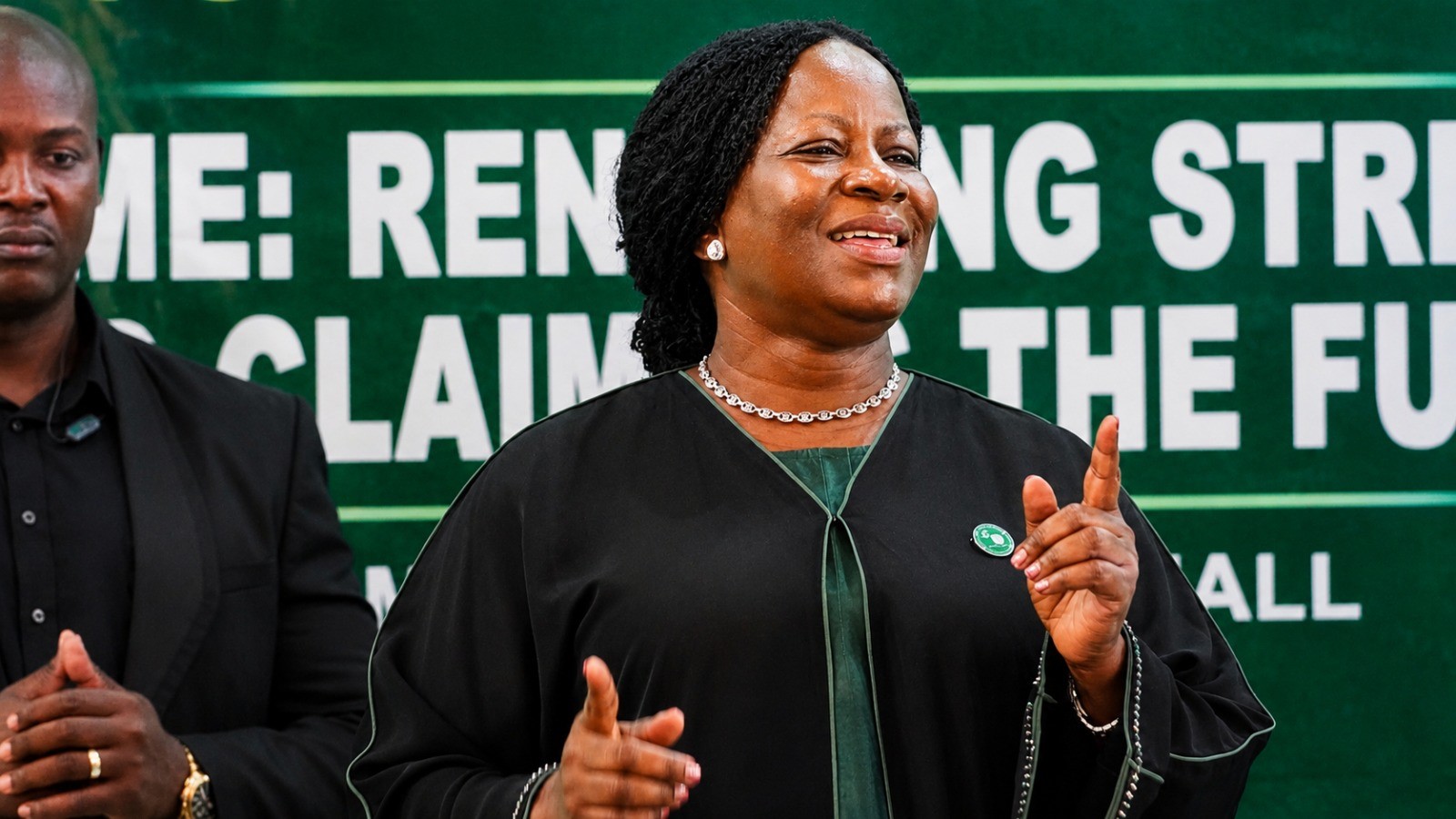
MONROVIA – Twenty-one years in Liberian opposition politics is a survival story in itself. Founded in the turbulent aftermath of the country’s post-conflict democratic renewal, the Liberty Party has navigated internal fractures, electoral defeats, defections, expulsions, and the bruising factionalism of the 2023 general elections — emerging, its leaders insist, stronger and more purposeful than at any prior point in its institutional life. The Friday, May 29, 2026 fundraising dinner at Monrovia City Hall was billed as a celebration and a recommitment. What it became was something more consequential: a declaration of intent by a party that believes its time is coming, and that the battles ahead will be won on principle rather than personality. THE ANALYST reports.
The Setting — A Gala That Carried Political Weight
The Monrovia City Hall was animated with the energy of a party rediscovering its sense of collective purpose. Singing, dancing, reflective speeches, and the presentation of awards and certificates of honour to outstanding partisans gave the evening the character of a democratic communion rather than a routine anniversary event. Party leaders mingled with members of the Legislature, government officials, representatives of allied political organisations, and dignitaries from across the country. The mood was celebratory but pointed — each tribute to the past carefully framed as fuel for the battles ahead.
The occasion formally marked the Liberty Party’s 21st year since its founding on May 19, 2005. In the mathematics of Liberian political history, two decades and a year represent something significant: a party that was born in the hope of the post-war democratic restoration and has outlasted many of the movements, coalitions, and individual political figures that populated that era. Survival, in the LP’s case, has been anything but passive. It has been earned through exactly the kind of turbulence that destroys lesser institutions.
Karnga-Lawrence — A Political Leader in Full Command
No presence at the anniversary dinner commanded more attention than that of the LP’s Political Leader, Senator Nyonblee Karnga-Lawrence. Her remarks were not a standard recitation of party history. They were a sustained argument for institutional identity over personal ambition — a distinction that carries particular resonance given the fractures of the 2023 election cycle, when competing factions within the party pulled in opposite directions and nearly tore the institution apart.
“We are here to honour the past, cherish the present, and call to action for the future,” Karnga-Lawrence told the gathering. She enumerated the qualities she believes have defined the party’s quarter-century of existence: unity, love, loyalty, resilience, tolerance, and the capacity for forgiveness and reconciliation. These are not merely rhetorical virtues in the Liberty Party’s context — they are hard-won practices forged in the heat of genuine internal crisis.
“We did not build this party on personality; we built it on principles. Not on division, but on unity — not on a path that divides Liberians, but on a path that unites us,” she declared. The statement was aimed, unmistakably, at the factional battles of the recent past. By insisting that the party’s foundation is principled rather than personal, she is asserting that no individual — including herself — is larger than the institution.
Her challenge to members was forward-looking and explicit: “The future does not belong to those who wait, but to those who organise, who show up, and who act.” Addressed to every level of the party’s structure — from the Executive Committee to the Diaspora leadership — the call was one for active, disciplined, ground-level mobilisation. The liberty Party, she signalled, is not waiting for 2029. It is preparing for it.
Stevquoah — The Governments Carefully Calibrated Outreach
The presence of Minister of State for Presidential Affairs Samuel A. Stevquoah — President Boakai’s chief of staff — was itself a political statement. Representing the head of state at an opposition party’s anniversary dinner is a deliberate act of institutional courtesy, and Stevquoah’s remarks were calibrated accordingly: warm, respectful, and attentive to the terms of the political arrangement that brought the Unity Party to power with Liberty Party support.
Stevquoah acknowledged directly that the Unity Party government “recognises the indispensable role of the Liberty Party in bringing Joseph Boakai to power,” and described the collaboration between the two parties as having been “built on a shared vision of good governance, national unity, economic recovery, and improved opportunities for all Liberians.” His appearance served as a public reaffirmation of that partnership — a signal that the governing coalition remains intact despite whatever strains the political environment may be generating.
The Minister’s parabolic closing — “When the spider webs unite, they can tie up a lion” — captured, in the idiom of indigenous Liberian wisdom, the arithmetic of coalition governance: that separately, these political forces are limited; together, they are formidable. It was a message simultaneously directed inward at Liberty Party partisans and outward at political observers monitoring the stability of the governing alliance.
Dillon — Football, History, and Political Prophecy
Among the most quoted interventions of the evening was that of Montserrado County Senator Abraham Darius Dillon, whose trademark blend of historical reflection and spirited political prognosis electrified the gathering. Dillon traced the Liberty Party’s foundational vision — a commitment to rule of law, national reconstruction, and genuine reconciliation — through the difficult years of its institutional growth.
“Our history is one of joy, some sadness, some rough roads, and some tough times,” he acknowledged, “but we are here together because of the grace of God and the resilience of our membership.” He singled out the Liberty Party’s capacity for institutional recovery: “Many political organisations that went through what LP went through never came back. We did.”
But it was Dillon’s football analogy that captured the evening’s imagination. Drawing a deliberate parallel to Arsenal Football Club’s 22-year wait to reclaim the English Premier League title, he offered a political prediction with barely concealed relish: “I strongly believe the Liberty Party will emerge victorious in the 2029 elections after 21 years of existence.” The crowd responded with the enthusiasm of partisans who have been waiting for exactly that kind of declaration — specific, confident, and emotionally resonant.
Smith and the Steering Committee — Gratitude and Strategic Groundwork
Liberty Party 21st Anniversary Committee Chairman Jackie C. Smith provided the evening’s formal institutional context. His opening remarks framed the celebration not merely as a party event but as a demonstration of democratic resilience — a proof of concept that political institutions can survive profound internal adversity and emerge with their core values intact.
“Over the years, the Party has remained the strongest voice for good governance, justice, accountability, and national development,” Smith declared. He specifically credited the leadership of Senator Karnga-Lawrence for providing the strategic direction and moral compass that has guided the party’s recovery from its most difficult recent period. The Chairman’s acknowledgement of that individual leadership — within a party that has explicitly committed itself to institutional rather than personal foundations — was a careful balance: crediting the leader without elevating her above the institution.
21 Years — Legacy, Fracture, and Reconsolidation
Any honest accounting of the Liberty Party’s 21-year history must reckon with the 2023 election cycle, when the institution’s internal contradictions reached a crisis point. Competing factions took fundamentally incompatible political positions: Bility’s grouping aligned with Alexander Cummings’ Alternative National Congress under the CPP banner, while Karnga-Lawrence’s faction aligned with the Unity Party Alliance. The party leadership expelled major political figures — including Senators Karnga-Lawrence and Dillon — over dues-related technicalities that were widely understood as proxies for deeper strategic disagreements.
That crisis has largely resolved. Karnga-Lawrence now serves as President Pro Tempore of the Senate. Dillon sits as Montserrado Senator. The LP’s partnership with the Unity Party government has translated into political relevance, if not executive authority. And the May 29 anniversary dinner demonstrated, convincingly, that the party has achieved at minimum a working consolidation — a functional institutional identity capable of projecting collective purpose toward a defined electoral horizon.
Whether that consolidation can hold through the pressures of an approaching election cycle, whether the principled foundations that Karnga-Lawrence champions can survive the temptations of factional advantage, and whether the Liberty Party’s democratic legacy is strong enough to carry it back to executive power after a quarter-century — these are the questions that will define the party’s next chapter. On the evidence of May 29, 2026, the Liberty Party believes the answers are favourable. It remains for the Liberian electorate, in 2029, to deliver the final verdict.
Comments are closed.