

Boakai Clamps Down On Officials’ Foreign Trips -Cabinet ministers face strict new travel restrictions
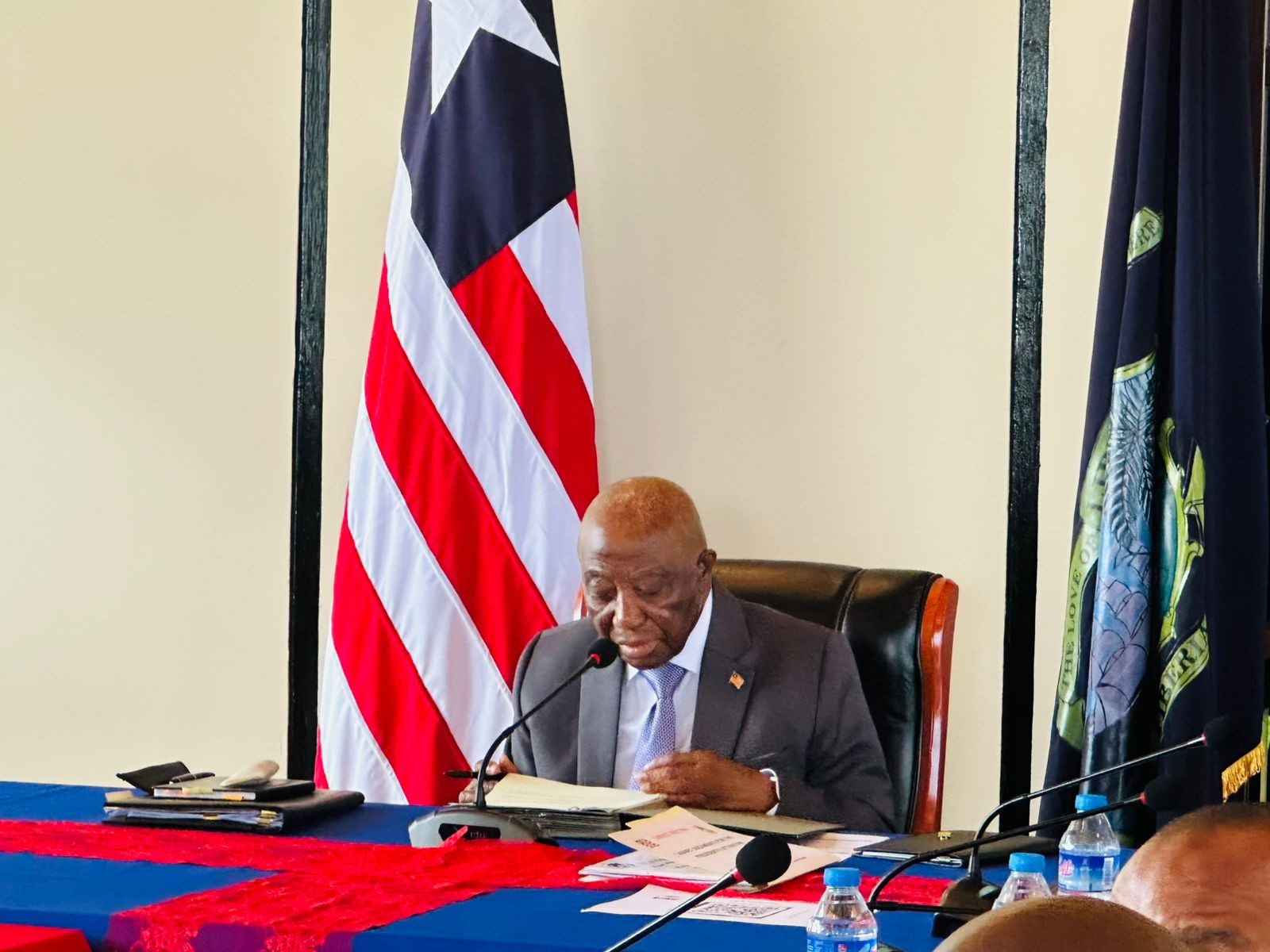
MONROVIA – In a sweeping directive issued Thursday at the Executive Mansion in Monrovia, President Joseph Nyuma Boakai has moved decisively to rein in what his administration openly acknowledges has become a costly and disruptive pattern of foreign travel among Cabinet Ministers, agency heads, and senior government officials. The directive, issued with immediate effect, introduces a strict one-trip-per-quarter cap on international travel, mandates prior presidential approval for all official trips, and establishes a ‘Virtual Participation First’ policy requiring government institutions to consider alternatives to physical attendance at international engagements. As THE ANALYST reports, the President described repeated travel as a drain on public funds and a threat to Cabinet functionality and institutional leadership.
President Joseph Nyuma Boakai has issued one of the most stringent travel restriction directives in recent Liberian governance history, ordering all Cabinet Ministers, heads of agencies and commissions, ambassadors, and senior government officials to significantly curtail foreign travel, citing growing concerns over its cost to the public purse, its disruption to Cabinet deliberations, and its erosion of effective institutional leadership during a period of critical national priority.
The directive, issued at the government’s regular Cabinet meeting on Thursday, May 28, 2026, at the Executive Mansion in Monrovia, takes immediate effect and introduces a comprehensive framework of conditions, approval requirements, and accountability measures designed to ensure that international travel by senior officials serves demonstrable national interests rather than personal convenience, conference appearances, or routine diplomatic socializing.
At the core of the directive is an explicit cap: except under extraordinary circumstances and with the express personal approval of the President himself, no Cabinet Minister or senior government official may undertake more than one official foreign trip per quarter. The measure represents a significant departure from the practice of recent years, during which multiple officials have maintained active international travel schedules that President Boakai now characterizes as incompatible with the demands of disciplined governance.
The President, in his directive, noted with unmistakable candour that the growing frequency of official foreign travel has increasingly hindered full participation in Cabinet deliberations and key government processes, depriving the administration of valuable policy input and institutional leadership at moments when both are most needed. The economic dimension was equally direct: repeated international trips, the directive states, impose substantial costs on the public purse, diverting resources from priority national development interventions.
Central to the new framework is the requirement that all travel requests must now be submitted through the Cabinet Office’s prescribed forms and must clearly articulate the purpose of travel, its strategic relevance to Liberia, travel dates and estimated total cost, the funding source, justification for in-person attendance, and a specific explanation as to why virtual participation would be inadequate. Where a delegation is proposed, the names of accompanying members must also be submitted for approval.
The directive further establishes what it terms a ‘Virtual Participation First Policy,’ directing all Ministries, Agencies, and Commissions to prioritise engagement through platforms such as Zoom and Microsoft Teams wherever practical.
Physical attendance at international conferences, forums, consultations, and ceremonies is now to be considered only where in-person presence is demonstrably necessary in the national interest or required by protocol — the mere existence of an invitation or the convenience of travel will no longer constitute sufficient justification.
Critically, the directive introduces a protection clause for government functionality: no travel will be approved where the absence of the requesting official would materially affect Cabinet participation, institutional leadership, urgent decision-making, or critical government operations. Cabinet Ministers are explicitly expected to attend Cabinet meetings unless personally excused by the President, reinforcing a standard of presence and accountability that the directive implies has not been consistently observed.
Post-travel accountability is addressed with equal seriousness. Within seven working days of returning from any approved trip, each traveling official is required to submit a concise mission report outlining objectives pursued, meetings held, outcomes achieved, commitments made, and recommended follow-up actions. The measure is designed to ensure that official travel produces documented institutional value rather than vanishing into the informal memory of the traveling official alone.
Implementation and compliance monitoring will be jointly supervised by the Ministry of State for Presidential Affairs and the Cabinet Office, while the President reserves the right to grant exceptions in cases involving compelling national interest. The directive closes with a clear admonition: all officials are expected to comply fully in the broader interest of responsible governance, operational efficiency, and prudent stewardship of public resources.
The directive arrives at a moment when the Boakai administration is under increasing scrutiny over its management of public finances and the pace of delivering on the ARREST Agenda for Inclusive Development.
Whether the restrictions will be enforced with the rigour they demand, or gradually absorbed into the landscape of policy announcements that find limited practical traction, will likely depend on the consistency and visibility with which the Cabinet Office and the Ministry of State apply the new framework in the weeks ahead.
Comments are closed.