

The Professor’s Voice: Higher-Order Thinking for National Progress
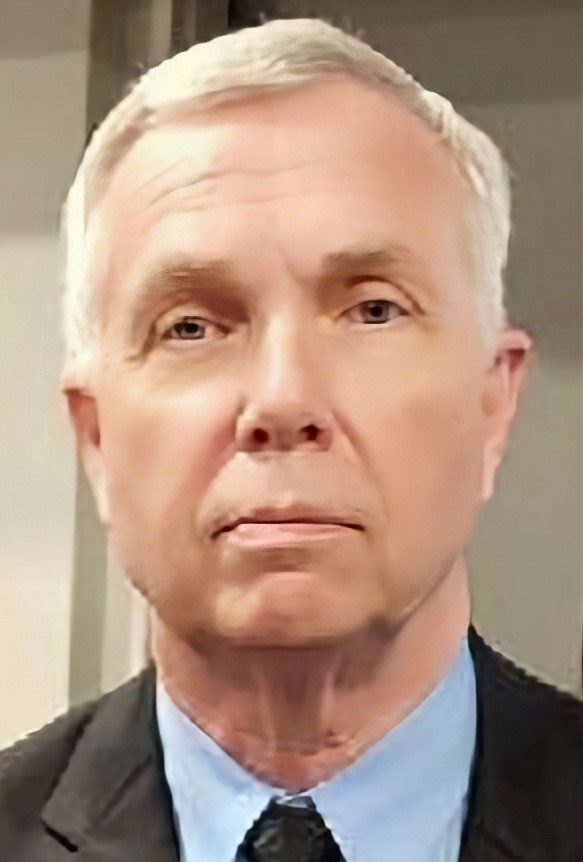
By Dr. Randy Nelson
Professor Emeritus of Education
Editorial Contributor
Complex problems within a nation’s social sector can sometimes seem insurmountable. Issues such as poverty, illiteracy, healthcare staffing shortages, street violence, drug abuse, and poor roads can challenge even the best of minds. Because a society’s various sectors impact one another in a web of interdependence, the thinking power necessary to create viable solutions requires strategists who are accustomed to high-level analysis and evaluation.
Capability in higher-order thinking skills is a prerequisite for the efficient advancement of any society. As solutions are considered, advantages and disadvantages must be weighed against each other. As solutions are unveiled and put into practice, strategists must be prepared to manage any unintended fallout.
Liberia indeed has many capable thinkers equipped for such work. We must, however, prepare the next generation of thinkers to assume such formidable responsibility. That preparation begins in Liberia’s schools.
Although young children routinely engage in simple forms of analysis, high-school and university-level students have the cognitive maturity necessary for deep analysis and evaluation. They develop these skills when teachers move beyond a list of facts or a packet of notes. When students are asked to determine causes and effects, examine individual parts, and identify relationships and assumptions, they are learning to analyze. When they make complicated decisions and justify their viability, they are learning to evaluate.
Liberian educators must take clear steps to ensure that students develop such skills. The efforts must be intentional and ongoing. The result will be students who have learned to separate evidence from assumptions, make strong decisions, and tackle real-world problems.
The development of analytical and evaluative thinking skills should be woven into every upper-level course. High schools must be mindful of where and how these skills are taught. College and university syllabi must contain course objectives that reflect the students’ involvement in higher-order thinking.
Students engaged in higher-order thinking often experience dramatic learning increases. When basic knowledge is used to gain conceptual understanding, content details take on greater meaning. In a biology class, for example, upper-level students may be required to generate detailed predictions about the effects of different fertilizer types, thereafter justifying them with scientific evidence. A history class might analyze which one of Liberia’s first 10 presidents would be most capable of reducing unemployment in present-day Liberia. Their decisions and subsequent justifications will require knowledge of each president’s priorities and accomplishments. Through such activities, academic content becomes more relevant, and students retain more knowledge.
When I was teaching senior-high literature, I would occasionally involve students in classroom debates. One popular debate occurred when we studied William Golding’s Lord of the Flies. Golding’s premise is that we are all born corrupt; therefore, we need rules, regulations, and oversight to keep us in line. Our civility, he argues, is a thin veneer covering our primal urges for violence and cruelty. In contrast, the French philosopher Jean-Jacques Rousseau maintained that we are born noble—good, innocent, and uncorrupted—but our goodness is later desecrated by the evils around us.
The debate involved deciding which thinker had the stronger argument and then defending one’s position with observations of human behavior. Students were instructed to “think like young attorneys” as they built their individual cases for the next day’s activity. Their assertions and fiery rebuttals were rich as they drew from everything possible to prove themselves right and their classmates wrong.
As time passed, the students became adept at juxtaposing philosophical ideas against their personal beliefs. They learned to probe the roots of their belief systems and assess the merits of their own thinking. They were taught to think abstractly and analytically and to justify their ideas. They began to grasp the value of deep thinking that required far more of them than recall and recitation. They became thinkers who understood the deeper purposes of literature.
Such skill development must not be minimized in Liberia’s schools. It must be strengthened and refined. The cognitive ability to navigate challenging issues is vital for Liberia’s future. Imagine a think tank in every county. Imagine such thinkers in every community across Liberia.
Today’s young people must become tomorrow’s sophisticated thinkers and visionaries—the architects of a dynamic and progressive Liberia. Let us settle for nothing less.
Comments are closed.