

Paye Blasts Koung, Fallah Over ‘NIMBO Plot’ -Former UP Boss Fires Back At Koung
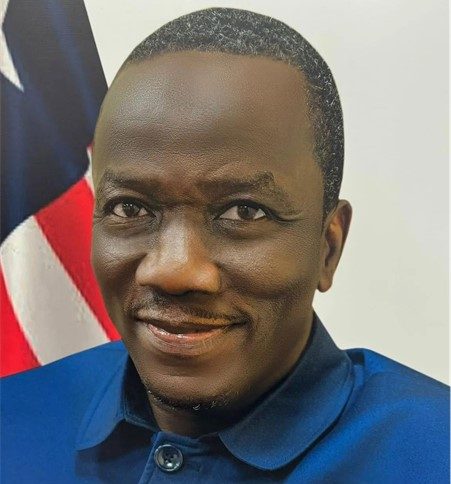
MONROVIA – In what political observers are calling one of the most explosive intra-party attacks since the Unity Party’s return to power in 2024, former party Secretary General and ex-Minister of Mines and Energy Wilmot Paye has publicly accused Vice President Jeremiah Kpan Koung and Deputy Speaker Thomas Pangar Fallah of secretly building a parallel political structure — the National Independent Movement for Boakai (NIMBO) — aimed at hijacking the ruling party’s future and advancing their own 2029 presidential ambitions at the expense of loyal party faithful. Speaking on Family Spoontalk on Tuesday, June 23, 2026, Paye delivered a barrage of allegations that sent shockwaves through Monrovia’s political establishment, claiming that what presents itself as support for President Joseph Nyuma Boakai is in reality a calculated scheme to suppress organic Unity Party members and install Koung as a successor-in-waiting. As THE ANALYST reports, both Koung and Fallah are yet to make a public comment, perhaps delaying an official response in due course for strategic reason.
The NIMBO Controversy
NIMBO or the National Independent Movement for Boakai — was publicly unveiled by Deputy Speaker Fallah in early January 2026, when he announced on state radio that the movement would mobilize nationwide support for President Boakai’s development agenda and reelection campaign. Fallah positioned it as an open umbrella for citizens who support the government but are not Unity Party members.
“I will prove to Boakai that I am into it with everything,” Fallah declared at the time, adding that NIMBO would establish chapters across all fifteen counties and that anyone who supports development is welcome to join, regardless of party affiliation.
He further declared in April 2026 on OK FM that NIMBO would become “the largest political movement in Liberia,” set for an official launch on May 24, 2026 in Monrovia.
But Paye sees NIMBO in a fundamentally different light — not as a movement for Boakai, but as a vehicle for Koung’s 2029 presidential bid, with Fallah positioned as his running mate.
Paye’s Accusations: A House Divided
Using a pointed domestic metaphor, Paye framed the NIMBO enterprise as the behavior of an ungrateful tenant. “When somebody comes to you to live in your house and you accommodate the person in your house, and the person says: I will be independent — I will do everything independent of you,” he said, drawing a direct parallel to Koung and Fallah’s behavior within the Unity Party fold.
“Thomas Fallah and Jeremiah Koung founded NIMBO. It is a political party they are forming, and Unity Party members would be naive to think these people are interested in working with them,” Paye asserted on the Spoontalk program.
He went further, alleging a deliberate strategic campaign to suppress potential Unity Party figures. “They want to replace the Unity Party. Do they think we don’t know that? They are targeting all the potential people in the Unity Party and fighting them, thinking it will give them an advantage. That strategy will not work. They will not replace the Unity Party,” he warned.
Koung’s 2029 Ambitions and the Dorr Cooper Angle
Beyond the NIMBO formation, Paye leveled a pointed personal allegation against the Vice President — that Koung blocked his appointment at the Ministry of Mines and Energy because of perceived political rivalry over Nimba County’s support base ahead of 2029.
“The Vice President didn’t want me at the Ministry of Mines and Energy; he said I don’t support his 2029 ambition to become President,” Paye declared on Spoontalk.
Paye also alleged that Koung had sought to enlist him — through Paye’s wife, a lecturer at the University of Liberia — in efforts to shield former Commerce Inspector General Dorr Cooper amid questions surrounding Cooper’s academic credentials. Paye says he flatly refused. “I advised that Cooper should resign,” he declared, adding that his refusal placed him at odds with powerful political figures and contributed to his eventual dismissal from the Cabinet in October 2025.
The allegations have revived public attention on the Dorr Cooper academic fraud case, one of the most politically sensitive controversies of the Boakai administration. As of press time, neither the Vice President, the Office of the Vice President, nor the Executive Mansion had issued any public response to Paye’s claims.
Fallah: From CDC Stalwart to Unity Party Ally
Thomas Pangar Fallah’s political journey makes his alliance with Koung and the Unity Party all the more contentious. For nearly two decades, Fallah was a senior figure in the Coalition for Democratic Change (CDC), the party of former President George Weah. He was expelled from the CDC following his role in the controversial ouster of Speaker Fonati Koffa — a move that drew fierce criticism even from within his own former base.
Despite having been labeled “Thief Five” and “Walking ATM” by Unity Party supporters during his years as a CDC lawmaker — and having represented Montserrado District #5 for 18 years while, critics allege, the district received no public school, clinic, or community hall — Fallah was warmly received at a Unity Party fundraiser in late 2025, where he was described by party leaders as “a man of honesty, integrity and value.”
The reconciliation sparked public outrage, with critics describing the Unity Party’s embrace of Fallah as “a betrayal of trust” and “a trade of integrity for money.” His subsequent formation of NIMBO — and his stated intent to drive it as “vision bearer” — has only deepened suspicions that his allegiance is not to the UP structure but to a Koung-Fallah 2029 ticket.
The Koung-Fallah 2029 Ticket Speculation
Political observers and media outlets have for months speculated about a potential Koung-Fallah presidential ticket for 2029, should President Boakai choose not to seek re-election due to age. FrontPageAfrica reported as far back as December 2024 that Koung was quietly laying groundwork for a presidential run, with Fallah as a potential running mate.
The two lawmakers go back a long way. During the 54th Legislature, Koung served as Co-Chairman of the Ways, Means and Finance Committee, while Fallah chaired it — a working relationship that has evidently matured into a political partnership. The trio of Koung, Fallah, and President Boakai were recently seen together in Lofa County at celebrations marking the counties that attained status in 1964, further fueling the speculation.
Paye, who hails from Nimba County himself, made clear that Koung’s Nimba connection gives him no exclusive claim on the county’s political space. “I speak the damn language. Nobody wants to gaslight me about me — I will not hear it. I will go and talk my own. You talk your own, I talk my own,” he declared defiantly.
Paye’s Standing and His Grievances
Wilmot Paye is no peripheral figure in Liberian politics. He served as National Secretary General and subsequently as National Chairman of the Unity Party — a party he traces his commitment to back to the years when, he says, many of today’s arriving opportunists did not believe in its standard bearer. He was appointed Minister of Mines and Energy by President Boakai at the outset of the administration in early 2024, and spent nearly two years undertaking what stakeholders described as significant reforms in the sector.
His dismissal by President Boakai in a Cabinet reshuffle in late October 2025 — without public explanation from the Executive Mansion — generated widespread debate. At his farewell, Paye famously compared government service to “a borrowed coat,” but he has since been anything but quiet about the internal dynamics he believes drove his removal.
In a December 2025 message ahead of the Unity Party’s Homecoming Celebration, Paye had already warned about “adulterants and unpatriotic intruders” within the party who were “more dangerous than the Opposition.” His Spoontalk appearance represents a significant escalation — the first time he has named names publicly.
No Response from Koung or Fallah
As of the time of this report, the offices of both Vice President Jeremiah Kpan Koung and Deputy Speaker Thomas Pangar Fallah had declined to respond to media inquiries regarding Paye’s allegations. Both camps, however, indicated they would issue official responses in due course.
The silence has done little to contain the political firestorm. Social media platforms buzzed with reaction across Liberia in the hours following the broadcast, with commentators divided between those who see Paye as a principled voice exposing a dangerous internal power play, and those who dismiss his statements as the grievances of a sacked minister with personal scores to settle.
What is beyond dispute, however, is that the battle lines within Liberia’s ruling establishment are now unmistakably drawn — and that the contest for the soul of the Unity Party, and for who will carry the flag in 2029, has officially begun in public.
Comments are closed.