

‘Nimba is Bleeding’-Rep. Bility Says, Urging Koung Heal Deepening Divisions
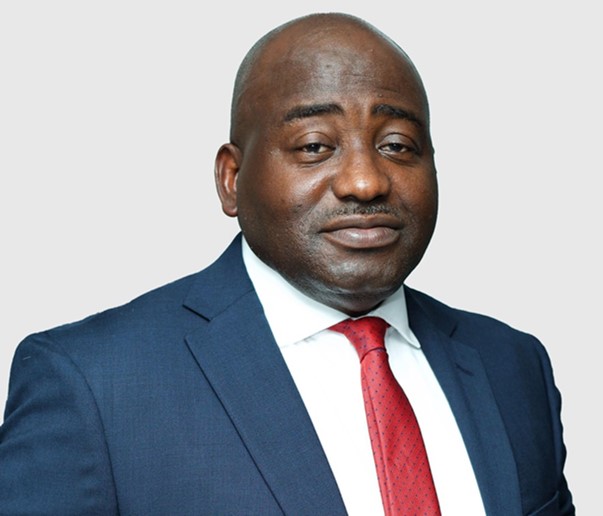
MONROVIA – Musa Hassan Bility, Political Leader of the Citizens Movement for Change (CMC) and Representative for Nimba County, has issued a sweeping public appeal for political reconciliation in Nimba County, calling directly on Vice President Jeremiah Kpan Koung to take the lead in healing growing divisions among the county’s political stakeholders. In a lengthy essay titled “As We Are, and As We Should Be,” Bility — himself a declared presidential aspirant — said he was not writing to assign blame or gain political advantage, but because “our county is bleeding emotionally, politically, and socially.” The essay, unusually candid in its assessment, has drawn wide attention across Liberia’s political class. THE ANALYST reports.
Musa Hassan Bility, Political Leader of the Citizens Movement for Change (CMC) and Representative for Nimba County, has issued a wide-ranging public appeal for political reconciliation in Nimba County, calling directly on Vice President Jeremiah Kpan Koung to exercise leadership in healing what he described as a deepening fracture among the county’s political stakeholders, opinion leaders, elders, and citizens.
In a lengthy essay published under the title “As We Are, and As We Should Be: A Call for Leadership, Healing, and Unity in Nimba,” Bility argued that since the 2023 elections and the formation of the new government in 2024, many Nimba stakeholders have appeared at odds with one another, with the Vice President’s relationship to the broader county political community at the center of the growing tension.
“I do not write this to assign blame. I do not write this to accuse anyone. I do not write this as an opposition politician seeking advantage from division. I write because our county is bleeding emotionally, politically, and socially,” Bility stated at the outset.
Paye’s Story Brings Focus
Bility used the public reflections of Hon. Wilmot Paye, former Chairman of the Unity Party, as a lens through which to examine the broader problem. He described Paye’s story as not an ordinary political story, but the story of a man who gave many years of his life to the Unity Party — who left, returned during difficult times, served in various capacities, and rose to become the party’s chairman.
“Whether one agrees with him or not, he is a man whose service to his party and to the country cannot be erased by political convenience,” Bility wrote. He said listening to Paye, one could hear more than anger. “One could hear hurt. One could hear the voice of a man who believes he was not treated fairly,” he stated.
Without attributing direct responsibility to the Vice President for Paye’s removal or the circumstances surrounding it, Bility posed what he described as fair questions of leadership. “If the Vice President did not cause the injury, did he do enough to prevent the wound from widening? If he was not responsible for the decision, did he do enough to reach out, to calm the spirit, to preserve the dignity of a man who had served?” he asked.
The Burden of the Vice President’s Office
Bility argued that by virtue of his office, his history, and his position, Vice President Koung carries a moral obligation that extends beyond party lines. “He is not merely the leader of those who voted for him.
He is not merely the leader of those who belong to his camp. By virtue of his office, his history, and his position, he carries a moral obligation to unite, to reconcile, and to build bridges even with those who may never support him politically,” Bility wrote.
He added that this is the burden of leadership. “When you become the leader of a people, you must understand that not all of them voted for you,” he stated.
Bility also offered a personal declaration that he said he hoped would dispel any misreading of his intent.
“As an opposition politician and as someone who has made no secret of my own national political ambition, some may think I should be happy when others are divided,” he wrote.
“But that is not how I see leadership. I am not happy when Nimba is divided. I am not happy when our elders are silent because they have taken sides. I am not happy when our young people inherit bitterness instead of vision.”
He said his desire to be President of Liberia did not mean he hated the Vice President or disrespected him. “It only means that we come from different political parties, different ideological foundations, and different visions for Liberia. That is democracy,” he stated.
A Direct Call to the Vice President
Bility issued a specific and detailed call to action addressed directly to Vice President Koung. He urged him not to allow the moment to be reduced to social media reactions, not to allow supporters to turn every criticism into war, and not to allow every wounded voice to be treated as an enemy.
He called on the Vice President to convene a broad gathering of county stakeholders — including Senator Prince Johnson’s political heirs, Senator Twayen, Senator Kogar, members of the House of Representatives, opposition parties, Unity Party members, those in MDR, CMC, and others — not to win their endorsement or bring them into his party, but to agree that division must not destroy Nimba.
“The purpose of leadership is not to make everyone agree with you. The purpose of leadership is to create a space where disagreement does not become destruction,” Bility wrote. He described the legacy he believed such an act of leadership would leave.
“Power will pass. Offices will end. Elections will come and go. Supporters will change. Political alliances will shift. But the legacy of a man who chose unity over ego, reconciliation over revenge, and leadership over camp politics will remain,” he stated.
Shared Responsibility across the County
While placing a specific responsibility on the Vice President, Bility was careful to spread the burden of reconciliation more broadly.
He argued that the Nimba Legislative Caucus, senators, representatives, elders, religious leaders, women leaders, youth leaders, and all political parties shared in the obligation to lower the county’s political temperature. “We cannot continue to behave as though Nimba belongs to one party, one leader, one camp, or one generation. Nimba belongs to all of us,” he wrote.
He called on those in the Unity Party not to treat every non-Unity Party citizen as an enemy, and on those in the opposition not to treat the Vice President as someone who does not deserve his position.
Bility urged all political formations to understand that the county is bigger than all of them. “Our people have seen too much division. They have seen too much hate. They have seen too much betrayal,” he wrote. He described a population that was hungry, tired, and confused — looking for leadership, not another war of egos.
The National Dimension
Bility closed the essay by linking Nimba’s internal divisions to Liberia’s broader stability. “A divided Nimba weakens the nation. A united Nimba strengthens Liberia,” he wrote. He argued that the county could not afford to become a battlefield of personal ambitions and that Liberia could not afford for one of its most important counties to be trapped in endless political bitterness.
He framed his final appeal in the parallel construction that gave the essay its title: “As we are, we are divided. As we should be, we must be united. As we are, too many people are wounded. As we should be, leadership must heal. As we are, politics is pushing us apart. As we should be, our values must bring us together.”
He addressed the call to the Vice President, the Nimba Legislative Caucus, elders, women, youth, political parties, and every stakeholder who loved Nimba and Liberia. “The call for unity is on all of us. But in this moment, it rests especially on the shoulders of the Vice President of the Republic of Liberia,” he concluded.
Comments are closed.