

‘Liberia Moving Without Vision’-Bility Urges Shift from Reaction to Strategy
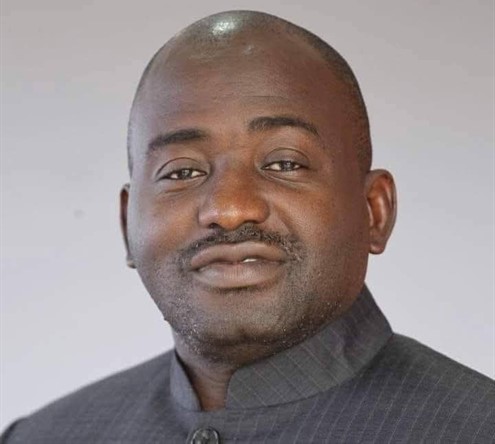
MONROVIA – At a time when Liberia faces mounting questions about governance, economic direction, and national purpose, concerns are increasingly shifting from isolated policy issues to a broader absence of strategic clarity. While government activity continues across sectors, a growing number of voices argue that movement alone is no substitute for direction. Among them is Nimba County District #7 Representative Musa Hassan Bility, whose latest reflection challenges the country to confront what he sees as a deeper and more consequential problem—the lack of a shared national vision. As THE ANALYST reports, the lawmaker’s message does not focus on what is being done, but rather on what is missing, raising fundamental questions about planning, coordination, and the future trajectory of the state.
Nimba County District #7 Representative Musa Hassan Bility has issued a sobering reflection on the state of national leadership and direction in Liberia, warning that the country is steadily drifting without a clear roadmap, a condition he describes as both dangerous and unsustainable.
In his regular column, Letter from Saclepea, titled “A Journey to the Unknown,” the lawmaker—who also serves as Political Leader of the Citizens Movement for Change—raised profound concerns about what he sees as a growing disconnect between national activity and national purpose.
Framing his argument within a broader reflection on governance and responsibility, Bility warned that moments of silence—particularly in the face of structural challenges—can shape the long-term destiny of a nation.
“There are moments in a nation’s life when silence becomes dangerous. When what we fail to say begins to shape what we eventually become,” he wrote, setting a contemplative yet urgent tone for his analysis.
Rather than focusing on specific policies or political actors, Bility directed attention to what he described as a more fundamental issue: the absence of a clearly defined national direction.
“This week, I find myself reflecting not on what Liberia is doing, but on what Liberia is not doing. And what we are not doing may be far more dangerous than any mistake we could make,” he stated.
According to him, Liberia today presents a paradox—one of visible activity without corresponding clarity of purpose.
“I see movement, but I do not see direction. I see activity, but I do not see coordination. I see leadership, but I struggle to see vision,” he observed, articulating a sentiment that resonates with a growing segment of the population.
The implications of this, he argued, are profound.
While acknowledging that nations can endure hardship and disagreement, Bility emphasized that the absence of vision poses a far greater threat to long-term stability and progress.
“A country can survive hardship. A country can survive disagreement. But a country cannot survive for long without a clear sense of where it is going,” he warned.
At the heart of his critique is the assertion that Liberia lacks a coherent and shared national roadmap—one that clearly outlines long-term goals, aligns government actions, and provides citizens with a sense of direction.
“Today, Liberia feels like a nation in motion without a destination,” he wrote, capturing what he described as a widespread sense of uncertainty.
He pointed to the absence of structured, forward-looking planning mechanisms that would otherwise define the country’s trajectory over the next five, ten, or even twenty years.
“There is no clearly defined national roadmap. No long-term plan that tells our people what this country should look like… No shared understanding between leadership and citizens about the future we are building together,” Bility emphasized.
In the absence of such a framework, he argued, governance has become largely reactive.
“We wake up each day reacting to events instead of shaping them. We govern from moment to moment, rather than from purpose to purpose,” he noted, adding that national discourse often revolves around promises that are not anchored in measurable or structured plans.
The result, he said, is a country that is difficult to predict—an environment that undermines confidence among citizens, investors, and stakeholders alike.
He illustrated this uncertainty through everyday realities faced by Liberians.
“Ask any young person today what Liberia will look like in two years, and you will be met with uncertainty. Ask a business owner what policy environment they should prepare for, and you will hear hesitation. Ask a mother what future she sees for her children, and too often, you will hear hope mixed with fear,” he explained.
Such conditions, Bility stressed, are not normal for a functioning nation.
“A nation must give its people something to believe in, something to plan around, something to build toward,” he argued, underscoring the importance of vision in fostering national confidence.
Without that vision, he warned, progress becomes elusive.
“When there is no vision, there can be no confidence. And when there is no confidence, there can be no real progress,” he stated.
Bility extended his critique to key segments of society, highlighting the impact of the current situation on youth, women, and the broader economy.
“Our children are growing up in a system that does not clearly define their future. Our women continue to struggle within an economy that lacks deliberate structure and opportunity. Our young people are moving into adulthood without a clear path,” he said.
Despite these realities, he observed, the nation continues to operate as though such conditions are acceptable.
“And yet, we continue as though this is normal. It is not,” he declared.
Perhaps his most striking analogy came as he sought to illustrate the risks facing the country.
“Liberia today feels like a car already in motion, filled with passengers, traveling on an uncertain road, without a driver holding the steering wheel,” he wrote.
The consequences of such a trajectory, he warned, extend beyond immediate challenges.
“It is not just risky. It is unsustainable,” he added.
He further cautioned that the most dangerous threats to a nation are not always dramatic or visible.
“Sometimes, the greatest danger is quiet. It is the slow erosion of hope. The gradual acceptance of uncertainty. The normalization of a system that offers no clear future,” he stated.
According to Bility, this gradual erosion is how nations lose their identity and direction over time.
However, despite the gravity of his concerns, he framed the current moment not only as a warning but also as an opportunity.
“Recognition is the first step toward correction,” he noted, suggesting that acknowledging the problem could pave the way for meaningful reform.
He called on national leaders, policymakers, and citizens to begin asking fundamental questions about the country’s future.
“What is our national vision? What are our priorities as a country? What sectors will define our growth? How do we move from poverty to productivity? How do we build systems that are stronger than individuals?” he asked.
Importantly, he emphasized that these are not abstract questions for future consideration, but urgent issues requiring immediate attention.
“These are not questions for tomorrow. They are questions for now,” he stressed.
At the center of his proposed solution is the development of a comprehensive national roadmap—one that is clear, deliberate, and shared across all sectors of society.
“Liberia does not need more speeches. Liberia needs a roadmap,” Bility asserted.
Such a roadmap, he explained, should serve multiple purposes: aligning government actions, guiding citizens, attracting investment, and restoring confidence in the country’s future.
He further called for a fundamental shift in governance—from reactive decision-making to strategic planning.
“We must move from reaction to strategy. From uncertainty to predictability. From scattered efforts to coordinated national purpose,” he urged.
In concluding his reflection, Bility returned to his central warning: that movement without direction is not progress, but risk.
“Because without a roadmap, we are not truly building a country. We are simply moving, without knowing where,” he said.
“And that is a risk we can no longer afford.”
Comments are closed.