
Gongloe Schools Students On Power -Says Leadership Is Stewardship; Challenges Youth To Serve
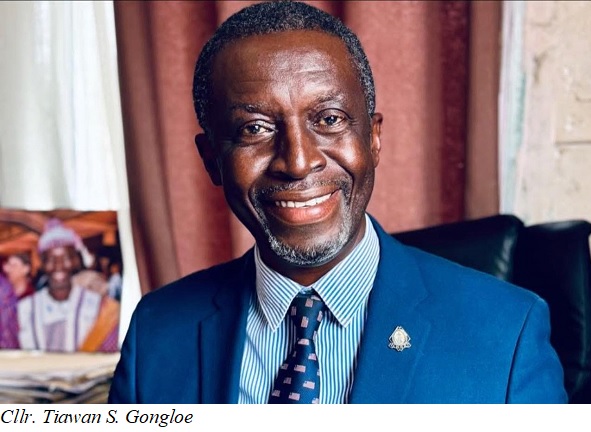
MONROVIA – In a nation struggling to reconcile its vast natural endowments with persistent underdevelopment, Associate Law Professor, human rights advocate, and former 2023 presidential contender Tiawan S. Gongloe has once again returned to a familiar terrain: moral leadership. Speaking at the installation of the Student Council Government of B. W. Harris Episcopal High School in Monrovia, Gongloe framed student leadership as a microcosm of Liberia’s larger crisis and opportunity. His keynote address, delivered under the theme “Leadership, Service, and the Liberia We Need to Build,” moved beyond ceremony into a sober diagnosis of Liberia’s governance failures, contrasting them with disciplined, people-centered leadership models across Africa, and issuing a challenge to the next generation to reject corruption, mediocrity, and the misuse of power. The Analyst reports.
The installation of a Student Council Government, Gongloe argued, is not a routine school event but a serious transition of responsibility. It is the moment when leadership is formally entrusted—not for personal recognition, but for service, discipline, and accountability.
Addressing student leaders, faculty, parents, and invited guests, he insisted that leadership must be understood early as a duty to others, not an opportunity for privilege.
B. W. Harris Episcopal High School, Gongloe noted, represents values Liberia desperately needs: discipline, moral instruction, academic excellence, and service.
These principles, he said, reflect an understanding that education is not merely about personal advancement, but about responsibility to society and country. According to him, nations decline when education produces only ambition, but no conscience.
Speaking candidly, Gongloe told the students that the Liberia they are inheriting will not be shaped by slogans, ceremonies, or speeches, but by deliberate choices. Leadership, he emphasized, is tested not by words but by priorities—by what leaders choose to fund, protect, and sacrifice for.
To illustrate his point, Gongloe turned to comparative African experiences. Botswana, he said, offers one of the clearest lessons. A landlocked country with no seaport, seventy percent desert land, and limited agricultural potential, Botswana nevertheless made disciplined leadership choices immediately after independence.
Rather than investing in extravagant convoys, excessive foreign travel, and lavish state banquets, its leaders focused on education, healthcare, agriculture, and infrastructure. Public office was treated as a trust, not a reward.
The results, Gongloe noted, speak for themselves. Botswana, which became independent in 1966—more than a century after Liberia—has risen to middle-income status and is widely regarded as a governance success story. That transformation, he stressed, was not accidental; it was the product of restraint, discipline, and people-first leadership.
He extended the comparison to Namibia, Mauritius, Seychelles, and Cape Verde—countries with fewer natural resources than Liberia, some with limited land and challenging geography, yet far ahead in education, healthcare, food security, infrastructure, tourism, and technology. Their citizens, he observed, enjoy better living conditions and greater social stability, which is why such countries experience fewer street protests than Liberia.
Even more controversially, Gongloe referenced Burkina Faso and Rwanda—states whose governments did not emerge through democratic means, but which nonetheless prioritize education, discipline, and public order.
While acknowledging their political differences, he underscored a central fact: these governments direct resources toward national development, do not glorify corruption, and enforce accountability. As a result, they outperform Liberia in key areas that affect ordinary citizens.
This comparison led Gongloe to pose what he described as a painful but necessary question. How can Liberia—blessed with fertile land, abundant rainfall, sunshine, mineral wealth, no desert, no drought, and direct access to the Atlantic Ocean—lag behind countries with far fewer advantages? Why does a nation so richly endowed still struggle with poor roads, unreliable electricity, weak healthcare, underfunded schools, and limited technological capacity?
The answer, Gongloe said, is not complicated. Liberia’s problem is not resources, talent, or opportunity. Liberia’s problem is leadership.
A country with good leadership produces satisfied citizens, he argued, while a country without it produces anger, frustration, and instability. Too often, leadership in Liberia has been mistaken for the display of power—long motorcades, frequent foreign travel with large delegations, and lavish ceremonies.
Yet none of these, Gongloe reminded his audience, educates a child, cures a disease, feeds the people, or builds a road.
“A nation does not develop because its leaders look important,” he said. “A nation develops because its leaders work.”
Drawing from the Episcopal tradition of B. W. Harris, Gongloe emphasized stewardship as the true essence of leadership. Stewardship, he explained, means managing entrusted resources for the common good, not personal enrichment.
He said it requires humility in authority, honesty in action, and accountability to conscience and country. Power, he insisted, is not ownership; it is responsibility.
From stewardship, the law professor turned to corruption—what he described not merely as a legal issue but a profound moral failure. Corruption, he said, steals futures. When funds meant for schools are diverted, children remain uneducated. When hospital resources disappear, lives are lost. When road funds are misappropriated, communities remain isolated. Corruption destroys trust and replaces hope with despair.
It was here that Gongloe reiterated one of his most enduring public statements: government is a place to serve, not to steal.
No country, he warned, has ever developed where greed eclipses service, or where public office becomes a shortcut to wealth instead of a platform for responsibility. The Liberia worth building, he argued, will only emerge under leaders who think first about the people in every policy and decision.
Turning directly to the newly installed Student Council Government, Gongloe framed their mandate as a test of character. Leadership, he told them, is not about title but example—not domination, but service; not privilege, but fairness.
Addressing the broader student body, he urged them to reject what he called Liberia’s “at least” mentality—the culture of settling for the minimum. They must not accept corruption as normal or poor leadership as inevitable. Success, he said, should not be measured by how much one takes from Liberia, but by how much one gives to it.
In closing, Gongloe thanked the school administration and the Episcopal Church in Liberia for their commitment to shaping not only competent minds but principled citizens. Liberia, he concluded, does not merely need skilled professionals; it needs ethical leaders.
And with leadership that truly puts the people first, Gongloe reminded the nation, a better Liberia remains possible.
Comments are closed.