
Cephas Goes to Dillon Rescue-As Solo Death Triggers Tribal Backlash
MONROVIA – Liberia’s increasingly volatile political climate took another dangerous turn Tuesday after inflammatory allegations linking Senator Abraham Darius Dillon to the stalled diplomatic confirmation of the late George Solo triggered sharp public backlash and renewed anxieties over the return of tribalized political rhetoric. What began as grief surrounding Solo’s death has now expanded into a wider national confrontation involving accusations of ethnic hostility, Senate politics, and competing attempts to shape public perception around the circumstances surrounding his failed ambassadorial confirmation. The controversy has exposed how fragile Liberia’s postwar reconciliation remains whenever political actors invoke ethnicity as a weapon of mobilization or grievance. For many observers, the dispute reflects a deeper crisis within national political discourse itself, where emotion increasingly overtakes institutional restraint and historical memory today, as seen the fiery exchanges. THE ANALYST reports.
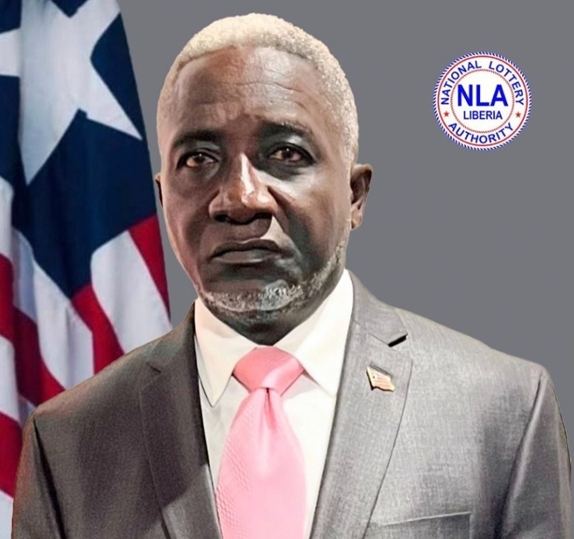
Public controversy surrounding the death of former CDC Chairman George Solo intensified dramatically Tuesday after political activist Cephas MMD Flanzamaton issued a blistering response to allegations by National Lottery Authority Director General Peter Solo accusing Senator Abraham Darius Dillon of blocking George Solo’s diplomatic confirmation because of tribal hostility toward Krahn people.
The dispute, already inflaming political and ethnic sensitivities nationally, has quickly evolved beyond an ordinary political disagreement into a broader national debate over the dangerous resurgence of tribal rhetoric in Liberia’s postwar political environment.
At the center of the controversy are emotionally charged claims by Peter Solo — brother of the late George Solo — who publicly accused Senator Dillon of deliberately frustrating George Solo’s diplomatic ambitions due to alleged dislike for the Krahn ethnic group.
Those allegations surfaced after reports revealed that George Solo, despite reportedly receiving presidential nominations connected to diplomatic assignments involving Belgium and Italy, was never formally confirmed by the Liberian Senate before his death.
Peter Solo’s reaction was unusually direct and politically explosive.
According to remarks published by Verity Online News, the NLA Director General alleged that Senator Dillon repeatedly intervened to undermine George Solo’s confirmation process and claimed such actions reflected hostility toward both the Solo family and the broader Krahn community.
“Dillon hates the Krahn people,” Peter Solo reportedly declared while accusing the Montserrado County Senator of obstructing the appointment process twice.
The comments immediately triggered widespread reaction because of Liberia’s painful historical relationship with ethnic polarization, particularly given the role tribal tensions played during the country’s fourteen-year civil conflict.

Senator Abe Darius Dillon
For many observers, the language represented a dangerous escalation capable of reopening old societal wounds at a time when Liberia continues struggling with fragile reconciliation and unresolved wartime divisions.
That concern formed the basis of Cephas MMD Flanzamaton’s forceful rebuttal.
In a sharply worded public response, Flanzamaton condemned what he described as a growing pattern in which political actors allegedly attempt to exploit tribal identity whenever controversy or personal tragedy emerges.
“It’s becoming a pattern where tribal bigots like the likes of the National Lottery Authority boss Peter Solo attempt to propagandize every misfortune on tribal lines to attract unwarranted attention and soft sympathy,” Flanzamaton declared.
The remarks reflected mounting frustration among sections of the political class and civil society who fear that ethnic narratives are increasingly reentering mainstream Liberian politics under emotionally charged circumstances.
Flanzamaton’s statement grew even more pointed as he accused Peter Solo of promoting rhetoric capable of reviving precisely the same societal divisions that fueled Liberia’s civil collapse decades earlier.
Referring sarcastically to the allegations against Dillon, Flanzamaton remarked that Peter Solo appeared ready to blame the Senator for “Eve eating the forbidden fruit” — a biblical reference he used to portray the accusations as exaggerated and irrational.
But beneath the sarcasm lay a deeply serious warning.
According to Flanzamaton, any attempt to encourage tribal polarization represents not merely political irresponsibility but a direct threat to national cohesion itself.
“Any proclivity to persist in tribal stratification is not merely retrogressive but antithetical to the imperatives of national cohesion and collective progress,” he asserted.
He further alleged that sections of Grand Gedeh County were increasingly being used by politically motivated actors seeking to exploit ethnic identity for partisan advantage.
That observation is politically significant because Grand Gedeh — historically associated with former President Samuel Doe and deeply affected by wartime ethnic tensions — remains symbolically sensitive within Liberia’s political and historical landscape.
Throughout Liberia’s civil conflict, ethnic affiliation frequently became intertwined with political suspicion, retaliation, and violence. Entire communities suffered massacres, displacement, and persecution tied to perceived political or ethnic identities.
Political observers therefore say rhetoric portraying contemporary political disputes through tribal lenses carries exceptional danger in Liberia’s fragile democratic environment.
Flanzamaton argued that rather than embracing ethnic narratives, political actors should recognize that true national leadership must rise above tribal considerations entirely.
“True leadership transcends ethnic boundaries and embraces the collective destiny of all nations, and our country, Liberia, is no exception,” he stated.
The statement also sought to isolate Peter Solo politically within Grand Gedeh itself.
Flanzamaton claimed that many elders and ordinary citizens from the county were unhappy with the inflammatory direction of the rhetoric and insisted that Grand Gedeh remained peaceful and should continue avoiding divisive political agitation.
The controversy simultaneously reopened broader public scrutiny surrounding how diplomatic confirmations actually function inside Liberia’s political system.
Flanzamaton questioned why Senator Dillon alone was being blamed for George Solo’s unconfirmed diplomatic status when two senators from Grand Gedeh County themselves sit in the Liberian Senate and could presumably have advocated more aggressively on his behalf.
“How come our two senators sit there and do nothing for the late George Solo’s speedy confirmation?” he asked.
That question cuts into a deeper issue surrounding public misunderstanding of Liberia’s confirmation procedures, diplomatic protocol, and Senate committee structures.
In separate remarks earlier Tuesday, Information Minister Jerolinmek Matthew Piah attempted to clarify aspects of George Solo’s stalled diplomatic nomination, explaining that the process involving Italy required formal agrément approval from the receiving country before the Liberian Senate could legally proceed toward confirmation.
According to Piah, the Italian government neither approved nor formally rejected Solo’s nomination but instead continued requesting clarifications that delayed the process indefinitely.
Still, those explanations have not fully calmed public emotions.
Instead, the controversy now appears to be evolving into a larger political struggle over narrative control surrounding George Solo’s death, diplomatic ambitions, and political legacy.
Analysts warn that Liberia’s increasingly polarized media environment and rapid social media amplification are intensifying emotionally driven narratives faster than institutional clarifications can contain them.
Some fear the controversy reflects a wider deterioration in political restraint nationally, where inflammatory accusations now emerge quickly before evidence, process, or verification fully develop.
Others caution that the repeated invocation of ethnicity in ordinary political disagreements risks normalizing dangerous patterns capable of destabilizing Liberia’s hard-earned postwar peace.
The sensitivity of the issue is magnified further because George Solo himself occupied a politically complicated position.
Though once Chairman of the Congress for Democratic Change under former President George Weah, Solo later aligned politically with President Joseph Nyuma Boakai’s coalition during the 2023 electoral period.
His attempted diplomatic transition therefore carried implications not only for government appointments but also for broader political reconciliation and coalition management inside Liberia’s fluid post-election political environment.
Now, however, his death risks becoming overshadowed by escalating political confrontation.
Flanzamaton concluded his response with an unusually direct warning to Peter Solo, urging him to abandon inflammatory rhetoric and allow his brother’s memory to rest peacefully rather than transforming grief into tribal conflict.
“Be forewarned, Peter Solo, and allow the spirit of our kinsman to rest in peace,” he declared.
Yet despite those appeals, the broader controversy appears far from settled.
What remains increasingly clear is that the George Solo saga has evolved beyond a personal family grievance or diplomatic dispute.
It has become a revealing test of Liberia’s political maturity, national restraint, and collective willingness to resist reopening the ethnic wounds that once helped drive the country into catastrophe.
Comments are closed.