

Baccus Matthews Remembered Nationally-Family Tribute Revives Historic Wartime Diplomacy
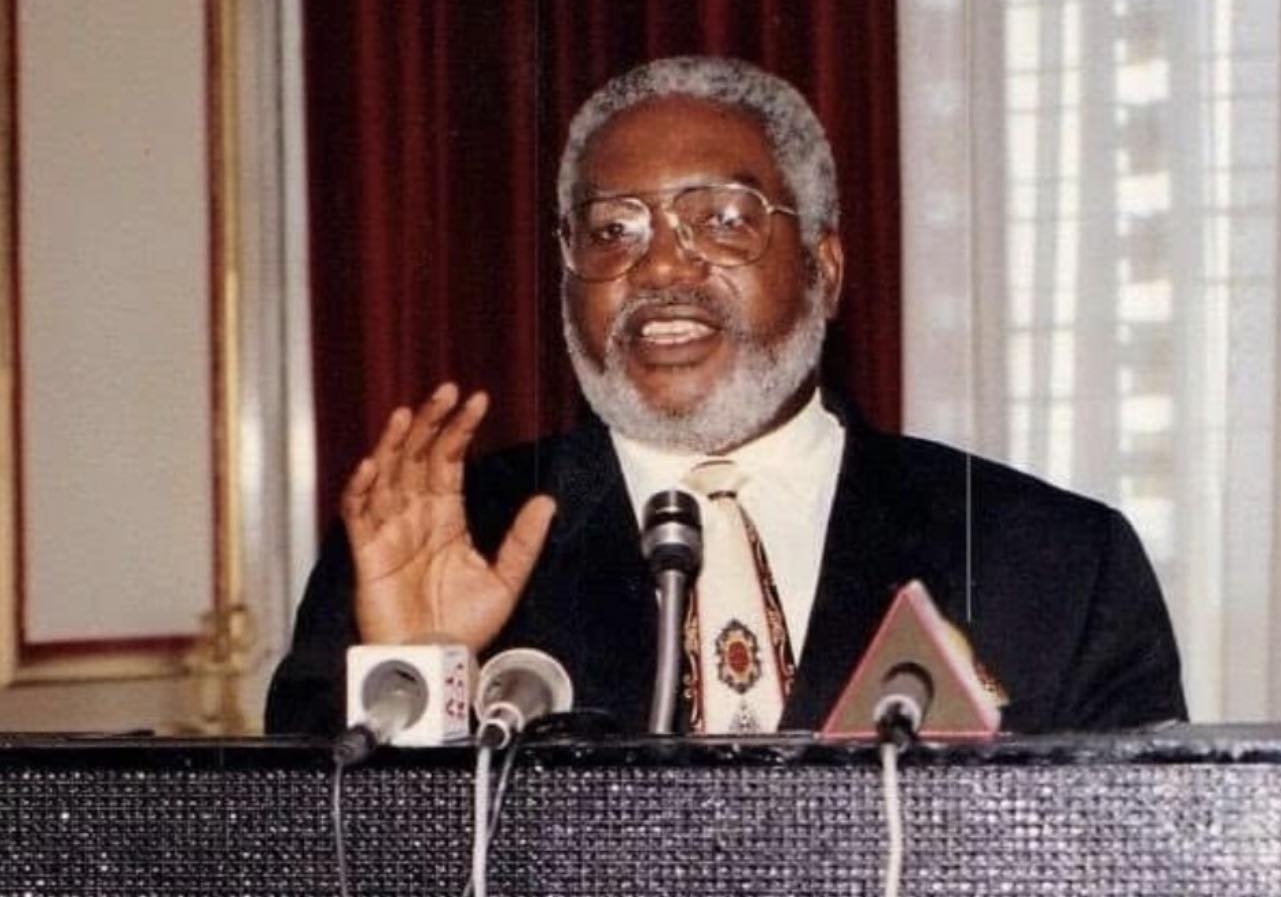
MONROVIA – Liberia’s difficult relationship with memory resurfaced this week through a deeply personal reflection from Martin Matthews, whose emotional tribute to his late father, veteran statesman G. Baccus Matthews, reopened national conversations about leadership, sacrifice, and the controversial diplomatic maneuvers that helped usher West African peacekeepers into Liberia during the height of civil war. At a time when younger Liberians increasingly know the country’s conflict through fragments of political rhetoric rather than lived experience, the reflection carried significance far beyond family remembrance. It revived attention to one of the most decisive moments in Liberia’s modern history, when regional intervention altered the trajectory of a collapsing state and prevented rebel forces from fully seizing national power militarily, as THE ANALYST reports.
A reflective and emotionally charged public tribute by Martin Matthews to his late father, veteran Liberian politician and former opposition leader Dr. G. Baccus Matthews, has reignited national discussion surrounding one of the most consequential chapters in Liberia’s civil war history — the controversial but ultimately pivotal regional intervention that brought West African peacekeepers into Liberia in 1990.
The remarks, posted publicly this week, moved beyond ordinary remembrance and instead reopened a broader national examination of leadership during wartime, the burden of political sacrifice, and the difficult choices made by actors who sought to halt Liberia’s descent into complete state collapse during the early stages of the country’s brutal civil conflict.
In deeply personal language, Martin Matthews reflected on the role his father played during the violent period when rebel forces advanced toward Monrovia and appeared increasingly capable of seizing state power through military force rather than democratic transition.
“In 1990, as various rebel forces pushed towards the capital, they nearly succeeded in taking power through the barrel of the gun, rather than through the ballot box,” Matthews recalled.
That observation cuts directly into one of Liberia’s most sensitive historical debates — the extent to which armed factions sought legitimacy through violence while constitutional governance rapidly deteriorated under the pressures of war, ethnic fragmentation, state implosion, and humanitarian catastrophe.
According to Matthews, his father joined other political and regional actors in aggressively advocating for external intervention through the Economic Community of West African States, commonly known as ECOWAS, at a time when Liberia’s conflict threatened to spiral entirely beyond political containment.
“He and others traveled through West Africa, advocating for ECOWAS to send peacekeepers,” Matthews wrote.
The statement revisits a period that remains profoundly consequential in both Liberian and African diplomatic history. The eventual deployment of ECOMOG — the ECOWAS Monitoring Group — represented the first major regional peacekeeping intervention undertaken by African states on the continent at such scale and complexity.
At the time, Liberia had descended into horrifying violence marked by massacres, displacement, ethnic killings, institutional collapse, child soldier recruitment, and the near disintegration of national authority.
The ECOMOG intervention itself was fiercely contested. Critics accused the force of partiality, military excesses, and geopolitical interference, while supporters argued the intervention prevented an outright rebel military takeover and helped create conditions for eventual ceasefire negotiations and democratic transition.
Martin Matthews’ recollection firmly aligns with the latter interpretation.
“ECOMOG succeeded in pushing rebel forces back so cease fire and peace talks could happen,” he stated.
Political historians have long noted that without regional intervention, Liberia’s conflict could have produced an even more catastrophic humanitarian outcome. At various stages of the war, Monrovia itself stood dangerously close to complete military overrunning by heavily armed factions competing for state control.
The intervention by ECOWAS, spearheaded principally by Nigeria alongside other regional contributors, therefore altered not merely battlefield calculations but the future political architecture of Liberia itself.
Matthews specifically expressed gratitude toward Nigeria and other contributing countries that supplied troops during the operation.
For many Liberians, the sacrifices made by ECOMOG troops remain emotionally complex. Thousands of West African soldiers operated under extraordinarily dangerous conditions inside Liberia’s fragmented conflict environment. Many lost their lives while attempting to stabilize a country collapsing under warlordism and political fragmentation.
Yet Martin Matthews’ reflection moved beyond institutional history and entered deeply personal territory.
He recounted how his father’s relentless diplomatic engagements across the sub-region frequently kept him away from home, including during important childhood moments.
“My father spent so much time on these trips, missing my birthdays,” he reflected.
That personal detail transformed the statement from a historical recollection into a meditation on the hidden private costs often borne by political families during periods of national crisis.
Even more striking was Matthews’ admission that, as a child, he sometimes wished his father could simply behave like an ordinary parent rather than a political actor consumed by national turmoil.
“Many times I wanted him to be a regular dad and play with me,” he wrote.
But according to Matthews, his father consistently framed the crisis through the suffering of ordinary Liberian children trapped inside the war.
“Creating peace for the other children who weren’t able to flee Liberia during the war was more important,” he stated.
The remarks have since resonated strongly across social and political circles because they intersect with an increasingly urgent national concern: the fading institutional memory surrounding Liberia’s civil conflict.
A growing generation of younger Liberians possesses little direct experience of the war years. Much of their understanding emerges instead through fragmented political narratives, partisan reinterpretations, family trauma accounts, and incomplete historical education.
As a result, public recollections from individuals directly connected to key wartime decisions increasingly carry historical significance beyond personal remembrance.
Dr. G. Baccus Matthews himself occupies a distinctive place in Liberia’s political history. Widely recognized as one of the country’s most influential opposition figures during the Samuel Doe era, Matthews became known for fiery populist rhetoric, mass mobilization politics, and his role in challenging authoritarian governance before Liberia’s collapse into war.
Yet his wartime role — particularly surrounding regional diplomacy and peace advocacy — often receives less public attention than his earlier opposition activism.
Martin Matthews’ tribute appears to deliberately reclaim that dimension of his father’s legacy.
He described spending time around his father during those years, listening quietly as discussions unfolded concerning war, peacekeeping, and the deteriorating national crisis.
“It was in these moments I began to form my own opinion of him,” he reflected.
He further praised his father’s “character, ethics and sense of responsibility,” portraying him as a leader willing to risk personal comfort and even personal safety in pursuit of peace.
One especially haunting aspect of the tribute involved Matthews’ recollection of learning, even as a child, about the use of child soldiers during Liberia’s war.
That brief observation reopened painful memories surrounding one of the conflict’s darkest features — the widespread recruitment and exploitation of children by armed factions.
Liberia’s civil war left an estimated quarter-million people dead and displaced countless others. Entire communities were shattered. Ethnic distrust deepened. Institutions collapsed. Regional stability became threatened. The war’s social and psychological consequences remain visible decades later.
Against that backdrop, Matthews concluded his reflection with a short but symbolically powerful biblical reference:
“Blessed are the peacemakers.”
The statement has since generated renewed discussion about whether Liberia has adequately preserved and documented the roles played by various political actors, regional institutions, religious leaders, civil society advocates, and international partners who contributed to eventual peace efforts.
Some analysts argue that Liberia’s postwar political culture often prioritizes contemporary partisan conflict over historical reconciliation and institutional memory preservation.
Others say the country still struggles to fully confront the layered complexities of the war itself — including the morally ambiguous decisions, competing political interests, and regional calculations that shaped intervention efforts.
Yet despite those unresolved debates, Matthews’ reflection succeeded in reviving a central national truth often overshadowed by present political turbulence: Liberia’s survival as a state was not inevitable during the darkest days of war.
It depended heavily on difficult regional diplomacy, controversial intervention, and individuals willing to push for peace even while national collapse appeared imminent.
And for at least one son reflecting publicly decades later, that sacrifice remains larger than personal absence, missed birthdays, or family disappointment.
It remains part of Liberia’s unfinished historical reckoning.
Comments are closed.