
NHA Undertakes Housing Expansion-Targets 512,000 units by 2030 for Low Income People
MONROVIA – Liberia’s deepening housing crisis has moved to the forefront of national policy discourse, as authorities unveil an ambitious reform agenda aimed at closing a widening deficit and redefining access to affordable shelter. With rapid urbanization, population growth, and decades of underinvestment compounding the challenge, the scale of need has become both a development concern and a governance test. The proposed reforms—spanning legal restructuring, financing innovation, and public-private collaboration—signal a shift toward systemic intervention rather than piecemeal solutions. As THE ANALYST reports, projections have climbed into the hundreds of thousands of required units, but central question remains whether institutional ambition can translate into coordinated, large-scale delivery capable of reshaping Liberia’s urban future.
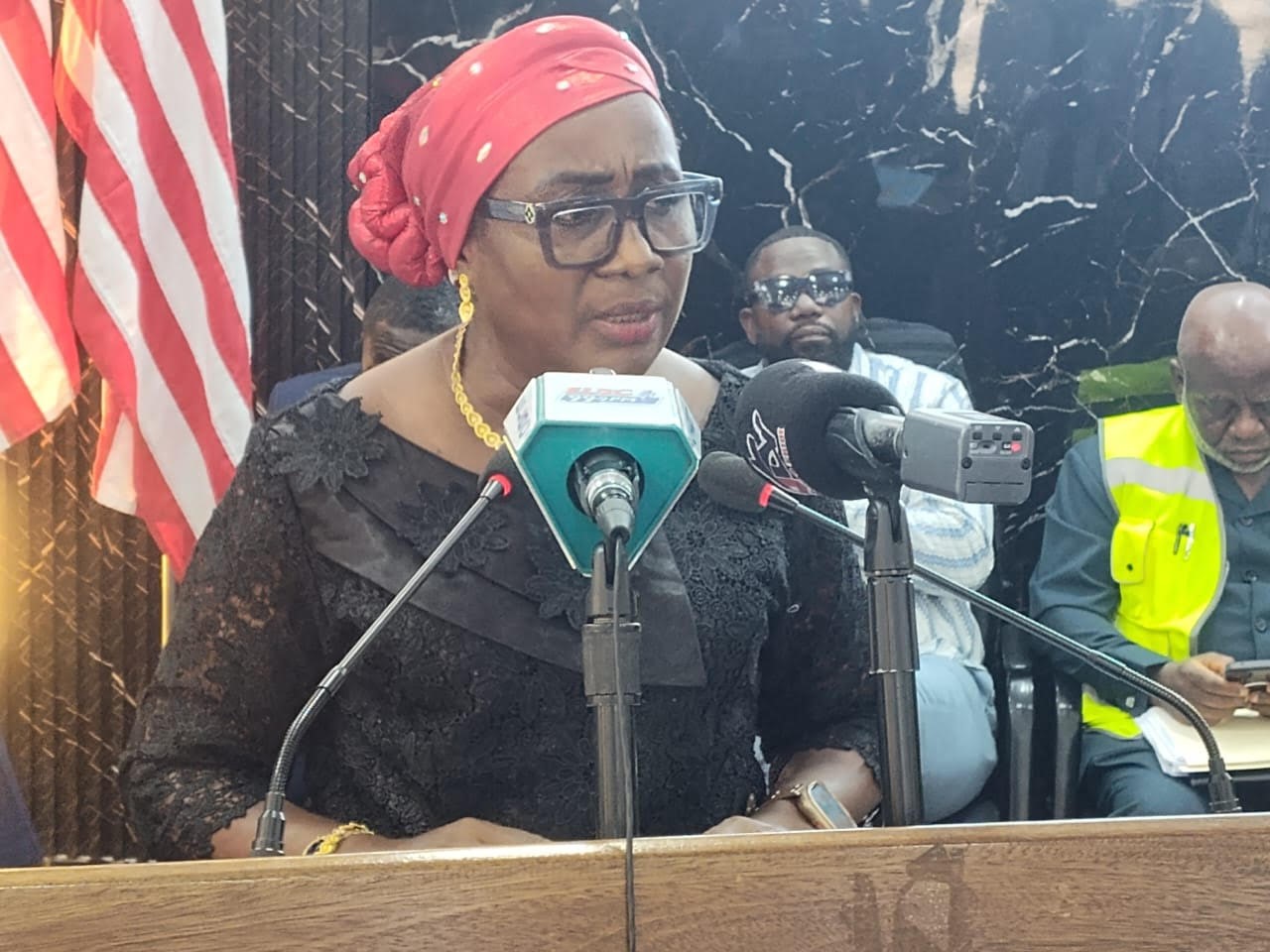
The Managing Director of the National Housing Authority (NHA), Florence K. Geebae, has outlined a sweeping national housing reform agenda designed to address Liberia’s growing housing deficit, modernize the sector, and expand access to affordable homes for low- and middle-income citizens.
Speaking Tuesday at the Ministry of Information’s regular press briefing, Madam Geebae presented a sobering assessment of the country’s housing landscape, revealing that Liberia will require more than 512,000 urban housing units by 2030 to meet demand and reduce overcrowding.
According to her breakdown, at least 200,000 new housing units are needed to ease existing congestion, while an additional 163,035 units will be required to accommodate population growth. Furthermore, approximately 4,891 units must be constructed annually to replace aging and structurally compromised buildings.
She described the situation as particularly urgent given that nearly 70 percent of Liberia’s urban population currently resides in slum conditions—a statistic that underscores both the scale and complexity of the challenge.
Central to the NHA’s reform strategy is the overhaul of its legal framework. Madam Geebae disclosed that the Authority is working to amend and restate its 1960 Act, with the aim of strengthening its mandate in planning, regulating, and developing housing nationwide.
The proposed legislation, now before the Law Reform Commission, seeks to introduce modern governance structures and align Liberia’s housing sector with contemporary global standards.
Among the key innovations in the draft law is the establishment of a Rent Monitoring and Regulatory Bureau, intended to oversee rental practices, prevent exploitation, and ensure fairness within the housing market—an intervention seen as critical in protecting tenants in a rapidly urbanizing environment.
On the financing front, Madam Geebae announced plans to establish a National Housing Trust Fund, a dedicated mechanism to support affordable housing development across the country.
She explained that the fund will draw from multiple sources, including a proposed 0.5 percent allocation from the national budget, payroll contributions, grants, loans, and investment income. The fund is expected to operate under strict transparency measures, including annual audits, to ensure accountability and sustainability.
“The objective is to ensure that by the time Liberians retire, they have access to decent housing,” she stated, linking housing policy directly to long-term social security and economic stability.
Providing updates on ongoing projects, Madam Geebae highlighted the government’s flagship initiative to construct 600 housing units across six counties. She noted that preparatory work has already been completed, including land identification, topographic and geotechnical surveys, site planning, and the development of bills of quantities.
The project, which is being implemented in partnership with private developers, is currently awaiting funding approval before construction can commence. Once completed, it is expected to improve living conditions for approximately 2,640 Liberians, based on average household size, while generating an estimated 3,000 indirect jobs.
However, she acknowledged that access to land remains a significant bottleneck in attracting housing investment. Several developers—both local and international—have submitted proposals but are unable to proceed due to land constraints.
To address this, the NHA is working toward the establishment of a national land bank and strengthening collaboration with government entities and county authorities to streamline land acquisition processes.
Madam Geebae also pointed to ongoing engagements with financial institutions, including mortgage financing arrangements with local banks and international partners, aimed at expanding access to credit for developers and prospective homeowners.
Despite the scale of the challenge, she highlighted several institutional gains since assuming office in 2024. These include the establishment of the Authority’s first official website, improvements in internal communication systems, upgrades to internet connectivity, and the reclamation of government-owned housing properties.
She further disclosed that over 1,500 prospective homeowners have already been enrolled in the NHA’s off-taker program, which targets individuals prepared to purchase completed housing units.
Looking ahead, Madam Geebae announced plans to convene a national housing conference in May 2026, bringing together stakeholders, investors, and policymakers to accelerate progress and deepen collaboration within the sector.
She also referenced partnerships with international organizations, including the United Nations Development Programme (UNDP), to support slum upgrading and broader urban development initiatives.
While acknowledging that Liberia’s housing sector lags behind those of more advanced African economies, Madam Geebae emphasized that sustained government investment, strengthened public-private partnerships, and a conducive regulatory environment will be essential to bridging the gap.
“We must put the right systems in place,” she said, “so that housing development becomes a reality for all Liberians, not just a privilege for a few.”
The NHA’s reform agenda, ambitious in both scope and intent, represents a significant step toward addressing one of Liberia’s most pressing urban challenges. Its success, however, will depend on the alignment of policy, financing, and implementation capacity in the years ahead.
Comments are closed.