
Liberia Secures AFRITAC ATI Leadership Roles -CBL celebrates major regional governance recognition
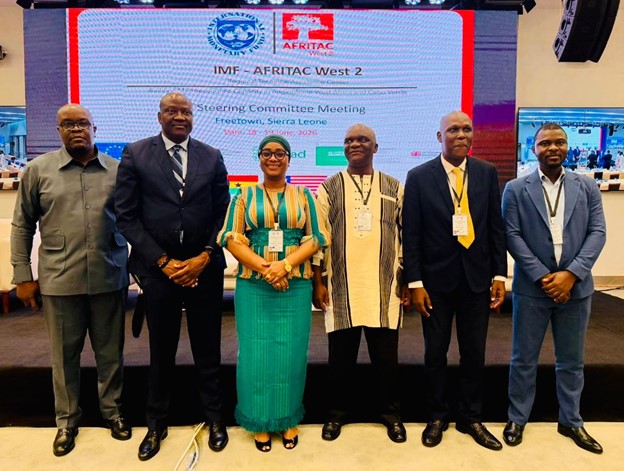
MONROVIA – Liberia’s election to lead both the AFRITAC West 2 Steering Committee and the African Training Institute Steering Committee marks a significant moment in the country’s expanding role within regional financial governance. The appointments place Liberia at the center of key discussions on economic management, technical assistance, institutional development, and capacity building across West Africa. The development also reflects growing confidence among member states and development partners in Liberia’s contribution to regional policy dialogue and reform efforts. Beyond diplomatic recognition, the leadership roles present an opportunity for Liberia to influence regional priorities while showcasing progress in public financial management and economic governance. THE ANALYST reports
The Central Bank of Liberia (CBL) has announced that Liberia has assumed the chairmanship of both the AFRITAC West 2 Steering Committee and the African Training Institute (ATI) Steering Committee for the period July 2026 to June 2027.
According to the CBL, the dual appointments underscore Liberia’s growing credibility and leadership in regional and international financial governance.
The Bank disclosed that the decision to transfer the ATI Steering Committee chairmanship from Mali to Liberia was unanimously endorsed by participating countries during a virtual meeting held on June 12, 2026. Similarly, the transfer of the AFRITAC West 2 Steering Committee chairmanship from Sierra Leone to Liberia was unanimously endorsed during a meeting held on June 18, 2026, in Freetown, Sierra Leone.
Regional Support for Liberia
Representing Liberia at the meetings was Executive Governor Henry F. Saamoi, accompanied by senior government officials, including the Deputy Governor for Economic Policy, the Commissioner General of the Liberia Revenue Authority (LRA), and other national stakeholders.
According to the CBL, Liberia’s delegation received unanimous support from member states and development partners. The Bank also noted that Liberian institutions, including the Liberia Institute of Statistics and Geo-Information Services (LISGIS), the LRA, and the CBL, participated prominently in panel discussions focusing on statistics, leadership and governance, and the integration of International Monetary Fund (IMF) capacity development programs.
Saamoi Outlines Priorities
In his acceptance remarks, Governor Saamoi identified three priorities that Liberia intends to pursue during its tenure.
He said Liberia would focus on ensuring the strategic relevance and responsiveness of IMF-supported capacity development programs, strengthening regional cooperation and peer learning among member countries, and enhancing the impact, effectiveness, and accountability of technical assistance and training initiatives.
“Liberia will discharge this responsibility with humility, dedication, and a strong spirit of partnership,” Saamoi affirmed.
The Governor further noted that Liberia intends to work closely with member states and development partners to advance the objectives of both institutions.
Hosting Responsibilities Ahead
As chair, Liberia will host the AFRITAC West 2 and ATI Steering Committee meetings in 2027. The CBL described the development as a milestone that will further strengthen Liberia’s profile as a convener of regional dialogue and institutional capacity-building initiatives.
The Bank noted that AFRITAC West 2 and ATI serve as important components of the IMF’s capacity development framework, providing technical assistance and training to member countries across the region.
According to the CBL, Liberia has benefited significantly from these programs, particularly in areas relating to monetary policy implementation, financial sector supervision, and macroeconomic management. The Bank stated that such reforms have contributed to strengthening economic stability and supporting sustainable growth.
The announcement follows what the CBL described as Liberia’s increasing leadership role within the Economic Community of West African States (ECOWAS) and the West African Monetary Zone, reinforcing the country’s position in regional financial cooperation and policy coordination.
Comments are closed.