
Boakai Champions Historical Leadership -Pledges to reclaim Liberia’s records
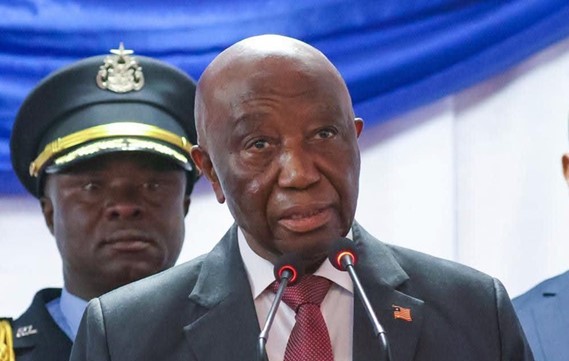
MONROVIA – President Joseph Nyuma Boakai used Liberia’s 179th Independence Anniversary to redirect the national conversation. He steered the anniversary away from ceremony toward a contest over the country’s historical memory. Speaking in Buchanan, Grand Bassa County, he unveiled a National Historical Recovery and Repatriation Initiative and vowed to rebuild neglected heritage institutions. The address reframed national identity as unfinished work, insisting Liberians, not foreign scholars, must interpret their own past. His proposals carry weight, reviving a history project first recommended by the Truth and Reconciliation Commission. Whether the government can shield that work from partisan influence has emerged as the central test. The program is pitched as generational, not administrative, As THE ANALYST reports,
Reclaiming the National Story
Delivering his Independence Day message in Buchanan under the theme “Strengthening National Identity Through Liberian-Led Historical Leadership,” Boakai argued that a nation understanding its history is better prepared to shape its future. He said the year’s theme called on Liberians to deepen their grasp of the national story and to take the lead in researching, preserving, and interpreting the history that defines their identity.
The President framed Liberian identity as something rooted across the full sweep of the country’s journey, from its conception in 1819 to independence in 1847. He said that story lived not only in archives and official records but also in the oral traditions of communities, cultural heritage, and the lived experiences of ordinary people.
Boakai tied that identity to a set of enduring values he described as uniquely Liberian, among them a republican tradition, a love of freedom, resilience, and cultural diversity. He said those values should shape not only how Liberians remember the past but also how they govern the Republic and build the future.
He also acknowledged the country’s connection to one of humanity’s darkest chapters, the transatlantic slave trade, whose reminders lie along the Liberian coastline. Boakai said his government supported honest efforts to acknowledge that history, not to reopen old wounds but to strengthen justice, reconciliation, and common humanity.
Rebuilding Heritage Institutions
The centerpiece of the address was the announcement of a National Historical Recovery and Repatriation Initiative, through which the government intends to work with international partners, universities, and cultural institutions to repatriate copies of historical records related to Liberia. Boakai said the effort would allow Liberians to once again access the documentary foundations of their national memory, much of which is held abroad in various institutions and private collections.
He pledged to modernize and strengthen the National Archives and the National Museum, both of which he said had operated for too long under difficult conditions that limited their responsibilities. The President said the government would improve infrastructure, preservation and conservation systems, digitization, and access for researchers, students, and citizens.
Boakai further directed the establishment of an intergovernmental technical committee to study the future of the Kendeja Cultural Center and recommend its restoration, modernization, and integration into Liberia’s national heritage program. He recalled that the center once stood as a proud symbol of Liberia’s cultural heritage and artistic expression.
The President also acknowledged recent scholarly work examining the country’s national symbols and how they might better reflect Liberia’s diverse peoples, cultures, and history. He said national symbols should embody the identity, aspirations, and contributions of all Liberians and inspire a deeper sense of belonging.
A Project Beyond Politics
In the most politically consequential portion of his message, Boakai announced that his administration would revive the National History Project, first recommended by the Truth and Reconciliation Commission. He said its purpose was to promote comprehensive, inclusive documentation of the experiences of all communities that have contributed to Liberia’s formation and development.
The President insisted the project must remain independent of partisan influence and insulated from the interests of any particular administration or generation. He warned that history should never be written through the lens of political convenience but must remain an honest, evidence-based account of the national journey.
Boakai said the project would be led by Liberia’s community of professional historians, archivists, archaeologists, anthropologists, linguists, educators, and other scholars working under institutional oversight. He added that international scholars and institutions would remain valued partners, but that Liberians must stay at the center of researching, interpreting, and presenting the country’s history.
He also stressed that credible scholarship had never been more important in an age when misinformation spreads instantly and opinion is too often mistaken for fact. According to Boakai, the country’s universities, archives, museums, and research institutions must become the guardians of national memory.
Centennial Reflections
The President noted that the year also marks one hundred years since two events he said profoundly influenced Liberia’s development: the signing of the 1926 Firestone Concession Agreement and the Harvard African Expedition to Liberia. He said each shaped the country’s economic path and contributed to the world’s understanding of its people, culture, and natural resources.
Boakai closed by framing national identity as the greatest inheritance Liberians could leave future generations, ahead of infrastructure or institutions. He said the goal was a confident nation whose citizens understand their common history, appreciate their diversity, and embrace a shared destiny.
He appealed to every Liberian, regardless of county, ethnicity, religion, political persuasion, gender, or social background, to see themselves reflected in the national story. The President said citizens should be bound not only by the hope of prosperity but by the strength of a shared identity and a commitment to one another.
Comments are closed.