

Exonerated by Police -Bryant McGill Calls for Respect for Evidence
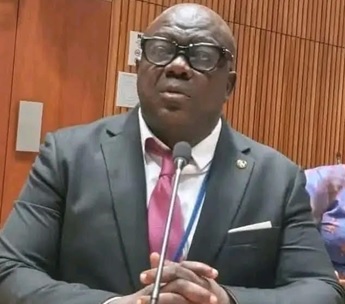
MONROVIA – There is always national climate strained by heightened sensitivity to sexual and gender-based violence, allegations involving public officials often trigger intense public reaction long before investigative processes are concluded. This tension between the urgent demand for justice for victims and the constitutional guarantee of due process has become one of Liberia’s most contested governance challenges. The case involving Bryant McGill, a suspended Deputy Minister for Youth and Sports, sits squarely at this intersection. Following months of public scrutiny, advocacy pressure, and political debate, McGill has now gone public with claims that he was exonerated by a professional investigation conducted by the Liberia National Police. His statement reopens broader national questions about evidentiary standards, the role of law enforcement, and how Liberia balances the protection of women and children with the fundamental principle that allegations must be proven before guilt is assigned. THE ANALST reports.
Suspended Deputy Minister for Youth and Sports, Bryant McGill, has publicly reaffirmed his innocence following what he described as his exoneration by the Liberia National Police over a rape allegation that emerged in August 2025.
Addressing a press conference on Tuesday, McGill said the allegation—first raised on August 11, 2025—was subjected to a thorough investigation by the Liberia National Police under the leadership of Inspector General Gregory O. W. Coleman and was ultimately found to be unsupported by evidence.
According to McGill, the police investigation concluded that there was no factual, forensic, or circumstantial evidence to substantiate the rape allegation made against him. He said the findings were reached through a professional process that included forensic review, witness verification, and adherence to due process.
“I appear before you today to reaffirm my innocence and to place verifiable facts—documented facts—on the public record,” McGill told reporters. “The investigation found no evidence to support the claim.”
The suspended deputy minister explained that he returned to Liberia from the United States on August 8, 2025, and maintained that from that date onward he did not meet, see, or interact with the alleged victim at any point. He said this assertion formed a central pillar of the police investigation and was confirmed during the process that led to his clearance.
McGill addressed in detail allegations associated with Saturday, August 30, 2025—a date frequently referenced in public discussions surrounding the case. He stated that the day in question was a non-working day and that he neither reported to work nor accessed his office at the Samuel Kanyon Doe Sports Complex.
He further clarified that he does not possess personal access to his office keys, noting that entry requires the presence of two assigned staff members. According to McGill, neither of those staff members was available on the day in question, making any alleged interaction at his office impossible.
Providing an alternative account of his whereabouts, McGill said he spent the entire day at Alpha Field in the company of multiple witnesses, including Trocon Nathaniel Robers, Kelvin Sebwe, Ivan Brown, Coach Lucretius Togba, and Attorney Kollie Dorko. He added that he returned directly to his residence afterward and did not leave again until the following day.
“These facts are verifiable,” he emphasized, urging journalists and the public to rely on evidence rather than speculation.
Despite the police findings, McGill lamented what he described as a sustained public trial in the media and on social platforms, which he said inflicted reputational harm on him and emotional distress on his family. He said his decision to speak publicly was not motivated by hostility toward any individual or institution, but by a desire to defend truth, justice, and due process.
At the press conference, McGill called on national and international institutions, youth organizations, and women’s advocacy groups to acknowledge the police findings and to apply consistent standards when defending justice.
Among the institutions he referenced were the Federation of Liberian Youth, the Liberia National Student Union, the Mano River Union Youth Department, the United Nations Resident Coordinator in Liberia, UN Women, UNICEF Liberia, and other women’s organizations and leaders.
He also urged the Minister of Gender, Children and Social Protection and the Minister of Youth and Sports to act swiftly in ensuring that evidence-based decision-making and due process remain central to their responses.
“Justice must not be selective,” McGill said. “Women’s rights must not be politicized or weaponized, and innocence must not be ignored once facts are established.”
While reaffirming his support for the protection of women and children and the fight against sexual and gender-based violence, McGill warned that false allegations—when proven as such—risk undermining genuine survivors and weakening public confidence in the justice system.
He said he cooperated fully with law enforcement authorities throughout the investigation and pledged continued respect for the rule of law. While he made clear that he would not litigate the matter in the media, he also said he would not remain silent in the face of what he described as verified truth.
McGill concluded by thanking individuals and institutions that stood by him during the period and urged those who judged prematurely to reflect on the weight of evidence. He also expressed sympathy for the alleged victim and her family, stating that he hopes the actual perpetrator, if any, is identified and prosecuted so that justice is ultimately served.
“The truth has spoken through lawful investigation,” he said. “History will record it accurately.”
Comments are closed.