

Liberia Seals Strategic Tourism Partnerships-LNTA DG Drives Tourism Sector Breakthrough
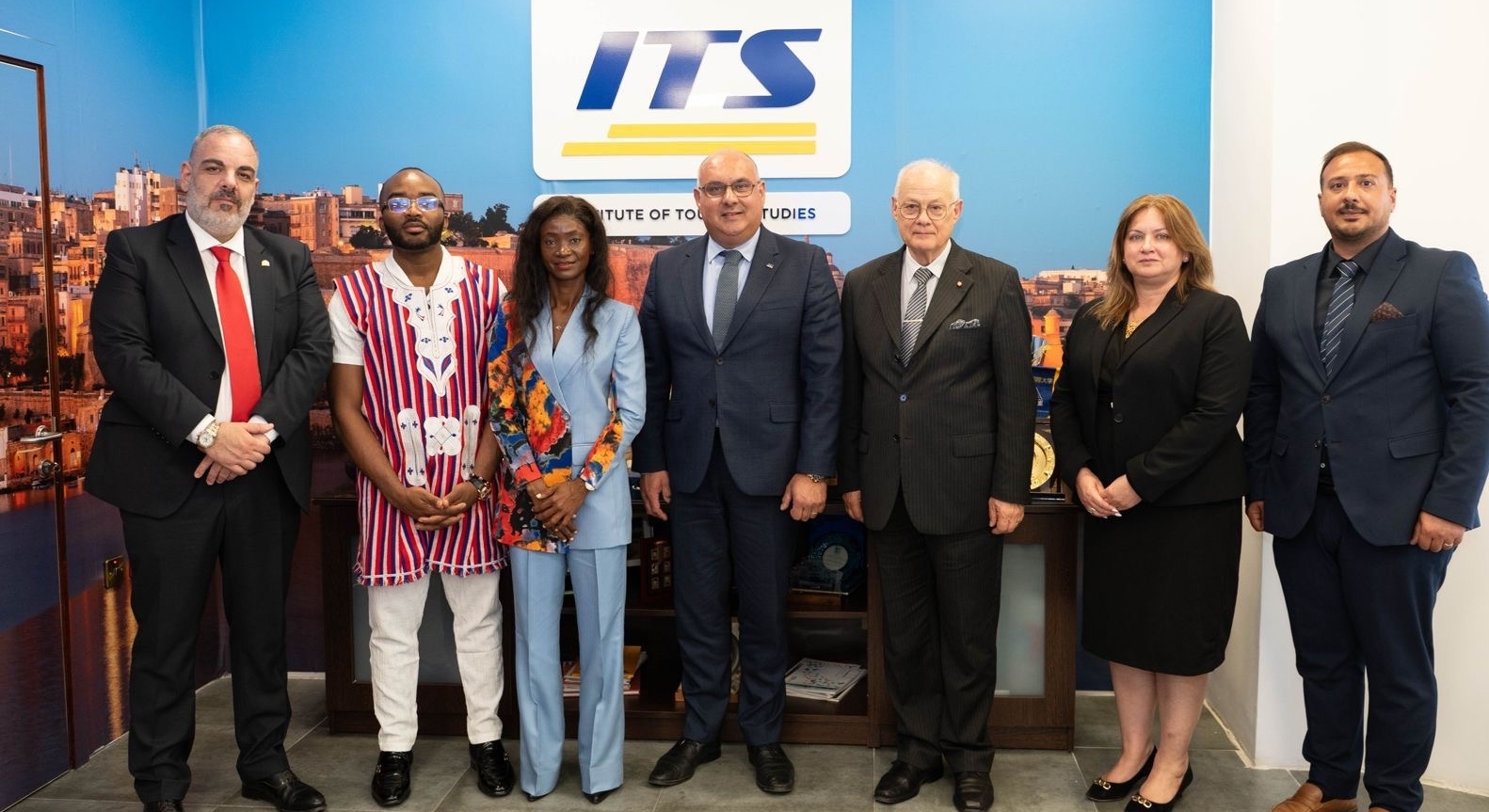
MONROVIA – Liberia’s push to reposition tourism as a serious economic pillar has gained uncommon momentum following a high-level mission to Malta led by Liberia National Tourism Authority Director General Princess Eva Cooper, marking a decisive shift from policy rhetoric to structured execution. Anchored in multiple strategic agreements, the visit connects Liberia to one of Europe’s most successful tourism models, raising expectations for job creation, skills development, and investment inflows. For a country seeking diversification beyond traditional sectors, the implications are significant but hinge on implementation discipline. As global competition intensifies and domestic capacity gaps persist, the Malta engagement presents both a breakthrough opportunity and a demanding test of Liberia’s ability to convert partnership into measurable impact. THE ANALYST reports.
Liberia has recorded what officials and sector analysts are already describing as a major strategic breakthrough in its effort to reposition tourism from a peripheral activity to a central pillar of economic growth, following a high-level four-day mission to Malta led by the Director General of the Liberia National Tourism Authority (LNTA), Hon. Princess Eva Cooper.
The mission, anchored in a series of carefully negotiated Memoranda of Understanding (MOUs), represents more than a diplomatic outreach. It signals a structured transition—one that moves Liberia’s tourism agenda from long-standing policy ambitions into a phase of deliberate, implementation-focused execution.
For years, Liberia’s tourism sector has been characterized by immense potential constrained by limited infrastructure, weak institutional coordination, and insufficient skills development. The Malta engagement, by contrast, introduces a comprehensive framework designed to address these gaps simultaneously.
A STRATEGIC ALIGNMENT WITH A GLOBAL MODEL

Formalizing a Shared Vision: A formal signing ceremony marking a milestone between countries, as both parties commit to collaboration through documented agreements.
At the heart of the mission is Liberia’s deliberate engagement with Malta—a European Union tourism powerhouse that has successfully transformed itself into one of the continent’s most competitive destinations.
With a population of approximately 520,000, Malta attracts more than 4.5 million visitors annually, generating between €3–5 billion in tourism revenue and contributing nearly 20 percent to its Gross Domestic Product (GDP).
For Liberia, the choice of Malta is not coincidental. It reflects a strategic decision to align with a tested model capable of translating natural and cultural assets into sustained economic returns.
This alignment, officials say, provides Liberia with access not just to expertise, but to systems—proven frameworks that can be adapted to local realities.
HIGH-LEVEL ENGAGEMENT ACROSS THE VALUE CHAIN
During her visit, Director General Cooper engaged extensively with a wide spectrum of Malta’s tourism ecosystem, ensuring that Liberia’s partnerships extend beyond symbolic agreements into practical, multi-sector collaboration.
Her engagements included high-level discussions with Mr. Carlo Micallef, Chief Executive Officer of the Malta Tourism Authority; Mr. Pierre Fenech, CEO of the Institute of Tourism Studies; and key representatives from both the Malta Chamber of Commerce, Enterprise and Industry and the Malta Chamber of SMEs.
Additional interactions with hospitality operators, tourism service providers, training institutions, and digital innovation platforms further broadened the scope of the mission—embedding Liberia’s engagement within the full tourism value chain.
This approach reflects an evolving understanding within Liberia’s policy space: tourism development cannot be achieved through isolated interventions. It requires coordinated action across education, regulation, investment, marketing, and service delivery.
A DIRECT PIPELINE FOR JOBS AND SKILLS DEVELOPMENT
Among the most consequential outcomes of the mission is a landmark five-year partnership with Malta’s Institute of Tourism Studies (ITS)—an agreement that introduces a structured pathway for Liberian youth into international training, internships, and employment opportunities within Europe’s tourism sector.
Under this framework, Liberian students will gain access to exchange programs, practical industry training, mentorship, and career placement support within Malta’s hospitality industry.
But the significance of the arrangement extends beyond individual opportunity. It establishes a systemic pipeline—one that integrates education with employment, ensuring that training translates directly into jobs.
The partnership also includes curriculum development support, faculty exchange, and exploration of scholarship opportunities, positioning Liberia to rapidly close its tourism skills gap while aligning its training standards with global benchmarks.
In a reciprocal arrangement, Malta is expected to deploy technical experts to Liberia to strengthen local training institutions and build domestic capacity—while discussions continue around the establishment of a satellite tourism training presence within Liberia itself.
INSTITUTIONAL STRENGTHENING AND SECTOR REFORM
Beyond workforce development, the Malta mission lays the groundwork for institutional reform—arguably one of the most critical constraints facing Liberia’s tourism sector.
Engagement with the Malta Tourism Authority (MTA) establishes a comprehensive framework for collaboration in key areas including tourism policy formulation, destination management, quality assurance, digital transformation, and sustainable tourism development.
This cooperation introduces mechanisms for joint marketing, participation in international tourism platforms, and alignment with global standards in service delivery and certification.
For Liberia, this represents a pathway toward transforming its tourism sector from an informal, fragmented system into a structured, standards-driven industry capable of competing at both regional and international levels.
PRIVATE SECTOR EXPANSION AND MARKET ACCESS
Another critical dimension of the mission is the expansion of private sector linkages—an area long identified as essential for unlocking tourism’s economic potential.
Through agreements with the Malta Chamber of Commerce, Enterprise and Industry, and the Malta Chamber of SMEs, Liberia has established direct channels for its businesses to access European markets, forge partnerships, and attract investment into tourism infrastructure and services.
These partnerships emphasize business-to-business collaboration, joint ventures, and enterprise development, particularly targeting small and medium-sized enterprises operating within Liberia’s tourism value chain.
Capacity-building initiatives focused on marketing, digitalization, and service excellence are also embedded within these agreements—aimed at enhancing the competitiveness of Liberian businesses within the global tourism marketplace.
FROM SYMBOLIC ENGAGEMENT TO EXECUTION
For years, Liberia’s tourism discourse has been dominated by policy statements and strategic plans with limited tangible outcomes.
The Malta mission signals a departure from that pattern.
For the first time, Liberia has secured a multi-layered international framework that simultaneously addresses human capital development, institutional reform, and private sector expansion.
The integration of these elements—education, policy, and investment—creates a comprehensive ecosystem for sector transformation.
Crucially, the agreements are designed to be implementation-driven. Technical working groups, structured timelines, and continuous engagement mechanisms are expected to guide execution and ensure accountability.
NATIONAL IMPACT AND ECONOMIC IMPLICATIONS
The implications of the Malta mission extend far beyond the tourism sector itself.
Improved skills and service standards are expected to enhance the overall visitor experience, while increased private sector participation and international exposure are likely to stimulate investment and job creation.
At a broader level, the initiative aligns with Liberia’s national objective of economic diversification—reducing reliance on traditional sectors such as mining and agriculture while expanding opportunities in services and creative industries.
Tourism, in this context, is positioned not merely as an economic activity, but as a platform for inclusive growth—supporting youth employment, entrepreneurship, cultural preservation, and international engagement.
A DEFINING MOMENT—WITH CONDITIONS
While the Malta mission represents a significant breakthrough, its success will ultimately depend on Liberia’s ability to sustain momentum and translate agreements into action.
Implementation will require strong institutional coordination, consistent policy support, and effective resource mobilization—areas where past initiatives have often faltered.
THE TEST AHEAD
As Liberia deepens its global engagement, the Malta mission stands as a defining moment—a demonstration of how strategic partnerships can move the country from potential to performance.
But it also raises expectations.
For a sector long seen as underdeveloped, the question is no longer whether tourism can contribute to national growth—but whether Liberia can deliver on the promise now within reach.
Comments are closed.