

EJS Demands Urgent National Reset-Challenges Boakai Government Performance
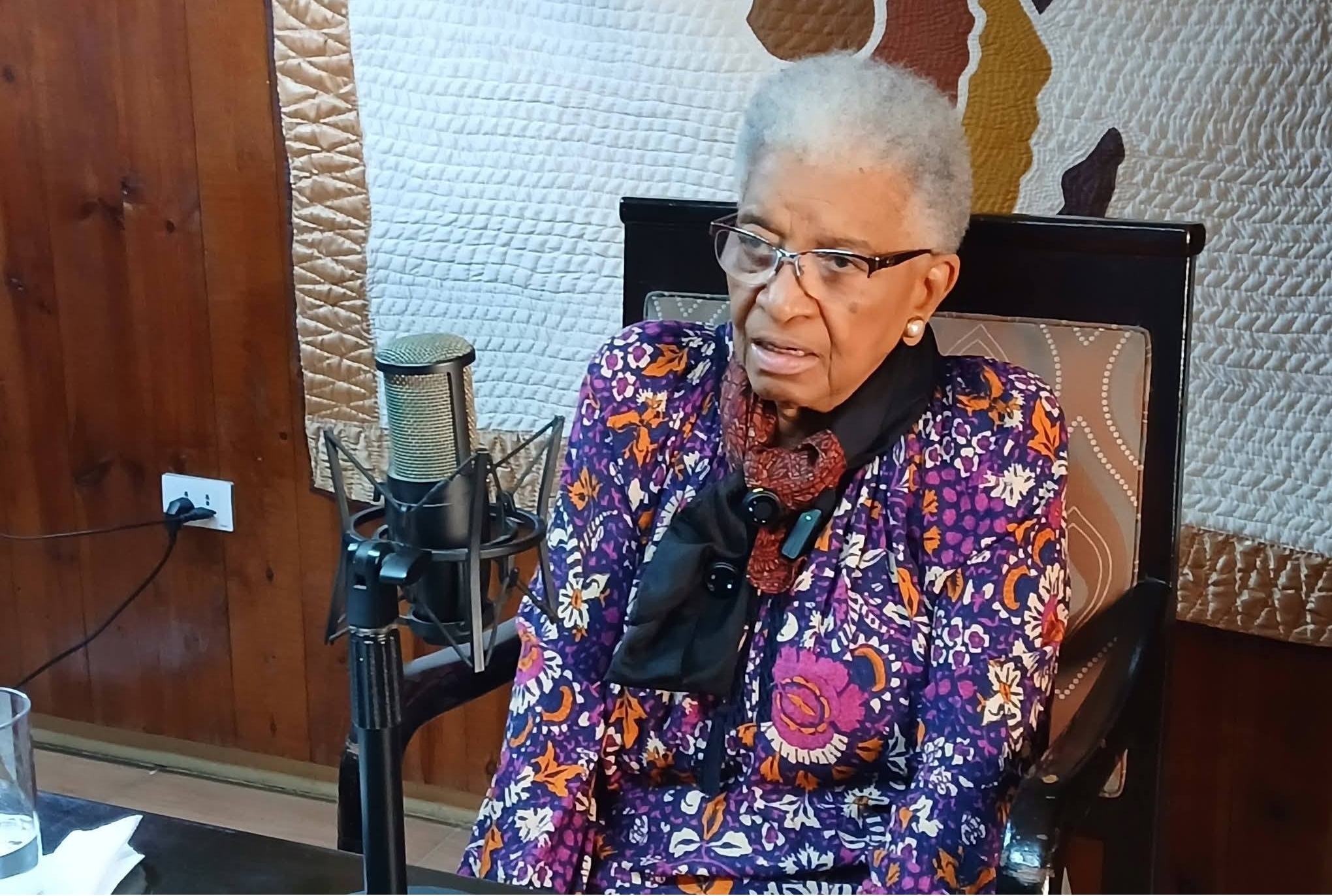
MONROVIA – In a rare, wide-ranging and emotionally candid radio interview, former President Ellen Johnson Sirleaf has delivered one of her most pointed post-presidency assessments of Liberia’s trajectory, blending reflective pride with unmistakable concern about governance, accountability, and national direction. Speaking on Truth FM, Sirleaf revisited her legacy while casting a critical eye on current leadership, warning that progress remains fragile and uneven. Her remarks come at a moment of rising public scrutiny over economic management, corruption, and social conditions, particularly in Monrovia. With Liberia’s youthful population exerting increasing pressure on the state, Sirleaf’s intervention signals both a caution and a call to action for national renewal. THE ANALYST reports.
Former Liberian President Ellen Johnson Sirleaf has stepped back into the national conversation with unusual force, offering a deeply reflective yet sharply critical assessment of Liberia’s current state in a Truth FM interview that is already reverberating across political, policy, and civic circles.
Her voice, seasoned by history and sharpened by distance from office, carried neither the defensiveness of legacy protection nor the detachment of retirement. Instead, it struck a careful but firm balance—acknowledging progress where it exists, but pressing hard on the unresolved structural weaknesses that continue to define Liberia’s governance and development trajectory.
At the outset, Sirleaf positioned herself not as a distant observer, but as an engaged stateswoman whose responsibilities extend beyond Liberia’s borders. Her ongoing work with global leadership platforms such as The Elders and the African Women’s Leader Network underscores a continued commitment to shaping international discourse on peace, governance, and development. Yet even within that global scope, her remarks revealed a persistent gravitational pull toward Liberia’s unfinished business.
“I am glad to be very much involved in matters relating to the Government of Liberia, but also in Africa and the rest of the world,” she noted, framing her current role as both outward-looking and nationally anchored.
That dual perspective—global exposure combined with domestic familiarity—appeared to inform the depth of her critique.
A GLOBAL STATESWOMAN WITH LOCAL CONCERNS
Sirleaf’s reflections on her international engagements were not mere ceremonial recounting. They served as a subtle contrast—an implicit benchmark against which Liberia’s governance challenges can be measured. Her reference to high-level dialogues on peace and prosperity with global leaders carried an undercurrent: that Liberia must situate itself more meaningfully within these conversations, not just as a participant, but as a credible actor.
Her recent mission to Tanzania under the African Women’s Leader Network was highlighted as a success, particularly the symbolic and strategic importance of engaging with a female sitting president. For Sirleaf, representation is not incidental—it is foundational to inclusive development. Yet she was clear that progress remains insufficient.
“Women leaders are doing well. Of course, we need to have many more of them,” she emphasized.
THE YOUTH QUESTION: A DEMOGRAPHIC REALITY
If there was a central thread running through Sirleaf’s intervention, it was the issue of Liberia’s youth population. Her framing was both statistical and existential.
“I think the major challenge in Liberia… is the young population,” she stated, pointing to figures indicating that over 70 percent of the population is under 35.
This is not merely a demographic observation—it is a policy imperative. The scale of youth unemployment, educational gaps, and limited economic opportunities represents a pressure point that, if unaddressed, could destabilize gains made over decades.
Sirleaf’s emphasis on education was unequivocal. Not as a rhetorical priority, but as a structural necessity. Education, in her view, is the gateway through which employment, leadership, and national development must flow.
Yet she did not confine responsibility to government alone. Her call extended to citizens, private actors, and civil society—an appeal for a collective national response to a generational challenge.
“We must do more… those of us who are not holding positions of public service,” she urged.
ON BOAKAI: CONTINUITY WITHOUT COMPLACENCY
Sirleaf’s comments on President Joseph Nyuma Boakai were measured, but not without implication. She acknowledged continuity in infrastructure development—projects initiated during her administration now being completed.
But beneath that acknowledgment lay a subtle warning: continuation is not enough.
“These projects are Liberia’s projects… for the Liberian people,” she stressed, effectively reframing them as national obligations rather than political achievements.
Her tone suggested that while progress exists, the pace and scale may not yet meet the country’s pressing needs.
CORRUPTION: THE PERSISTENT SHADOW
When the conversation turned to corruption, Sirleaf’s demeanor shifted. The measured cadence gave way to a more sober, cautionary tone.
Her administration, she argued, made significant strides in establishing integrity institutions. Yet she was candid in admitting that corruption persisted despite those efforts.
That admission was not an act of concession—it was a warning.
“Corruption has always remained a problem,” she said, underscoring the systemic nature of the issue.
Her prescription was equally direct: accountability must begin at the highest level. The credibility of the state, she implied, is inseparable from the integrity of its leadership.
More critically, she warned of the external consequences—loss of international support, diminished respect, and weakened bargaining power in global engagements.
MONROVIA: A SYMBOL OF NATIONAL FAILURE
Perhaps the most striking moment of the interview came when Sirleaf turned her attention to Monrovia.
“This city is filthy. It’s dirty… I am ashamed,” she said bluntly.
The remark, stark and unfiltered, cut through layers of diplomatic restraint. It was not merely a critique of sanitation—it was an indictment of governance failure at the most visible level.
For Sirleaf, the state of the capital is not cosmetic. It is reputational. It shapes how Liberia is perceived by investors, partners, and visitors.
Yet even in criticism, she identified opportunity. Urban sanitation, she argued, could serve as a job creation pathway for young people—linking environmental management to economic inclusion.
ECONOMY AND ACCOUNTABILITY: THE REAL TEST
On the issue of Liberia’s expanding national budget, Sirleaf struck a nuanced position. Growth in revenue, she acknowledged, is a positive development.
But the real question, she insisted, is not how much is collected—but how it is used.
“Is the money going to support school systems, health systems, road systems… or will it end up in personal pockets?” she asked.
That question, left deliberately open-ended, speaks to a broader concern about fiscal discipline and public trust.
She praised institutions like the Liberia Revenue Authority for improving collection, but warned that gains in revenue must be matched by gains in accountability.
DEMOCRACY, PRESS FREEDOM, AND LEGISLATIVE RESPONSIBILITY
Sirleaf also addressed political tensions, particularly around freedom of speech and legislative conduct. Her position was unequivocal: democratic space must remain open.
She rejected punitive approaches to dissent, warning that restrictions on speech undermine governance rather than strengthen it.
Her skepticism toward proposals to expand legislative seats reflected a deeper concern about efficiency and effectiveness within existing structures.
“What we need is those who are seated… to carry out their responsibilities,” she stated.
LEGACY AND LIMITATION
In reflecting on her own presidency, Sirleaf adopted a tone of humility.
“Under the circumstances… I did all that I could do,” she said, acknowledging both achievement and limitation.
But even in that reflection, there was an implicit message: leadership is constrained, but responsibility is not diminished.
A VOICE THAT STILL RESONATES
What emerged from the interview was not merely commentary—it was intervention.
Sirleaf’s words carry weight not only because of her history, but because of their timing. Liberia stands at a moment where expectations are rising faster than delivery, where demographic pressure is intensifying, and where governance credibility remains under scrutiny.
Her message, stripped of nuance, is clear: Liberia cannot afford complacency.
“It’s not a matter of saying it. It’s a matter of all of us doing it,” she concluded.
In that statement lies both challenge and instruction—a reminder that the country’s future will be shaped not by rhetoric, but by action.
Comments are closed.