
Dopoh Proffers Mining Reform Agenda-Targets Smuggling, Boosts Local Value
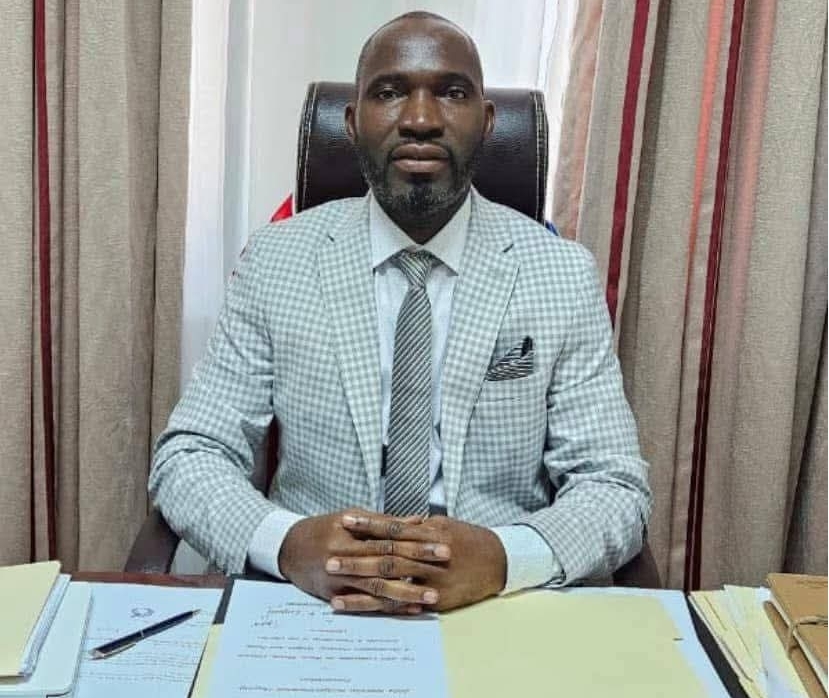
MONROVIA – A renewed push to reform Liberia’s mining sector is gathering momentum on Capitol Hill, as River Gee County Senator Francis S. Dopoh advances a sweeping legislative agenda aimed at closing loopholes, curbing gold smuggling, and restructuring the country’s largely informal artisanal mining system. The proposal arrives at a critical moment when persistent revenue losses and limited value addition continue to undermine the sector’s contribution to national development. By targeting both regulatory gaps and structural inefficiencies, the initiative seeks to reposition mining as a driver of inclusive growth. Yet, as debate intensifies, questions remain about implementation, institutional capacity, and the balance between reform and economic stability. THE ANALYST reports.
Liberia’s long-troubled gold sector is once again at the center of legislative attention, as River Gee County Senator Francis S. Dopoh unveils an ambitious reform agenda designed to address systemic weaknesses, curb illicit outflows, and unlock greater economic value from the country’s mineral resources.
Speaking at a press conference on Capitol Hill, Senator Dopoh outlined a comprehensive approach that goes beyond incremental adjustments, instead proposing a structural overhaul of how Liberia regulates, organizes, and benefits from its mining industry.
Her central argument is both straightforward and compelling: Liberia cannot continue to export raw gold while importing refined products and expecting to build a resilient economy.
“Many of us complain when we see ounces of gold leaving the country,” she remarked, challenging both policymakers and stakeholders to move from rhetoric to action.
At the heart of the proposed reforms is a focus on Liberia’s artisanal and small-scale mining sector, which accounts for the majority of mining activity nationwide but remains largely informal and weakly regulated.
This informality, Dopoh argues, is a double-edged sword. While it provides livelihoods for thousands of Liberians, it also creates conditions for smuggling, revenue leakage, and environmental degradation.
The existing licensing framework—particularly the classification of Class B and Class C licenses—is, in her view, inadequate for managing the complexities of the sector. It neither sufficiently empowers local miners nor effectively enforces standards.
To address this, Dopoh is advocating for the formation of mining cooperatives, a model that would bring artisanal miners into more structured arrangements. These cooperatives, she suggests, would serve multiple functions: organizing production, ensuring fair pricing, facilitating access to markets, and providing a platform for regulatory oversight.
A key component of this approach is the establishment of county-level gold markets. Under the current system, many miners are forced to travel to Monrovia to sell their gold, often under conditions that leave them vulnerable to exploitation. By decentralizing markets, Dopoh aims to create more equitable trading environments while reducing incentives for smuggling.
The environmental dimension of the reforms is equally significant. The widespread use of mercury in gold extraction has long been a source of concern, contributing to water pollution and health risks in mining communities. By organizing miners into cooperatives, the government would be better positioned to enforce safer and more sustainable practices.
This intersection of economic and environmental policy reflects a broader understanding that mining reform cannot be narrowly defined. It must address the full spectrum of impacts associated with the sector.
Beyond regulation, Dopoh’s proposal places strong emphasis on value addition. Currently, most of Liberia’s gold is exported in raw form, depriving the country of the economic benefits associated with processing and refining.
To reverse this trend, the Senator is advocating for the development of a domestic gold refining industry. Such an initiative, she argues, would not only create jobs but also strengthen the national economy by retaining more value within the country.
The proposal aligns with broader discussions within government circles, including considerations by the Central Bank of Liberia to incorporate gold into the country’s financial reserves. However, Dopoh questions the logic of pursuing such strategies while continuing to export unprocessed gold.
“We should not continue exporting raw gold only to consider buying refined gold from outside,” she emphasized, highlighting what she sees as a fundamental inconsistency in current policy approaches.
Her vision is forward-looking, with a five-year timeline for implementation. Within that period, she aims to see Liberia reach a point where gold is no longer exported in an unfinished state—a target that, while ambitious, reflects a growing urgency to transform the sector.
The economic implications of such a transformation are significant. A functioning domestic value chain could attract investment, stimulate industrial development, and provide more stable income streams for miners. It could also enhance government revenue through improved regulation and reduced smuggling.
However, the path to achieving these outcomes is far from straightforward. Institutional capacity remains a critical challenge. Implementing cooperative models, establishing local markets, and enforcing environmental standards will require coordinated efforts across multiple agencies, as well as sustained political will.
Dopoh acknowledges these challenges but frames them as opportunities rather than obstacles. She points to Liberia’s post-war recovery as evidence that transformative change is possible when policy is aligned with national priorities.
“As a country, we must take decisive steps,” she asserted. “This is about operationalizing a system that benefits our people—not just issuing licenses.”
In a notable extension of her remarks, the Senator also addressed a separate but related issue: public discourse surrounding the Armed Forces of Liberia (AFL).
Responding to recent debates sparked by comments from Senator Amara Konneh regarding the strength of the Liberian military relative to regional forces, Dopoh cautioned against reliance on unverified information circulating on social media.
She emphasized that figures suggesting the AFL has reached approximately 2,000 personnel are not official and should not be treated as authoritative. Such statements, she warned, risk undermining public confidence and could have unintended security implications.
This intervention highlights the broader context in which the mining reforms are being proposed—a period marked by heightened sensitivity around governance, security, and national development.
Dopoh’s caution underscores a recurring theme in contemporary Liberian politics: the need for responsible communication in an era of rapid information dissemination.
Her remarks also reinforce the importance of institutional processes. Decisions regarding the Armed Forces, she noted, are based on formal planning and consultation within legislative and executive frameworks, rather than public speculation.
As the proposed mining reforms move toward legislative debate, they are expected to attract significant attention from stakeholders across the sector, including miners, investors, civil society organizations, and development partners.
The outcome of these discussions will likely shape the future trajectory of Liberia’s extractive industries.
For now, Dopoh’s initiative has succeeded in placing critical issues back on the national agenda—issues that have long been acknowledged but often inadequately addressed.
Whether the proposed reforms translate into tangible change will depend on the ability of policymakers to navigate complex trade-offs, build consensus, and sustain momentum in the face of competing interests.
In a sector where the stakes are measured not only in economic terms but in environmental and social impacts, the challenge is formidable.
Yet, as Dopoh’s proposal makes clear, the cost of inaction may be even greater.
Comments are closed.