

Deputy Minister of Finance for Budget and Development Planning Provides Expert Testimony in Ongoing Economic Sabotage Case
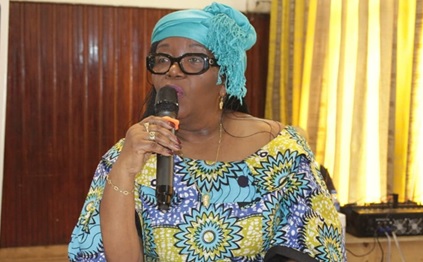
MONROVIA – Deputy Minister of Finance for Budget and Development Planning, Tanneh G. Brunson has provided expert opinion on the Government of Liberia’s financial procedure in the ongoing economic sabotage case involving former Finance Minister Samuel D. Tweah and others.
Appearing at Criminal Court C, the subpoenaed Deputy Minister described direct debit as a process through which the Central Bank of Liberia (CBL) may automatically deduct funds from the Government’s account (the Consolidated Fund) to settle obligations to the bank, often for services rendered. Such transactions are backed by legal agreements or memoranda of understanding with the Ministry of Finance and are subsequently regularized through formal requests from CBL for the issuance of allotments in its favor.
She noted that direct debits other than those executed through agreements with the CBL are technically feasible and may be requested by the fiscal authorities to address very urgent, time-sensitive payments where it is determined that the normal budget execution process that entails the issuance of allotments and other procedures may delay the prompt handling of an emergency. Minister Brunson noted, however, that the key requirement is that any transaction benefiting from such direct debit treatment must be legal and that the appropriate documentation/authorizations and records to support the ex post facto issuance of allotmentmust be provided as promptly as possible so that transaction can satisfy all the public financial management requirements.
In relation to the US$6.2 million transaction under review, the Deputy Minister indicated that it did not pass through the regular processing channel at the MFDP at the time it occurred. She disclosed that she only became aware of the transaction during a review of financial reports, including year-end documentation, which reflected changes between the Financial Intelligence Agency (FIA’s) original appropriations and its final expenditure figures.
“When I saw that direct debit, it raised an alarm because we did not process any of such transaction for FIA and there was nothing to support said transaction from the CBL to them without our knowledge”, Minister Brunson informed the Court.
During cross-examination, she reiterated that “for any transaction to be properly processed within the government system, it must be budgeted or must have received additional funds through budgetary transfers; and must also follow the established chain of authorization, underscoring the importance of adherence to public financial management procedures”. She informed the court that she did not issue the allotment for the transaction in question before the execution of the direct debit and did not issue the allotment after the transaction was effected because the Department of Budget and Development Planning was not provided with the required documentation/authorization to issue the allotment.
In conclusion, Deputy Minister Brunson also emphasized that while direct debit is technically possible under exceptional or emergency circumstances, such transactions require legal authorization, distinguishing clearly between procedural possibility and legal permissibility.
Comments are closed.