

Bility Urges Calm as Age Debate Intensifies-Says ‘Protect presidency, avoid needless drama
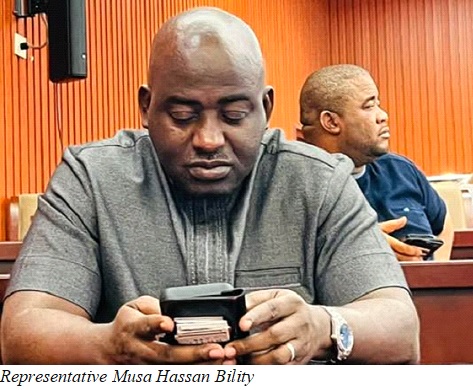
MONROVIA – In the days after President Joseph Nyuma Boakai’s latest State of the Nation Address, a familiar Liberian argument surged again—this time louder, sharper, and more personal: the President’s age. But a new intervention is shifting the discussion away from mockery and chest-beating toward restraint and statecraft. In a public “Letter from Saclepea,” Nimba lawmaker Musa Hassan Bility cautions that the real danger is not age itself, but the political denial and pressure that can distort decision-making at the highest level of government. His message is blunt: a presidency should be protected from drama—through honest assessment, disciplined staffing, and a governing style built for stability. THE ANALYST reports.
A fresh wave of national conversation over President Joseph Nyuma Boakai’s age has prompted a cautionary appeal from Representative Musa Hassan Bility, who is urging Liberians—especially political defenders of the administration—to treat the issue with sobriety rather than denial.
Bility’s intervention comes in a written statement styled as a “Letter from Saclepea,” circulated in the wake of the President’s State of the Nation Address delivered on Monday, January 26, 2026, before the 55th Legislature of Liberia. The lawmaker argues that the public debate has drifted into extremes: critics using age as ridicule, and supporters responding as if the only defense of the President is to pretend the question does not exist.
“I understand why the conversation is happening,” Bility notes, while insisting that the country is “missing the deeper point.”
In his view, the issue is not a matter of disrespecting a sitting Head of State, but of recognizing the practical demands of leadership—and organizing government in a way that reduces strain on the presidency while improving performance across institutions.
Bility, who is also political leader of the opposition Citizens Movement for Change (CMC), contends that age, by itself, is not disqualifying, but it changes the burden of governing and raises the stakes for judgment, delegation, and discipline.
He warns that when loyalists try to “over-prove” strength, they may end up pushing the President into exhaustion, or into avoidable political exposure.
At the center of his message is a call for realism: that Liberians can respect the office while still acknowledging human limits.
He suggests the nation should stop rewarding a culture where proximity to power encourages people to demand endless travel, endless meetings, and endless public appearances—often for political theater rather than public value.
In the letter, the Nimba District #7 representative presses a broader point about how modern presidencies function.
He argues that effective leadership is not measured by physical stamina or public spectacle, but by clarity of judgment, steady decision-making, and the ability to run a well-managed executive branch. In that regard, he urges that the administration be structured so that competence—not flattery—carries the weight of daily governance.
Bility’s statement also takes aim at what he calls “dangerous” denial: the tendency of partisans to react to any mention of age as an insult, rather than as a prompt for smarter governance. He cautions that refusing to have an honest discussion does not protect the President; it merely weakens public confidence when citizens can plainly see gaps between political messaging and lived reality.
“What I saw around the SONA conversation was not impressive,” he writes, arguing that too many voices were speaking “as if the only way to defend the President is to pretend he is thirty years younger.” He describes such posturing as denial, and warns that denial, in governance, can become a public risk.
He the ‘Letter from Saclepea” the CMC leader places particular emphasis on political pressure—how supporters, in trying to prove loyalty, can demand more from a leader than is wise. Bility argues that the president should not be “pushed beyond his boundary for selfish gain,” and that the country should allow the presidency “space, time, and rest,” while building a system that still delivers.
He also links the controversy to a larger question of national stability. The presidency, he notes, is not merely a personality but an institution.
When public trust in the steadiness of that institution declines—whether because of real governance failures or unnecessary political drama—the consequences can be unpredictable in a fragile democracy.
Bility frames his message as a warning rooted in recent history: that Liberia has paid too high a price to return to constitutional order and should avoid any politics that creates avoidable uncertainty at the center of the state.
In his words, the country has “struggled too hard” to regain stability, and must now protect it through mature political conduct.
The lawmaker’s appeal is also a direct message to the President’s inner circle and governing coalition: to prioritize a disciplined system around the President—strong ministers, clearer roles, reliable decision channels, and a governance style that reduces noise while increasing output. He suggests that mental strength, careful decision-making, and a properly managed government can keep the presidency effective, regardless of age.
In a tone that is both admonishing and nationalistic, Bility argues that the public discussion should not become a competition in propaganda. He suggests that supporters do the administration no favors when they treat every concern as hostility, or every critique as treason. Instead, he urges a more mature posture: defend the presidency by improving performance, not by manufacturing illusions.
His letter closes with a final plea for steadiness—warning that if the country handles the issue responsibly, “Liberia is safer,” but if it does not, and public faith in the stability of the presidency weakens, the outcome becomes “unknown and unpredictable.”
For Bility, the standard he is calling for is not merely political strategy but civic duty. He describes this approach—honest, restrained, and institution-centered—as what patriotism should look like: keeping the ship steady, keeping the peace secure, and keeping the nation focused on governance rather than drama.
Comments are closed.