
Musu-Scott Challenges Senate Intervention Authority -Says constitutional limits define legislative oversight
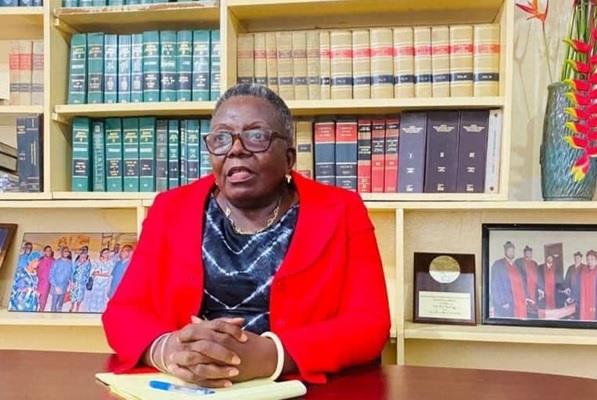
MONROVIA – What began as a dispute over petroleum governance is now evolving into a broader constitutional debate over the limits of legislative authority and the separation of powers within Liberia’s democratic system. As senators intensify scrutiny of activities at the National Oil Company of Liberia (NOCAL), former Chief Justice and current NOCAL Board Chairperson Cllr. Gloria Musu-Scott has entered the controversy with a forceful legal argument that challenges the Legislature’s authority to issue operational directives to Executive Branch agencies. Her intervention shifts public attention from questions surrounding oil sector management to a more fundamental issue: where oversight ends and administration begins under Liberia’s constitutional framework and democratic governance structure. THE ANALYST reports.
MUSU-SCOTT ENTERS GROWING CONTROVERSY
The increasingly heated dispute surrounding the National Oil Company of Liberia has taken a significant constitutional turn following the intervention of former Chief Justice Cllr. Gloria Musu-Scott, who has publicly challenged what she considers an overextension of legislative authority in recent actions targeting the state-owned petroleum institution.
Musu-Scott’s comments which were posted under Senator Kanneh’s post emerged as lawmakers, led by Gbarpolu County Senator Amara Konneh and River Gee County Senator Jonathan Boye Charles Sogbie, continue to press for investigations and administrative actions regarding NOCAL’s activities.
While much of the public discussion has centered on petroleum governance, licensing authority and accountability in the management of Liberia’s oil sector, Musu-Scott has redirected attention toward a different but equally significant issue—the constitutional boundaries governing the relationship among Liberia’s three branches of government.
Her intervention has injected a new layer of complexity into an already contentious debate and has prompted renewed discussion among legal practitioners, governance experts and policymakers regarding the proper exercise of legislative oversight.
FORMER CHIEF JUSTICE CITES CONSTITUTION
In a comment directed at the lawmakers, Musu-Scott argued that the Liberian Constitution clearly establishes limits on the powers that each branch of government may exercise.
According to her, while the Legislature possesses extensive authority to conduct oversight, investigate public institutions and hold government officials accountable, those powers do not extend to issuing administrative directives to agencies operating under the Executive Branch.
“The Constitution of Liberia does not give you the authority to give administrative instructions to an agency in the executive branch of government,” Musu-Scott stated.
Her argument is rooted in constitutional provisions that define the separation of powers and allocate distinct responsibilities among the Executive, Legislative and Judicial branches.
According to Musu-Scott, preserving those boundaries is essential to maintaining constitutional order and preventing institutional encroachment.
SEPARATION OF POWERS TAKES CENTER STAGE
At the heart of Musu-Scott’s position lies one of the foundational principles of constitutional democracy: separation of powers.
The doctrine is explicitly recognized under Article 3 of the 1986 Constitution of Liberia, which establishes three separate but coordinate branches of government and prohibits any branch from exercising powers assigned to another except where otherwise provided by law.
Legal scholars note that the doctrine serves as a safeguard against excessive concentration of power and helps preserve checks and balances within government.
Musu-Scott contends that legislative attempts to direct operational decisions at NOCAL risk crossing that constitutional line.
According to her interpretation, oversight and administration are not interchangeable functions.
While the Legislature may investigate and question actions taken by Executive institutions, she argues that it cannot assume direct control over their daily management.
OVERSIGHT VERSUS ADMINISTRATION
A major component of Musu-Scott’s argument focuses on distinguishing oversight responsibilities from administrative authority.
She maintains that lawmakers possess every right to scrutinize public institutions, summon officials, review expenditures and demand accountability.
However, she argues that those powers must be exercised within constitutional limits.
“The exercise of constitutional legislative authority does not extend to the administrative day-to-day operations of agencies of the Executive Branch,” she emphasized.
According to her reasoning, legislative oversight is intended to evaluate performance, examine compliance and identify potential wrongdoing.
Administration, on the other hand, involves managing institutions, directing operations and implementing policy decisions—functions constitutionally assigned to the Executive Branch.
Musu-Scott therefore contends that efforts by lawmakers to direct specific operational actions risk blurring an important constitutional distinction.
PRESIDENTIAL AUTHORITY UNDER REVIEW
The former Chief Justice further anchored her position in Article 50 of Liberia’s Constitution, which vests executive authority in the President of the Republic.
That provision establishes the President as Head of State, Head of Government and chief administrator of the Executive Branch.
Under this constitutional arrangement, agencies, commissions and state-owned enterprises operate under executive authority.
Musu-Scott argues that if concerns exist regarding the conduct of a public institution such as NOCAL, corrective administrative measures must ultimately originate within the Executive Branch rather than through direct legislative mandates.
According to her interpretation, bypassing the Presidency and issuing directives directly to agencies risks undermining constitutional governance structures.
Her position has attracted attention because it frames the NOCAL controversy within a much broader constitutional context.
LAWMAKERS SEEK GREATER ACCOUNTABILITY
The senators who initiated scrutiny of NOCAL have maintained that their actions are motivated by concerns regarding transparency, accountability and proper management of Liberia’s petroleum resources.
Senator Konneh, in particular, has argued that questions surrounding reconnaissance activities and other petroleum-related transactions warrant close legislative examination.
Supporters of the Senate’s position contend that oversight is especially important in sectors involving significant national assets and potential future revenues.
Governance advocates note that robust legislative scrutiny often serves as an important safeguard against mismanagement and institutional abuse.
From this perspective, Senate involvement is viewed as a legitimate exercise of constitutional responsibility rather than an encroachment upon executive authority.
The competing interpretations underscore the complexity of balancing oversight with respect for institutional boundaries.
CONSTITUTIONAL TENSION NOT NEW
Legal observers note that tensions between oversight and administration are not unique to the current NOCAL controversy.
Throughout democratic systems, disputes periodically emerge regarding how far legislative oversight can extend before it begins to interfere with executive functions.
Liberia’s constitutional framework seeks to address such tensions through a system of checks and balances designed to ensure accountability while preserving institutional independence.
The current debate therefore reflects a broader challenge confronting democratic governance: how to ensure vigorous oversight without disrupting constitutional allocations of authority.
Many legal experts believe that the NOCAL controversy may ultimately provide an opportunity to clarify these boundaries more explicitly.
DEBATE MOVES BEYOND PETROLEUM GOVERNANCE
What is particularly noteworthy about Musu-Scott’s intervention is that it shifts attention away from the substance of the petroleum dispute itself.
Rather than focusing primarily on reconnaissance licenses, regulatory authority or oil-sector transactions, her argument centers on constitutional procedure.
In doing so, she has transformed what began as a sector-specific controversy into a broader discussion about governance and institutional integrity.
Observers say the constitutional questions now emerging may ultimately prove as significant as the petroleum issues that initially triggered the dispute.
The debate has therefore evolved into a broader examination of how Liberia’s democratic institutions interact and where constitutional limits should be drawn.
LEGAL COMMUNITY WATCHING CLOSELY
The controversy is attracting growing attention within Liberia’s legal community.
Lawyers, constitutional scholars and governance experts are increasingly weighing in on the implications of Musu-Scott’s position and the broader issues raised by the Senate’s actions.
Many observers anticipate that the dispute could generate important legal and constitutional discussions in the weeks ahead.
Some argue that stronger clarification of institutional roles would benefit both government agencies and lawmakers by reducing uncertainty and preventing future conflicts.
Others believe the matter may eventually require formal legal interpretation to settle competing viewpoints.
A DEFINING GOVERNANCE QUESTION
As public debate over NOCAL continues, the controversy is rapidly becoming more than a dispute over petroleum policy.
It has evolved into a defining governance question touching on constitutional interpretation, institutional independence, oversight authority and executive responsibility.
Musu-Scott’s intervention has ensured that any future discussion of NOCAL will now occur within a broader constitutional context.
Whether one agrees with her interpretation or not, her argument has sharpened national attention on the delicate balance between accountability and separation of powers.
As lawmakers continue their scrutiny and NOCAL continues its defense, the ultimate outcome may help shape future understandings of constitutional governance and institutional authority in Liberia for years to come.
Comments are closed.