
Boakai Government Charts Border Strategy -Defends Sovereignty Diplomatically, Rejects Provocations
MONROVIA – Border disputes have historically carried the potential to destabilize communities, strain diplomatic relations and undermine regional integration efforts if not managed with restraint and strategic leadership. Against that backdrop, Liberia’s response to recent tensions along its frontier with neighboring Guinea is emerging as a test of both statecraft and regional diplomacy. Rather than embracing confrontation, the Boakai administration says it is pursuing a deliberate strategy anchored in dialogue, multilateral engagement and established international mechanisms. Government officials insist that national sovereignty remains non-negotiable, but equally emphasize that peace and stability must guide every response. As THE ANALYST reports, the emerging policy direction by the Boakai government seems to reflect broader efforts to preserve regional cohesion while protecting Liberia’s territorial integrity.
GOVERNMENT REAFFIRMS PEACEFUL APPROACH
The Government of Liberia has issued one of its strongest policy declarations yet regarding the evolving border situation with neighboring Guinea, making clear that while Liberia remains unwavering in defense of its sovereignty and territorial integrity, it is equally committed to resolving all disputes through peaceful diplomacy rather than confrontation.
The position, articulated during the Ministry of Information’s regular press briefing on Tuesday, reflects what officials describe as a comprehensive national strategy aimed at preventing escalation while protecting Liberia’s legitimate national interests.
At the center of the government’s approach is a determination to ensure that border-related disagreements do not degenerate into instability capable of affecting communities, disrupting regional cooperation or undermining decades of progress achieved under the framework of the Mano River Union.
Government officials argue that Liberia’s response is guided not by emotion or political rhetoric but by established diplomatic principles that prioritize dialogue, verification of facts and coordinated engagement with regional partners.
The administration insists that every step being taken is intended to safeguard national interests while simultaneously preserving the peace that remains essential to economic development and regional integration.
SOVEREIGNTY REMAINS NON-NEGOTIABLE
While emphasizing diplomacy, the Liberian Government has also made it abundantly clear that questions of national sovereignty are not open to compromise.
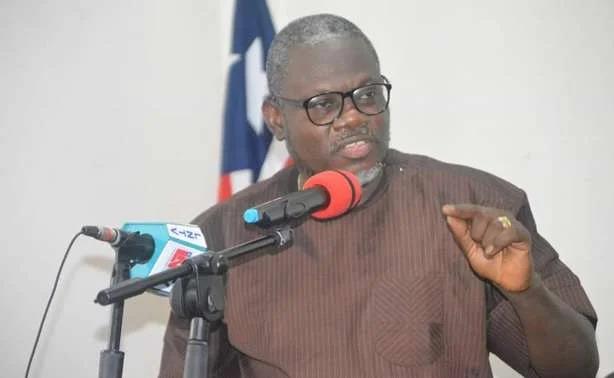
Information Minister Jerolinmek M. Piah stated that Liberia’s commitment to peace should never be mistaken for weakness or uncertainty regarding its territorial rights.
According to the government, the country’s sovereignty, territorial integrity and constitutional authority over its recognized territory remain fundamental national interests that must be protected under all circumstances.
Officials maintain that Liberia’s approach seeks to balance firmness with restraint, ensuring that legitimate national concerns are advanced through lawful international channels rather than unilateral actions.
The government argues that this balance is particularly important in a region where historical border sensitivities require careful handling to prevent misunderstandings from escalating into broader diplomatic disputes.
Minister Piah stressed that Liberia remains fully committed to defending its national interests while avoiding actions capable of inflaming tensions.
DIPLOMACY TAKES CENTER STAGE
The cornerstone of Liberia’s strategy is diplomacy.
Government officials insist that the border issue is not a matter to be settled through confrontation, threats or inflammatory rhetoric but through sustained engagement between neighboring states.
Minister Piah emphasized that Liberia remains firmly committed to dialogue as the most effective and responsible means of resolving the situation.
According to him, structured diplomatic engagement provides the best opportunity for both countries to address concerns, establish facts and reach mutually acceptable outcomes consistent with international law.
The administration further argues that diplomatic engagement allows both governments to manage tensions responsibly while protecting the interests of citizens living within affected border communities.
Officials believe that continued dialogue remains essential for maintaining stability and avoiding actions that could undermine broader regional cooperation.
MANO RIVER UNION FRAMEWORK GUIDES RESPONSE
A central feature of Liberia’s position is its reliance on regional institutions and established multilateral mechanisms.
The government says its actions are fully aligned with the principles and objectives of the Mano River Union and the African Union, both of which emphasize peaceful settlement of disputes among member states.
Officials contend that regional institutions exist precisely to provide mechanisms for addressing disagreements before they evolve into larger conflicts.
Liberia therefore views the current border situation not as an isolated bilateral dispute but as a matter that must be addressed within a broader framework of regional peace and cooperation.
The government maintains that preserving the credibility of regional institutions requires member states to respect established mechanisms for conflict resolution.
According to officials, Liberia intends to continue utilizing those mechanisms throughout the process.
CONAKRY MEETING SHAPED CURRENT POLICY
The administration pointed to the March 2026 tripartite engagement in Conakry as a major milestone in efforts to address the border issue.
During that meeting, Presidents Joseph Nyuma Boakai of Liberia, Mamadi Doumbouya of Guinea and Julius Maada Bio of Sierra Leone reportedly agreed that all border-related concerns should be handled through diplomacy and technical engagement.
Government officials describe that understanding as the foundation of current regional efforts.
The agreement reflected a shared recognition among the three neighboring countries that maintaining peace remains essential to economic growth, security cooperation and regional development.
Liberia regards the commitments reached during the Conakry engagement as a critical framework for moving forward.
Officials argue that the meeting demonstrated a collective willingness among regional leaders to prioritize peaceful solutions over confrontation.
SPECIAL ENVOY DEPLOYED TO REGION
As part of efforts to translate diplomatic commitments into concrete action, President Boakai subsequently dispatched a Special Presidential Envoy to several neighboring countries.
The envoy was tasked with engaging leaders in Côte d’Ivoire, Guinea and Sierra Leone while advancing implementation of agreements reached during the Conakry discussions.
According to government officials, the mission reflects Liberia’s determination to maintain momentum and ensure that diplomatic understandings produce tangible outcomes.
The administration views these engagements as evidence that Liberia is not merely issuing statements but actively pursuing solutions through direct regional engagement.
Officials say the envoy’s activities have helped sustain communication among regional governments and strengthen preparations for upcoming consultations.
JULY SUMMIT EXPECTED TO ADVANCE TALKS
Attention is now turning toward a highly anticipated Mano River Union Summit expected to take place next month.
Government officials say the summit will provide an important platform for advancing discussions on regional peace, security and development.
The meeting is expected to create opportunities for leaders to review progress, address outstanding concerns and reinforce commitments made during earlier engagements.
Liberia believes the summit could serve as a major step toward reducing tensions and strengthening confidence among border communities.
Officials argue that continued engagement at the highest political levels remains essential for preventing misunderstandings and ensuring coordinated responses to emerging challenges.
The administration therefore views the summit as a critical component of its broader diplomatic roadmap.
SECURITY CONSULTATIONS CONTINUE
While diplomatic initiatives proceed, the government says it has maintained close consultations with national security institutions and international partners.
Officials stress that preserving peace requires vigilance as well as diplomacy.
Accordingly, security agencies remain engaged in monitoring developments and maintaining communication with counterparts and relevant stakeholders.
The government says these efforts are intended to prevent localized incidents from escalating and to ensure that residents in border communities remain protected.
Officials also note that effective coordination between diplomatic and security institutions is essential to managing sensitive situations responsibly.
The administration believes that maintaining open channels of communication has already contributed significantly to preserving calm.
REGIONAL LEADERSHIP REMAINS KEY OBJECTIVE
Liberia’s position also reflects its broader desire to strengthen regional cooperation and reaffirm its role within the Mano River Union.
Government officials argue that peaceful management of border concerns demonstrates responsible leadership and reinforces the principles upon which regional cooperation is built.
Recent engagements involving Presidents Boakai, Doumbouya and Alassane Ouattara at the Africa Forward Summit in Nairobi further underscored the importance regional leaders attach to resolving the issue.
According to the government, these discussions revealed a shared commitment among West African leaders to preserve stability through cooperation rather than confrontation.
Officials believe that maintaining regional solidarity will be essential to achieving a durable and mutually acceptable resolution.
PEACE, FACTS AND ENGAGEMENT
Ultimately, Liberia’s policy rests on three pillars: peace, facts and sustained engagement.
The government maintains that emotional rhetoric and unilateral actions have no place in the resolution of sensitive border matters.
Instead, officials argue that diplomacy, verification of facts and continued regional dialogue provide the most effective path toward lasting stability.
As tensions along the Liberia-Guinea frontier continue to attract public attention, the Boakai administration is signaling that it intends to remain firmly committed to a strategy that protects national sovereignty while avoiding unnecessary confrontation.
For Liberia, the message is unmistakable: the country’s territorial integrity is non-negotiable, but so too is its commitment to peace, regional solidarity and responsible diplomacy.
Comments are closed.