

CENTAL Hails Anti-Corruption Court -Civil society demands legislature pass bills urgently
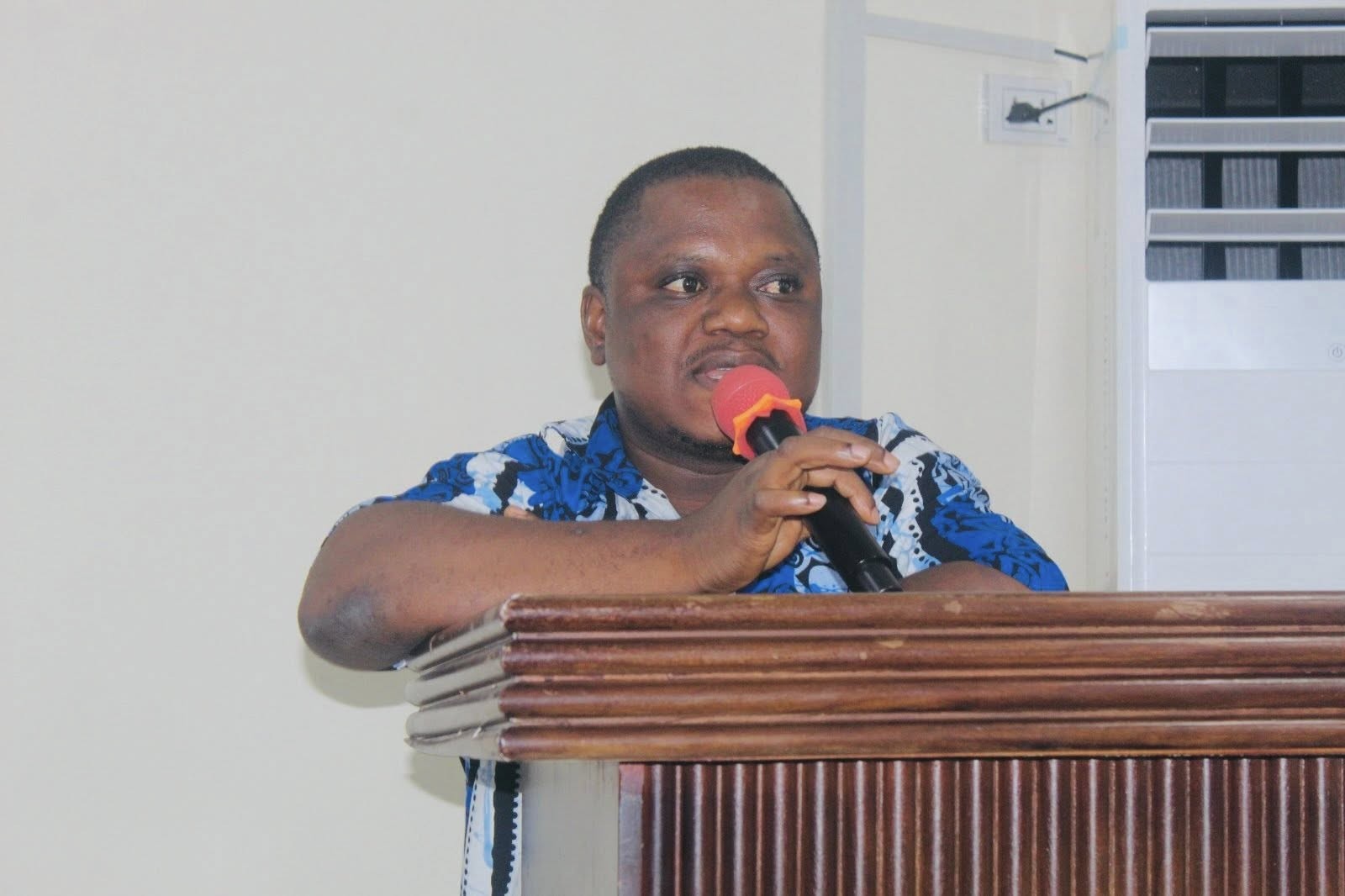
MONROVIA – The Center for Transparency and Accountability in Liberia has welcomed President Joseph Nyuma Boakai’s submission to the Legislature of two landmark bills — one establishing a War and Economic Crimes Court, and another establishing a National Anti-Corruption Court — while simultaneously raising alarm over findings from a General Auditing Commission compliance audit that identified hundreds of millions of dollars in untraced government revenue and significant irregularities in the management of public financial accounts. As THAT ANLAYST reports, the dual announcement, delivered at a CENTAL press conference in Monrovia on Wednesday, May 27, 2026, captures both the promise of institutional reform and the depth of the accountability crisis those reforms are intended to address.
The Center for Transparency and Accountability in Liberia stood before the press on Wednesday to deliver a statement that was simultaneously an endorsement of government action, a demand for legislative urgency, and a sobering accounting of how deeply entrenched financial irregularities continue to undermine the integrity of Liberia’s public revenue system.
CENTAL welcomed President Boakai’s formal submission to the Legislature, on May 20, 2026, of two pieces of legislation of historic significance: an Act establishing a War and Economic Crimes Court, and an Act adopting a new Title 17(a) of the Liberian Code of Laws Revised, which would establish the National Anti-Corruption Court. The submission was preceded by an official presentation of the draft legislation by the Office of the War and Economic Crimes Court at the Executive Mansion on May 6, 2026, following extensive consultations with diverse national stakeholders.
CENTAL’s Executive Director Anderson Miamen described the submission as an indelible step forward, noting that despite the relative progress made by successive governments in the anti-corruption sphere — including the enactment of Whistleblower and Witness Protection laws and the establishment of specialised institutional structures — the slow pace of prosecution of those investigated and accused of corruption has consistently hamstrung reform efforts and sustained a culture of impunity.
When established, the National Anti-Corruption Court would provide original jurisdiction and exclusive authority to hear corruption-related cases, ensuring swift trials and removing such cases from the overcrowded general court dockets that have historically allowed high-profile corruption proceedings to languish for years.
The court would operate with dedicated financing, institutional capacity, and a prosecutorial mandate specifically calibrated to the demands of complex corruption cases — conditions that the general court system has demonstrably failed to consistently provide.
CENTAL called on the leaderships and memberships of both the House of Representatives and the Senate to hold timely, open, and inclusive public hearings and to move with deliberate speed toward passage of the bill.
The organization further pledged its full institutional support to the establishment process and committed to working with the Office for the Establishment of War and Anti-Corruption Courts, the legislature, the executive, and other partners to ensure the initiative achieves its intended milestone.
However, the press conference was not solely an occasion for institutional affirmation. CENTAL used the platform to address, in considerable detail, the findings of a compliance audit conducted by the General Auditing Commission covering government revenue collection, reporting, and reconciliation processes for the period July 1, 2018 to December 31, 2024, spanning both Transitory and Consolidated Bank Accounts.
The audit findings, released approximately one month prior to the press conference, revealed a landscape of financial management that CENTAL characterised as deeply concerning. Major discrepancies were identified between revenue reported in the Tax Administration System and deposits reflected in the Government’s Consolidated Revenue Account at the Central Bank of Liberia. Significant gaps were found between revenue recorded in Transitory Bank Accounts and the General Revenue Account.
Variances emerged between billing records in the Automated System for Customs Data and the Liberia Integrated Tax Administration System.
Unauthorized withdrawals were recorded in Transitory Bank Accounts, alongside irregularities associated with reversal transactions, and persistent delays in the remittance of government revenue from commercial bank transitory accounts to the General Revenue Account.
The most alarming revelations concerned scale. Revenues amounting to US$257,512,276 and L$23,633,186,485 recorded in transitory bank accounts could not be traced to the General Revenue Account. Unauthorized withdrawals totaling $59,786.14 and L$55,773.87 were identified in transitory accounts during the period under review. Furthermore, the audit found that taxes collected at rural customs and tax collectorates were being maintained in cash by tax collectors for protracted periods — a practice that CENTAL noted exposes public resources to theft, corruption, and other forms of abuse with minimal institutional safeguard.
CENTAL acknowledged the May 19, 2026 joint press conference convened by the Ministry of Finance and Development Planning, the Liberia Revenue Authority, and the Central Bank of Liberia, in which the three institutions welcomed the GAC audit, outlined remedial initiatives already underway, and pledged further reforms.
The organisation noted the revision of banking agreements governing transitory accounts, the mandating of daily sweep reports from commercial banks, the deployment of ASYCUDA at major customs and border locations, and the transition to an upgraded ASYCUDA Version 4.4 capable of direct electronic integration with financial institutions.
While welcoming these forward-looking measures as vital steps, CENTAL was pointed in its assessment that they do very little to satisfactorily address the alleged past discrepancies and abuses that the audit brought to light.
Accordingly, the organisation called on the joint public accounts committee of the Legislature to conduct timely, inclusive, and robust public hearings into the audit findings; on the Liberia Revenue Authority, Central Bank, and responsible institutions to fully implement all audit recommendations; and on the Liberia Anti-Corruption Commission, the Ministry of Justice, and other anti-graft institutions to initiate and conclude criminal investigations into the discrepancies identified. CENTAL also called on the government to provide periodic, detailed public updates on the implementation of audit recommendations — ensuring that accountability extends beyond institutional statements and into measurable, transparent outcomes for ordinary Liberians.
Comments are closed.