
GC Backs Witness Protection Act Amendments-Says protection laws key to accountability
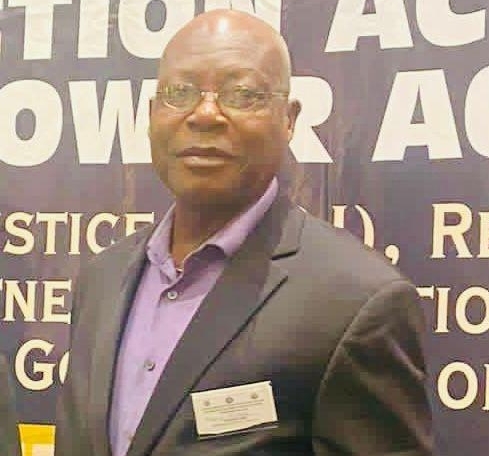
MONROVIA – Liberia’s governance reform agenda gained further institutional backing as the Governance Commission weighed in decisively on the ongoing review of witness and whistleblower protection laws, framing the process as essential to restoring public confidence in state institutions. Speaking at a high-level technical forum in Monrovia, Acting Chair Alaric K. Tokpah emphasized that strengthening legal safeguards is no longer optional but necessary in an era defined by technological risks, institutional distrust, and increasing demand for accountability. His remarks reinforced a growing national consensus that effective protection systems are foundational to justice delivery, positioning the proposed amendments as a critical step toward aligning Liberia’s legal framework with modern governance standards and citizen expectations. THE ANALYST reports.
Liberia’s ongoing effort to strengthen its justice and accountability framework received renewed impetus Tuesday as the Governance Commission, through its Acting Chair Alaric K. Tokpah, delivered a forceful endorsement of proposed amendments to the Witness Protection Act and the Whistleblower Act, describing the exercise as a “governance imperative” rather than a mere legislative review.
Addressing participants at a One-Day High-Level Technical Review Meeting held at the Boulevard Palace in Sinkor, Tokpah positioned the reform process within a broader national context—one defined by the urgent need to reinforce institutional credibility, safeguard truth-tellers, and rebuild public trust in Liberia’s justice system.
Reform Beyond Procedure
From the outset, Tokpah sought to elevate the significance of the gathering, cautioning against viewing it as a routine technical exercise.
“This review is not simply a technical exercise,” he stressed. “It is a governance imperative.”
This framing reflects a broader shift in how Liberia’s leadership is approaching legal reform—moving beyond procedural compliance toward systemic transformation.
For the Governance Commission, the stakes are clear: without robust protection mechanisms, the entire accountability architecture risks weakening under pressure.
Recognizing Institutional Leadership
Tokpah used the platform to commend the Ministry of Justice and the Witness Protection Agency for convening the review, noting that their initiative demonstrates foresight and a deep understanding of the challenges facing Liberia’s justice system.
He also acknowledged the presence of civil society organizations, development partners, and other stakeholders, emphasizing that reform of this magnitude requires collective responsibility and sustained collaboration.
This multi-stakeholder engagement, he suggested, is essential to ensuring that the resulting framework is both comprehensive and widely supported.
Addressing Modern Risks
A central theme of Tokpah’s remarks was the need to update Liberia’s legal framework to reflect contemporary risks—particularly those associated with technological advancement.
Traditional notions of confidentiality and protection, he argued, are no longer sufficient in an era of digital surveillance, data breaches, and cyber vulnerabilities.
The proposed amendments must therefore incorporate safeguards that address these evolving threats, ensuring that sensitive information remains secure even in increasingly complex environments.
Strengthening Confidentiality and Protection
Among the key priorities outlined by the Governance Commission is the strengthening of confidentiality provisions.
Witnesses and whistleblowers must be assured that their identities and testimonies will be protected—not only in theory but in practice.
This requires clear legal provisions, robust enforcement mechanisms, and operational systems capable of maintaining secrecy under pressure.
Equally important is the need to enhance protections against retaliation.
Tokpah emphasized that individuals who report wrongdoing must be shielded from intimidation, harassment, and professional or personal harm.
Without such guarantees, the incentive to come forward diminishes significantly.
Incentives and Support Systems
Beyond protection, the Governance Commission highlighted the importance of providing incentives and support mechanisms for witnesses and whistleblowers.
These may include financial compensation, psychosocial support, and other forms of assistance designed to sustain individuals who take significant personal risks in the interest of justice.
Such measures, Tokpah noted, are essential to maintaining the courage and resilience of those who engage with the system.
Aligning with Global Standards
Tokpah also stressed the importance of aligning Liberia’s legal framework with international best practices, particularly under instruments such as the United Nations Convention Against Corruption (UNCAC).
Alignment with global standards not only strengthens domestic systems but also enhances Liberia’s credibility in the international arena.
It signals a commitment to transparency, accountability, and cooperation—principles that are increasingly central to global governance.
Building Public Trust
Underlying all these reforms is a fundamental objective: rebuilding public trust.
Citizens’ confidence in the justice system is shaped by their perception of fairness, transparency, and effectiveness.
A system that protects those who speak out sends a powerful message—that integrity is valued and wrongdoing will be addressed.
Conversely, a system that fails to protect witnesses risks eroding confidence and discouraging civic participation.
From Law to Practice
Tokpah’s remarks repeatedly emphasized the need to bridge the gap between legal frameworks and practical implementation.
It is not enough to enact laws, he argued.
Those laws must be enforceable, operationally viable, and supported by clear mandates and oversight mechanisms.
This focus on implementation reflects lessons learned since the enactment of the 2021 Acts—lessons that now inform the current reform process.
A Collective Commitment
In his closing remarks, Tokpah reaffirmed the Governance Commission’s commitment to supporting the reform agenda.
The institution, he said, stands ready to contribute to efforts that enhance transparency, accountability, and public trust.
He called on all stakeholders to seize the opportunity presented by the review process, ensuring that the voices of witnesses and whistleblowers are not silenced but protected and amplified.
The Broader Significance
As Liberia continues to navigate complex governance challenges, the outcome of this reform process will have far-reaching implications.
It will shape the effectiveness of anti-corruption efforts, influence public perception of state institutions, and determine the extent to which citizens feel empowered to engage with the justice system.
Tokpah’s intervention underscores the gravity of the moment. This is not simply about refining legal texts. It is about strengthening the very foundations of governance—ensuring that justice is not only pursued but made possible through systems that protect those who make it attainable.
Comments are closed.