
PUL Mobilizes Country for Press Freedom Day -UNDP’s Dia headlines Kakata event, as Journalists Gather
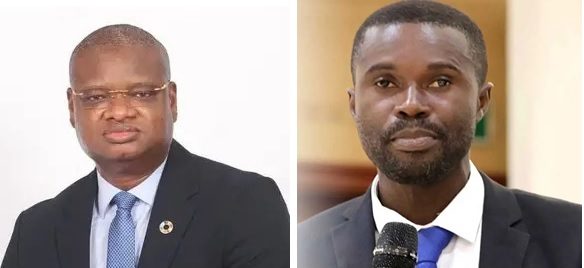
MONROVIA – As Liberia joins the global observance of World Press Freedom Day, the Press Union of Liberia is mobilizing journalists, civil society actors, and policymakers in Kakata at a moment defined as much by reflection as by concern. This year’s celebration, anchored by a keynote from the United Nations Development Programme’s Resident Representative Aliou Mamadou Dia, comes against the backdrop of growing national debate over freedom of expression, rule of law, and political accountability. While the gathering seeks to reaffirm press freedom as a pillar of peace and development, recent developments within Liberia have introduced a sharper urgency to the conversation—raising questions about whether democratic space is holding firm or gradually narrowing, as THE ANALYST reports.
The Press Union of Liberia is rallying journalists, civil society actors, policymakers, and ordinary citizens in what is shaping up to be one of the most consequential observances of World Press Freedom Day in recent years, as Liberia confronts an evolving and increasingly complex conversation about the state of free expression and democratic space.
The three-day event, taking place from May 3–5 in Kakata, Margibi County, is more than a ceremonial gathering. It is emerging as a national moment of reckoning—one where celebration, reflection, and concern intersect in equal measure.
At the center of the observance is a deliberate effort by the PUL to broaden participation beyond traditional media circles. The Union is mobilizing not only journalists, but also civil society organizations, students, development partners, and ordinary citizens—an acknowledgment that press freedom is no longer a sectoral issue, but a national one tied directly to governance, accountability, and public trust.
“As the umbrella body of journalists and media institutions, the PUL is dedicated to shaping public opinion through constructive engagement on matters of national interest,” the Union stated in its formal invitation, framing the celebration as part of a broader mission to contribute to Liberia’s democratic transformation.
This year’s global theme—“Shaping a World at Peace: Promoting Press Freedom for Human Rights, Security and Development”—has been localized in Liberia as “Advancing Press Freedom for Human Rights and Development,” a subtle but important shift that reflects the country’s own evolving priorities and challenges.
Yet beneath the formal language lies a more urgent subtext.
The keynote address by Aliou Mamadou Dia, Resident Representative of the United Nations Development Programme, is expected to set the tone for that conversation. His intervention comes at what organizers themselves describe as a “critical moment” for Liberia, where recent developments—including concerns over the erosion of democratic norms, tensions around freedom of expression, and disputes tied to the Liberia-Guinea border—are beginning to reshape the national discourse.
Those issues, the PUL notes, carry implications that extend beyond politics. They have the potential to undermine peace, weaken human rights protections, and disrupt development trajectories if not addressed with clarity and commitment.
The structure of the celebration reflects that awareness.
Activities began with a social gathering on May 3, designed not only to commemorate the day but also to foster solidarity within the media community. But it is the second day’s official program that is expected to draw the most attention.
A parade through Kakata City will symbolically place journalists at the center of public space, followed by a high-level indoor program at City Hall, where panel discussions will explore the intersection of press freedom, governance, and development.
The panel itself brings together a mix of experienced media professionals and development practitioners, including former PUL President Abraham Massaley, former Secretary General Tom Winston Monboe, independent development expert Caroline Boah, Liberia Broadcasting System Deputy Director General Kadiatu Konteh-Brohiri, and Africa Development Management Associates Managing Director Elias B. Shoniyin.
Their collective perspectives are expected to offer both reflection and critique—examining not only the progress made in Liberia’s media landscape, but also the emerging pressures that continue to test it.
Beyond the formal sessions, the inclusion of informal activities—such as a football match between the PUL and the Liberia National Police—carries symbolic weight. It reflects an effort to bridge relationships between the media and security institutions, even as those relationships remain under scrutiny.
That theme becomes more explicit on the third day, with a dedicated media-security dialogue featuring the Inspector General of Police, Colonel Gregory Colman. The session aims to address issues of crisis communication, operational interaction, and mutual accountability—areas that have historically been sources of tension.
Equally significant is the planned conference on journalists’ welfare and safety, a topic that has gained increasing attention in recent years as reporters, particularly outside Monrovia, continue to face risks ranging from harassment to physical harm.
The PUL’s decision to include a comprehensive assessment of press freedom over the past twelve months underscores the seriousness of the moment. That assessment is expected to go beyond celebration, offering a candid evaluation of achievements, setbacks, and emerging threats within the sector.
For many observers, this year’s observance is unfolding under a different tone.
Liberia, long regarded as a relative success story in post-conflict media freedom, is now navigating a more complicated reality. While legal frameworks supporting press freedom remain largely intact, the practical environment in which journalists operate is increasingly shaped by political tension, public scrutiny, and institutional responses to dissent.
It is this gap—between law and lived experience—that is driving much of the current conversation.
The PUL, for its part, appears keenly aware of that dynamic. Its messaging emphasizes not only the importance of protecting press freedom, but also the need for sustained engagement among stakeholders to ensure that those protections are meaningful in practice.
“The PUL is confident that this year’s celebrations will reposition stakeholders to recommit to the advancement of press freedom, independent journalism, and freedom of expression,” the Union stated, linking the outcome of the event to broader democratic goals.
As the celebrations continue in Kakata, the question is not simply how Liberia marks World Press Freedom Day—but what the observance ultimately represents.
Is it a reaffirmation of principles already secured, or a call to defend freedoms that are increasingly being tested?
For the journalists, policymakers, and citizens gathered in Margibi County, the answer may well determine the trajectory of Liberia’s democratic space in the months and years ahead.
Comments are closed.