
Witness Testimony Raises Doubts in Tweah et al Case-Defense exposes gaps in investigation
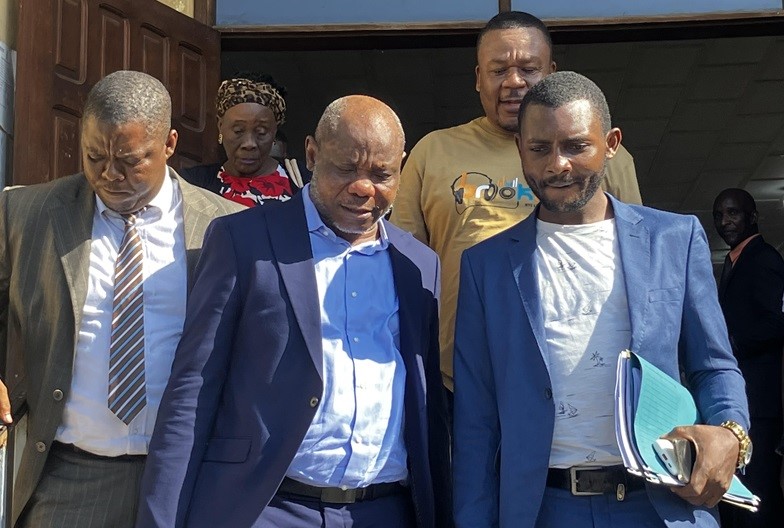
MONROVIA – A dramatic turn in the ongoing corruption trial involving former Finance Minister Samuel D. Tweah Jr. and others has exposed critical tensions at the heart of the prosecution’s case, as its lead witness admitted under cross-examination that investigators were “not interested” in the operational details of the controversial US$6 million expenditure. The revelation, delivered amid visible strain and mounting courtroom pressure, has triggered sharp legal debate over the evidentiary foundation of the indictment and raised fundamental questions about whether the prosecution can sustain its burden of proof. As THE ANALYST reports, with defense attorneys pressing contradictions and analysts pointing to gaps in both investigative logic and legal thresholds, the trial is rapidly evolving into a defining test of prosecutorial rigor, judicial scrutiny, and the integrity of Liberia’s justice system.
The ongoing trial involving former Finance Minister Samuel D. Tweah Jr. and co-defendants entered a critical phase this week as the prosecution’s principal witness, Baba M. BorKai of the Liberia Anti-Corruption Commission, came under intense cross-examination that many observers say has begun to unravel key elements of the government’s case.
What began as a routine continuation of proceedings quickly transformed into a high-stakes legal confrontation when defence counsel Arthur Johnson pressed the witness on a central issue: the absence of evidence demonstrating personal enrichment or diversion of the alleged US$6 million.
Under sustained questioning, the witness made a statement that has since reverberated across legal circles: “The investigation was not interested in the operational details of $6 million in question. We were investigating an act of corruption….”
That admission has been widely interpreted by legal analysts as potentially damaging to the prosecution’s case. In criminal proceedings involving allegations of corruption or theft, establishing how funds were used, diverted, or misappropriated is often central to proving intent and culpability.
By indicating that investigators did not prioritize such details, the witness inadvertently opened a line of argument that the defence has seized upon with increasing force.
The defence’s argument is straightforward yet profound: if investigators were not interested in the operational breakdown of the funds, on what basis did they conclude that the money was misused or stolen?
That question, which analysts believe will dominate subsequent proceedings, strikes at the logical consistency of the prosecution’s theory. It suggests a potential gap between suspicion and proof—a gap that must be bridged if the charges are to withstand judicial scrutiny.
Compounding the issue is what many observers describe as a contradiction in the witness’s own testimony.
While asserting a lack of interest in operational details, the witness simultaneously emphasized the importance of knowing which national security institutions received portions of the funds. Critics argue that such information constitutes operational detail in itself, thereby undermining the coherence of the investigative position.
The courtroom exchanges further intensified when the defence highlighted the prosecution’s reliance on the defendants’ refusal to disclose sensitive information as a basis for indictment. According to the witness, the accused failed to specify how the funds were distributed among national security institutions.
However, the defence countered that the accused have consistently cited national security considerations for withholding such information, raising a complex legal tension between transparency in prosecution and confidentiality in state security operations.
This tension has introduced a broader constitutional and institutional dimension to the case. On one hand, the prosecution argues that the lack of disclosure supports an inference of wrongdoing.
On the other, the defence contends that national security protocols may legitimately restrict the disclosure of sensitive operational expenditures, thereby complicating the evidentiary framework within which the case must be assessed.
Further controversy emerged over the status of the Financial Intelligence Agency (FIA) within Liberia’s national security architecture.
The witness contended that the FIA’s inclusion in the joint security framework was based on a letter from former National Security Advisor Jefferson Kanmoh, implying that such inclusion lacked proper authority.
The defence, however, rejected this interpretation, pointing to the National Security Act of 2011, which defines the composition of national security institutions to include both those existing at the time of enactment and those established thereafter.
They argued that the Financial Intelligence Unit (FIU), the predecessor to the FIA, was established in 2012 under former President Ellen Johnson Sirleaf and has since functioned as part of the joint security community.
According to the defence, the prosecution’s reliance on a 2023 communication assigning a security code to the FIA as evidence of its admission into the joint security framework is fundamentally flawed.
They maintain that the code was merely for communication purposes and does not constitute institutional recognition. This argument, if upheld, could significantly weaken the prosecution’s narrative regarding the legality of the fund transfer.
As proceedings continued into the second day of cross-examination, the pressure on the prosecution’s witness appeared to intensify. Observers noted visible signs of strain, including moments of hesitation, indirect responses, and reliance on generalized assertions rather than specific evidence.
The defence repeatedly pressed the witness to provide concrete proof linking the accused to personal enrichment or illicit diversion of funds, but such evidence was not forthcoming during the exchanges.
The issue of money laundering further complicated the prosecution’s position. When asked to identify additional accounts through which the alleged funds were laundered, the witness failed to present evidence of transfers beyond government accounts.
The omission, according to defence, is particularly significant because, under prevailing legal standards, money laundering typically involves the movement of funds through multiple accounts to conceal their origin. The absence of such evidence raises questions about the applicability of the charge in this case.
In a pivotal courtroom moment, defence counsel challenged the witness to reconcile his claims with testimony from the Central Bank of Liberia, where a senior official had stated that the disbursement of the funds met the necessary legal requirements.
They contend that the witness’s inability to directly address this contradiction further fueled concerns about the consistency and reliability of the prosecution’s evidence.
Legal analysts observing the proceedings have increasingly pointed to what they describe as structural weaknesses in the prosecution’s case.
These include the absence of direct evidence of theft, reliance on inference rather than demonstrable facts, and repeated objections by the prosecution to lines of questioning that seek to clarify evidentiary gaps. Some analysts interpret these dynamics as indicative of a broader challenge in sustaining the charges under rigorous judicial examination.
The prosecution, for its part, has sought to defend its approach, at times objecting to defence questions on the grounds that they encroach upon the role of the jury.
However, the court has, in several instances, overruled such objections, affirming the defence’s right to probe the evidence and test the credibility of the witness. This judicial posture underscores the adversarial nature of the proceedings and the central importance of cross-examination in establishing the truth.
As the court adjourned for recess, attention turned to the next phase of the trial, where the prosecution is expected to attempt to reinforce its case and address the weaknesses exposed during cross-examination.
Whether it can do so effectively remains an open question—one that will likely determine the trajectory of the proceedings in the days ahead.
What is clear, however, is that the trial has entered a decisive stage. The defence has successfully shifted the focus from allegations to evidence, from assertion to proof, and from narrative to legal standard.
In doing so, it has compelled the court—and the public—to confront the fundamental question at the heart of the case: whether the prosecution can substantiate its claims beyond reasonable doubt.
As proceedings resume, the outcome will hinge not on rhetoric or perception, but on the ability of each side to meet the exacting demands of the law.
For now, the courtroom remains a battleground of competing interpretations, where every answer, omission, and contradiction carries weight—and where the final judgment will shape not only the fate of the accused, but also public confidence in Liberia’s justice system.
Comments are closed.