
Yonqui Dismisses Fears of Religious Domination -Yonqui Urges Liberians to Focus on Development, Not Religion
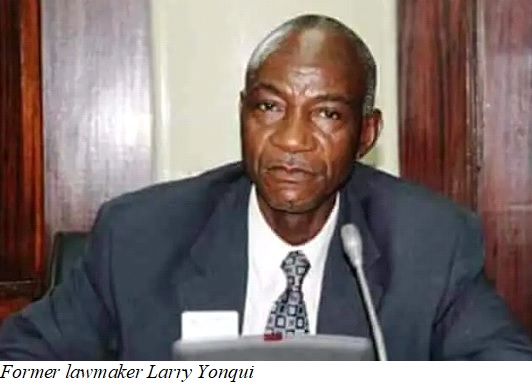
MONROVIA – As Liberia edges toward another politically sensitive period, public debate has increasingly featured claims that religious identity could shape future leadership outcomes. These narratives, often amplified during election cycles, have raised concerns about national cohesion in a constitutionally secular state. Against this backdrop, former lawmaker Larry Yonqui has moved to counter growing speculation that Liberia risks religious domination, arguing that such fears are unfounded, politically motivated, and distract from the country’s real development challenges. The Analyst reports.
Former Nimba County District #8 Representative Larry Yonqui has dismissed rising public fears that Liberia could fall under religious domination should a Muslim become president, describing the claims as exaggerated and politically driven.
Speaking from a demographic and regional perspective, Yonqui cited data from Liberia’s 2008 national census, which showed that Christians constitute approximately 88 percent of the population, while Muslims account for about 12 percent. According to him, these figures alone undermine claims that Liberia’s religious balance could be fundamentally altered through political leadership.
“Almost everyone in Liberia identifies as Christian,” Yonqui said, recalling how religious sentiments were previously inflamed during a brief conflict at Red Light under the Moses Z. Blah administration. He noted that even individuals with limited understanding of religion framed that unrest as a Christian–Muslim conflict, illustrating how easily religious identity can be politicized.
Yonqui argued that fears of Islamization collapse when examined within a broader regional context. He pointed to neighboring countries such as Guinea, Sierra Leone, and Ghana, where Muslim populations range from roughly 40 percent to as high as 70 percent in some areas, yet Christians continue to practice their faith freely without restriction.
“If countries where Muslims form a clear majority cannot convert or suppress religious minorities, how can a 12 percent Muslim population in Liberia dominate an 88 percent Christian majority?” Yonqui asked.
He maintained that narratives suggesting religious takeover are deliberately crafted to instill fear, polarize voters, and divert attention from pressing national concerns such as infrastructure development, economic opportunity, and social services.
The former lawmaker urged Liberians to evaluate leadership based on tangible development outcomes rather than religious rhetoric. He pointed to road and bridge construction, expanded electricity access, and women’s economic empowerment as more meaningful benchmarks for judging governance performance.
“What does development have to do with religion?” Yonqui asked rhetorically. “Do you have to pray before crossing a bridge or receiving electricity?”
Yonqua also emphasized that Liberia’s constitutional framework provides strong safeguards against religious domination. The country is officially secular, with guaranteed freedom of worship, and has long-standing historical ties with the United States and the broader international community, which he said further reinforce protections for religious pluralism.
He reassured citizens that Liberia’s religious identity is not under threat and warned against allowing fear-based narratives to undermine national unity.
“People should not be afraid,” Yonqui said. “Liberia cannot and will not be changed in that way.”
Liberia remains predominantly Christian, with diverse denominations represented alongside a significant Muslim minority and smaller populations practicing indigenous and other faiths. Yonqui concluded that preserving national cohesion requires focusing on development, inclusion, and constitutional values rather than politicizing religion.
Comments are closed.