
UP Chairman Defends Kolubah’s Expulsion-Cites Threat to National Sovereignty
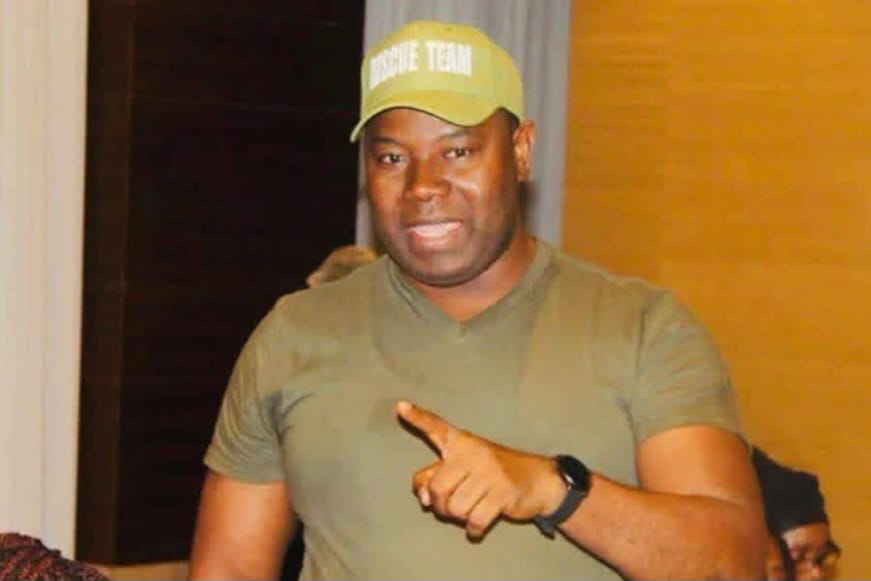
MONROVIA – The Chairman of the ruling Unity Party, Luther Tarpeh, has broken his party’s silence on the controversial expulsion of Montserrado County District #10 Representative Yekeh Kolubah, offering a forceful justification rooted in national security concerns and political accountability.
Further amplifying his position, Tarpeh described the situation as one marked by “mixed feelings,” underscoring an internal conflict between appreciation for Kolubah’s past contributions and concern over his recent conduct.
In a strongly worded statement, Tarpeh acknowledged Kolubah’s instrumental role in the Unity Party-led “Rescue Team’s” victory during the 2023 general elections, praising his ability to connect with ordinary Liberians and amplify dissatisfaction with the former administration of George Weah. “His unfiltered utterances against the former regime sealed and magnified the misdirection our nation was heading,” Tarpeh noted, adding that Kolubah’s populist style “resonated especially with the ordinary Liberians.”
Tarpeh went further to recall how Kolubah’s energetic and often theatrical presence on the campaign trail made him a crowd favorite, with supporters frequently chanting his name and portraying him as a political “nightmare” for George Weah during the heated electoral contest. He described Kolubah as both “entertaining” and impactful, noting that his ability to communicate in simple, relatable language helped bridge the gap for many citizens who struggled to grasp the complexities of governance and national development.
Despite this recognition, the Unity Party chairman made it clear that the lawmaker’s post-election conduct strained political tolerance within the ruling establishment. According to Tarpeh, Kolubah’s persistent criticism and “unproven allegations” against the government of Joseph Nyuma Boakai were initially met with restraint. “We chose the silent posture because we knew that Yekeh will always be Yekeh,” he said, suggesting the party had long accommodated the legislator’s controversial style.
At the same time, Tarpeh suggested that this very communication style, blunt, unconventional, and often confrontational, eventually became a liability. He characterized Kolubah’s political approach as one that thrives “in chaos,” arguing that such a posture increasingly conflicted with the responsibilities of national leadership, particularly during moments requiring diplomatic sensitivity and national cohesion.
However, Tarpeh argued that Kolubah crossed a critical line with remarks concerning the disputed border situation in Lofa County involving neighboring Guinea. He accused the lawmaker of making statements that appeared to validate Guinean territorial claims, calling it “an intentional statement aimed at emboldening Guinean authorities” amid already heightened tensions.
Expanding on this point, Tarpeh warned that statements made by a sitting lawmaker carry significant national and international implications. He argued that Kolubah’s remarks were not merely controversial but potentially consequential, as they “became a reference point” capable of influencing external perceptions and emboldening foreign claims. This, he implied, elevated the issue from routine political rhetoric to a matter of national security and diplomatic posture.
“That was not just political talk,” Tarpeh asserted. “It became glaring that Yekeh was not just a brash talker but a dangerous species to our national existence.” He further contended that Kolubah’s comments risked undermining Liberia’s sovereignty at a time when national unity should supersede partisan differences.
The Unity Party chairman emphasized that while political disagreements are normal in any democracy, issues of territorial integrity demand collective resolve. “All around the world, when it comes to invasion or encroachment, citizens unite against a common threat irrespective of party lines,” he stated. “But Yekeh chose to trade our sovereign pride for his usual political rhetoric.”
Tarpeh also raised broader concerns about leadership standards and accountability, questioning whether public officials should be allowed to make far-reaching national statements without substantial evidence, especially when such remarks could impact sensitive territorial disputes.
He further used the moment to advocate for reforms within Liberia’s legislative framework, calling for higher educational standards for those seeking public office. “We need to raise the benchmark for education for those who serve in the legislature,” he declared, linking leadership competence to national stability.
In a conciliatory closing, Tarpeh distanced the Unity Party from direct responsibility for Kolubah’s removal, urging the embattled lawmaker to reflect on his own actions. “Do not see the Unity Party as the brain behind your removal,” he said. “Your utterances were not carefully thought through.” He also wished Kolubah well in his future endeavors, maintaining a measured personal tone despite the political fallout.
The expulsion of Yekeh Kolubah continues to generate debate across Liberia’s political landscape, with critics raising concerns about due process and freedom of expression, while supporters argue it was a necessary step to safeguard national interests.
Comments are closed.