

The Professor’s Voice: Commentary on Education
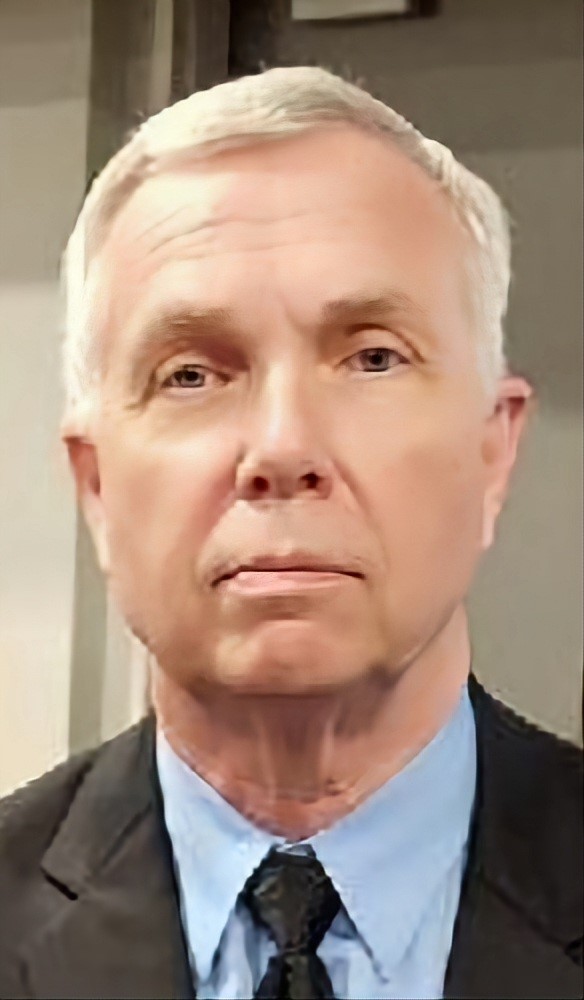
By Dr. Randy Nelson
Professor Emeritus of Education
Editorial Contributor
Functional illiteracy can be a punishing burden to those who suffer from it. People who have never learned to read and write above a fundamental level may someday tell you how frustrating it is when low reading ability strips them of anticipated opportunities. They might tell you about professions that are beyond their reach because operating a computer requires aptitude in reading and writing. They may never mention that their hopes of returning to school were snuffed out long ago by frustration and futility.
Growth and prosperity are thus wrenched from the hands of intelligent Liberians.
My concern today is reading—and the wide-ranging losses a country may experience whenever a high number of its citizens struggle to read. If I could share one important message with every teacher in Liberia, it would be this: Teach and reinforce reading with every bit of energy you have. Be intentional about reading success. Be relentless in your pursuit of reading excellence.
All of Liberia will reap the benefits.
Advancements in brain science will help you understand my urgency.
When we are born, our brains do not have an inborn genetic structure designed to facilitate reading. In other words, nothing within a newborn’s brain causes reading skills to emerge naturally. Instead, our brains must learn to create new circuits. This is accomplished by recycling dormant circuits that once served our primordial ancestors. As they develop in multiple regions of the brain, these newly created circuits facilitate the reading process.
As new skills are learned and practiced, the brain’s reading circuitry proliferates and strengthens. The circuitry responds to the stimuli of sounds being connected to letters on a chalkboard, to letter-sounds evolving into words, to words evolving into sentences, and to sentences acquiring meaning. The result is a dynamic and powerful “mental machine” that is available to all skilled readers.
The benefits of this circuitry go far beyond our ability to be good students or to operate a computer. Reading creates brain circuitry required to think in abstractions, to analyze complex issues, and to weigh diverse viewpoints. It enhances our capacity to evaluate ideas and, when necessary, refute them in fiery debate. We likewise acquire the ability to evaluate solutions to seemingly unsolvable problems. Skills such as these engender restless, insatiable thinkers—visionaries capable of empowering an honorable country with a fractured past.
Liberia indeed has a number of proficient thinkers, but what could be accomplished if that number were exponentially increased? Imagine an army of influential thinkers fighting to eradicate current issues: gender inequality, drug abuse, illiteracy, street violence, unemployment, robbery, youth homelessness, and poverty. Such efforts require the analytical and evaluative thinking skills that reading enables.
Exceptional reading instruction in Liberia’s schools must become an imperative. Well-prepared teachers must develop skilled and fluent readers who find satisfaction in the written word. Teachers must make skilled reading seem as natural as breathing the air.
Administrators must assess both the quality and quantity of reading instruction in their respective schools. They must seek teachers who are well trained in phonics instruction—teachers who understand proper skill sequencing, the strategies needed for skill reinforcement, and the importance of ongoing reading practice.
Although it will be difficult, schools must surmount funding limitations to purchase reading materials. Students learning to read must have books in their hands.
As students move into high schools and universities, we must challenge them to read the works of renowned writers such as Langston Hughes, Ayn Rand, Pearl S. Buck, Aldous Huxley, Ernest Hemingway, and Harper Lee. We need to inspire a love of history through the writings of Frederick Jackson Turner, Barbara Tuchman, W. E. B. Du Bois, and Joseph Saye Guannu. We must motivate them with the works of Edward Wilmot Blyden, Ophelia S. Lewis, Patricia Jabbeh Wesley, and Bai T. Moore.
The world of intellectual richness awaits all who can read. As accomplished readers, graduates across Liberia will have the skills to enter society as problem solvers, as change agents, as sophisticated thinkers—as men and women with original ideas and the capacity to defend them. Let education empower them with a bold vision, the vision of a country that acknowledged its struggles, addressed them, fought doggedly to succeed, and reclaimed its glory.
Let us all fight for that magnificent day.
Comments are closed.