

“Democracy Under Siege” -Bility Condemns politics of intimidation
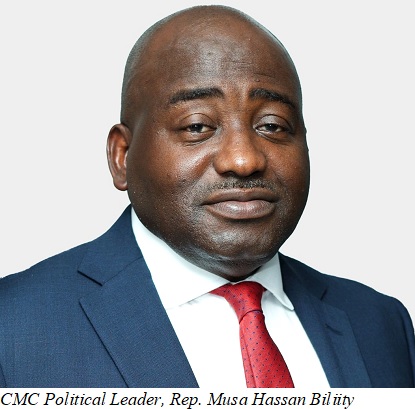
MONROVIA – Liberia’s increasingly tense political climate has taken another confrontational turn following a sharply worded intervention by Citizens Movement for Change Political Leader Musa Hassan Bility, who is warning that the country may be drifting toward a dangerous culture of intimidation where criticism of the establishment is allegedly being met with personal attacks, blackmail, and organized bullying. Framed through his widely circulated “Letter from Saclepea” platform, the statement arrives amid deepening national debates over free expression, political tolerance, and the shrinking boundaries between democratic disagreement and personal destruction. While government supporters may dismiss the comments as opposition rhetoric, Bility’s warning touches a far broader national anxiety about whether Liberia’s democratic space is becoming increasingly hostile toward dissenting voices and independent criticism. THE ANALYST reports.
Citizens Movement for Change (CMC) Political Leader and Nimba County District #7 Representative Musa Hassan Bility has launched one of his strongest political attacks yet against the current Liberian political establishment, warning that the country may be entering what he described as a dangerous democratic era where intimidation, blackmail, personal destruction, and coordinated bullying are increasingly being deployed against critics of those in power.
In a blistering political commentary issued under his regular platform, “Letter from Saclepea,” titled “When Bigots Fear Criticism and Turn to Bullying,” Bility accused the political establishment of allegedly replacing governance with propaganda and leadership with intimidation campaigns designed to silence dissent and frighten outspoken citizens into submission.
The statement, already generating intense political conversation across sections of Liberian society, arrives at a politically sensitive time when national discourse is becoming increasingly polarized and accusations of intolerance toward criticism continue emerging from opposition circles, activists, and sections of civil society.
“What we are witnessing today in Liberia is dangerous,” Bility warned at the opening of his statement, before arguing that the issue extends beyond any single controversy and instead reflects what he believes could become a broader assault on democratic dissent and free expression in the country.
According to him, the unfolding controversy surrounding Cllr. Moriah Yeakula, Vice Chairperson for Legal Affairs of the Alternative National Congress (ANC), should alarm all Liberians regardless of their political affiliation or personal views toward her.
“The real issue is this,” Bility asserted. “Are we now entering an era where those in power will weaponize personal attacks, intimidation, blackmail, and coordinated bullying against anyone who dares to criticize them?”
That question formed the central political thesis of the statement.
Though Bility stopped short of directly naming specific officials within the administration, the target of his criticism was unmistakably aimed at the broader governing establishment and what he characterized as a growing culture of intolerance toward dissenting voices.
The outspoken opposition figure argued that governments obsessed with crushing critics rather than solving national problems expose what he described as insecurity and fear.
“A government that becomes obsessed with destroying critics rather than responding to its people’s suffering reveals its own insecurity,” he declared. “It is a sign of weakness, not strength. It is a sign of fear, not confidence.”
The comments are likely to intensify already growing political friction between the government and opposition actors, especially as the country moves deeper into an increasingly charged political environment marked by disputes over governance performance, accountability, economic hardship, and democratic freedoms.
Bility’s intervention also taps into a wider historical sensitivity within Liberia’s political culture.
Liberia’s democratic history has repeatedly been shaped by tensions between state power and dissenting voices. From periods of one-party dominance and military rule to years of conflict and political suppression, questions surrounding freedom of speech, political intimidation, and tolerance for criticism have remained recurring national concerns.
Against that backdrop, Bility’s warning appears carefully designed to frame current political developments within a larger historical narrative about democratic backsliding and the dangers of unchecked political intolerance.
The CMC leader argued that truly confident governments respond to criticism through performance, ideas, and governance outcomes rather than through alleged intimidation campaigns.
“Strong governments confront criticism with performance and ideas,” he stated. “Weak governments hunt individuals, invade personal lives, sponsor humiliation, and attempt to silence voices through fear.”
The statement’s repeated references to intimidation, blackmail, and “coordinated attacks” suggest that Bility believes Liberia’s political space is becoming increasingly personalized and hostile, where critics are allegedly targeted not through policy rebuttals but through efforts aimed at emotional destruction and reputational damage.
That accusation carries potentially serious implications within a democratic system where political competition depends heavily on free expression and open criticism.
“When governments begin to hide their failures behind bullying campaigns, when they spend more time monitoring opponents than solving national problems, when they wait for personal vulnerabilities to exploit instead of presenting solutions to the people, then democracy itself becomes threatened,” Bility warned.
The Representative further claimed that activists, journalists, opposition figures, and outspoken citizens must now become increasingly vigilant because intimidation has allegedly become part of a broader political strategy.
“Be careful,” he cautioned dramatically. “Blackmail will come. Character assassination will come. Coordinated attacks will come. Attempts to isolate and emotionally destroy people will come.”
The language reflects a growing tendency among sections of Liberia’s opposition community to portray current political tensions not merely as ordinary democratic disagreement, but as evidence of an emerging hostile political culture where criticism is increasingly personalized.
At the center of Bility’s argument is the controversy surrounding ANC legal executive Cllr. Moriah Yeakula, whom he described as a target of what he believes was a deliberate campaign intended to malign and intimidate her because of her outspoken criticism.
“What happened around Moriah sends a chilling message,” he wrote. “If you speak too loudly, if you criticize too effectively, if your voice begins to resonate with ordinary people, the machinery of power may come after you personally.”
Bility further argued that Yeakula’s decision to publicly challenge allegations made against her ultimately exposed what he characterized as false narratives and deliberate political targeting.
“And suddenly, the same voices that were loud, aggressive, and determined to destroy her have gone silent,” he claimed.
The controversy surrounding Yeakula has already become one of the most politically discussed public disputes in recent weeks, drawing sharp reactions across party lines and social media spaces.
Supporters of opposition parties have increasingly framed the matter as evidence of intolerance toward criticism, while government-aligned voices have argued that public figures must also accept scrutiny and accountability for their public conduct and statements.
That broader debate reflects a growing tension within Liberia’s evolving democratic landscape: where exactly the line should be drawn between legitimate political accountability and politically motivated intimidation.
Bility’s comments now push that debate into even sharper territory.
He warned that once governments begin fearing criticism to the extent that they allegedly resort to personal destruction campaigns, democracy itself becomes endangered.
“Because once leaders begin to fear criticism so deeply that they resort to destroying people personally, democracy itself is in danger,” he stated.
Political analysts say the statement is likely to resonate strongly among opposition supporters and sections of civil society already concerned about shrinking tolerance for dissent within national political discourse.
At the same time, critics of Bility may dismiss the comments as exaggerated political rhetoric aimed at mobilizing opposition sentiment and positioning the CMC as a defender of democratic freedoms ahead of future political contests.
Still, even some neutral observers acknowledge that the statement touches on deeper anxieties within Liberian society regarding the tone of contemporary political engagement.
Social media culture, partisan polarization, online attacks, and increasingly aggressive political communication have significantly transformed Liberia’s public discourse in recent years. Public debates frequently deteriorate into personal insults, character attacks, and emotionally charged exchanges rather than substantive policy discussions.
Within that environment, accusations of organized political bullying have become increasingly common across multiple political camps.
Bility’s intervention therefore extends beyond one controversy. It attempts to frame the broader national political climate itself as becoming more hostile, more intolerant, and more psychologically aggressive.
His final warning carried unmistakable political symbolism.
“Liberians must watch carefully,” he concluded. “The signs are there. The desperation is visible. And history has taught us that governments become most dangerous when they begin to fear tomorrow.”
That statement appears deliberately crafted to suggest that political insecurity within ruling establishments often manifests through increasing aggression toward critics and dissenters.
Whether the administration responds directly to the allegations remains uncertain. Government officials and supporters have repeatedly rejected claims that the administration is hostile toward criticism, often arguing instead that opposition actors sometimes attempt to portray legitimate scrutiny as persecution.
Nevertheless, Bility’s remarks are expected to fuel fresh national debate surrounding political freedom, democratic tolerance, press independence, and the overall health of Liberia’s democratic environment.
More significantly, the statement underscores how rapidly Liberia’s political atmosphere is hardening into a climate of suspicion and confrontation where disputes are no longer confined merely to governance performance, but increasingly center on the very rules governing democratic disagreement itself.
As opposition parties continue positioning themselves for future political battles and the government seeks to defend its record amid growing economic and social pressures, the struggle over criticism, dissent, and political tolerance may now become one of the defining democratic questions confronting Liberia’s evolving political landscape.
Comments are closed.