
Senate Urged to Reject NEC Nominee-STAND cites conflict risks, democratic doom
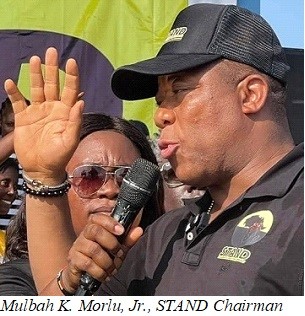
MONROVIA – A new front has opened in Liberia’s evolving democratic discourse as Solidarity and Trust for a New Day (STAND) formally petitions the Senate to reject the nomination of Jonathan K. Weedor as Chairman of the National Elections Commission. At the center of the appeal lies a familiar but consequential question: can electoral institutions remain credible when public perception of neutrality is in doubt? STAND’s argument reaches beyond legal technicalities, drawing on history, political context, and fragile regional stability to frame the nomination as a potential risk to national peace. As Liberia looks toward future elections, the stakes are no longer procedural—they are existential. THE ANALYST reports.
A significant political and constitutional debate is unfolding in Liberia following a formal appeal by Solidarity and Trust for a New Day (STAND), urging the Liberian Senate to reject the nomination of Mr. Jonathan K. Weedor as Chairman of the National Elections Commission (NEC).
In a strongly worded communication addressed to the Pro-Tempore and distinguished members of the Liberian Senate on April 3, 2026, STAND framed its position as a matter of national interest, constitutional integrity, and democratic preservation, warning that the confirmation of Mr. Weedor could undermine public trust in Liberia’s electoral system.
The appeal is anchored in concerns relating to conflict of interest, compromised neutrality, and the broader implications such an appointment could have for Liberia’s democratic stability, particularly in the lead-up to future elections, including the critical 2029 general and presidential elections.
CONSTITUTIONAL NEUTRALITY UNDER SCRUTINY
STAND’s argument begins with a direct reference to Article 89 of the 1986 Constitution of Liberia, which stipulates that no member of the National Elections Commission shall be affiliated with any political party or hold any other public office.
While acknowledging the constitutional requirement and its intent, the organization argues that formal compliance alone is insufficient in addressing the deeper issue of perceived neutrality. According to STAND, the concern extends beyond technical adherence to the law and into the realm of public perception, which it describes as equally critical to the legitimacy of electoral institutions.
The group maintains that even if Mr. Weedor has formally resigned from any political affiliations, his prior involvement in partisan activities raises legitimate questions about his ability to act independently and impartially in overseeing national elections.
ALLEGATIONS OF PRIOR POLITICAL INVOLVEMENT
Central to STAND’s appeal are allegations that Mr. Weedor played an active and strategic role in the 2023 presidential campaign of President Joseph Nyuma Boakai.
According to the communication, evidence circulating in the public domain suggests that Mr. Weedor was involved in technical aspects of the campaign, including vote tabulation, calculations, and the announcement of first-round results on behalf of the Unity Party.
The organization further references statements attributed to Mr. Weedor in which he reportedly indicated a close personal relationship with President Boakai, even suggesting familial ties by referring to himself as the President’s nephew and highlighting their shared origin from Lofa County.
STAND has requested that such video evidence be formally attached and reviewed by the Senate as part of its deliberative process, emphasizing the need for thorough scrutiny.
PERCEPTION AS A DEMOCRATIC FACTOR
The organization’s submission underscores a critical principle in democratic governance: that perception can be as consequential as reality.
STAND argues that the credibility of the National Elections Commission depends not only on its legal independence but also on the public’s confidence in its impartiality.
It warns that if citizens perceive the leadership of the NEC to be politically aligned or biased, the legitimacy of election outcomes—whether presidential, senatorial, or representative—could be called into question, regardless of the technical integrity of the electoral process.
Such a scenario, the organization suggests, could erode trust in democratic institutions and create conditions for political instability.
HISTORICAL PRECEDENT AND CAUTION
In reinforcing its argument, STAND draws on Liberia’s political history, referencing the controversial 1985 elections conducted under the administration of former President Samuel K. Doe.
The organization notes that the role of the Special Elections Commission (SECOM) under Emmett Harmon was widely perceived by many Liberians as lacking credibility, a perception that contributed to political unrest and ultimately to the November 12, 1985 coup.
By invoking this historical precedent, STAND cautions against decisions that could trigger similar perceptions of electoral manipulation, emphasizing that the consequences of compromised electoral credibility can extend far beyond immediate political disputes.
REGIONAL AND NATIONAL CONTEXT
The appeal situates Liberia’s current democratic stability within a broader regional context characterized by increasing instability, particularly in parts of the Sahel.
It also references recent tensions within Liberia’s sub-region, including developments involving neighboring Guinea, to underscore the fragility of peace and stability in the region.
Against this backdrop, STAND argues that Liberia cannot afford decisions that may undermine confidence in its democratic institutions or create conditions conducive to unrest.
The organization emphasizes that the National Elections Commission must not only be independent in law but must also be unquestionably credible in the eyes of the Liberian people.
PRESIDENTIAL STATEMENTS AND NATIONAL CONSISTENCY
STAND further strengthens its argument by recalling statements made by President Joseph Nyuma Boakai during the 2023 elections, in which he warned that election rigging would signify “the end of Liberia.”
The organization argues that this statement underscores the gravity of electoral credibility and the potential consequences of undermining it.
It suggests that confirming a nominee whose neutrality is in question could contradict the very principles the President articulated, thereby raising concerns about consistency in governance and policy.
THE SENATE’S CONSTITUTIONAL RESPONSIBILITY
In its appeal, STAND places significant emphasis on the role of the Liberian Senate as a constitutional safeguard.
The organization reminds Senators that their responsibility extends beyond confirmation procedures to include the protection of national interests, constitutional integrity, and democratic stability.
It calls on the Senate to exercise what it describes as “patriotic judgment” and “constitutional courage” in its deliberations, emphasizing that the decision will have long-term implications for Liberia’s electoral credibility and political future.
A FORMAL AND PUBLIC APPEAL
STAND concludes its communication with a formal request for the rejection of Mr. Weedor’s nomination, framing the decision as essential to preserving public trust, safeguarding the integrity of the electoral system, and ensuring national stability.
The organization also notes that copies of the communication have been shared with members of the international and diplomatic community, including the United States Embassy, the United Nations, the European Union, ECOWAS, the African Union, and The Carter Center.
This step, it explains, is intended to promote transparency and reinforce Liberia’s commitment to democratic accountability and international partnership.
IMPLICATIONS FOR LIBERIA’S DEMOCRATIC FUTURE
Analysts suggest that the controversy surrounding the nomination reflects broader tensions within Liberia’s democratic evolution, particularly regarding the balance between political loyalty and institutional independence.
The outcome of the Senate’s deliberations is expected to have far-reaching implications, not only for the leadership of the National Elections Commission but also for public confidence in Liberia’s democratic processes.
As the country looks ahead to future elections, including the pivotal 2029 polls, the credibility of its electoral institutions will remain a central pillar of peace, stability, and governance.
In a political landscape where trust in institutions is both fragile and essential, the Senate’s decision on this nomination may well define the trajectory of Liberia’s democracy in the years to come.
Comments are closed.