

Quaqua Dissects Drug Narratives-Warns misinformation could destroy trust
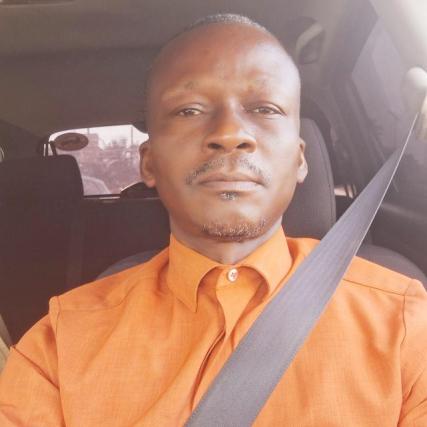
MONROVIA – Peter Quaqua has intervened in the shifts of Liberia’s drug debate from personalities toward the institutional danger created by competing political and law-enforcement narratives. His argument recognizes two realities. Drug trafficking must be confronted forcefully, but enforcement loses credibility when citizens suspect political selectivity, official protection or institutional compromise. Quaqua assigns responsibility across government, opposition, media, civil society and the courts. Government must disclose evidence and apply equal standards. Opposition leaders must distinguish due-process concerns from automatic claims of persecution. Journalists must investigate without becoming instruments of propaganda. The warning is timely: once the public sees justice as partisan theater, even legitimate investigations become harder to sustain. Truth, consistency and institutional independence remain Liberia’s strongest weapons against narcotics networks. THE ANALYST reports.
MONROVIA: Former President of the Press Union of Liberia (PUL) Peter Quaqua has warned that Liberia’s escalating fight against illicit drugs risks becoming consumed by competing political, government and media narratives, potentially weakening public trust in the institutions responsible for investigating and prosecuting suspected traffickers.
Quaqua said the deeper national concern extends beyond arrests, seizures, accusations and political controversy. He argued that Liberians must confront the possibility that sophisticated drug networks could influence, penetrate or compromise the institutions established to fight them.
In an article titled, “When the Drug War Becomes a War of Narratives,” Quaqua called for transparent government communication, equal treatment under the law, responsible opposition scrutiny, independent journalism and evidence-driven court proceedings. He maintained that Liberia cannot defeat drug trafficking if political controversy destroys confidence in law enforcement, the judiciary and other frontline institutions.
Two Fronts, One Crisis
Quaqua said Liberia is fighting its drug war on two fronts. On the first front, the government is pursuing alleged traffickers, intercepting consignments and bringing suspects before the courts.
He identified the arrest and imprisonment of former Vice President Jewel Howard-Taylor as the most dramatic recent development in the government’s enforcement campaign. Her case has generated intense political debate over whether the proceedings represent legitimate law enforcement or what government critics describe as political persecution and selective justice.
The second front, according to Quaqua, is the less visible but equally consequential battle over the public narrative. He said that struggle determines how citizens interpret arrests, prosecutions, official statements, leaked documents and allegations of political interference.
“Who decides whether an arrest represents legitimate law enforcement or political persecution?” Quaqua asked. He also questioned whether the government is genuinely confronting the drug trade or engaging in what critics characterize as selective justice.
Quaqua warned that when the fight against narcotics becomes a contest between competing political narratives, public trust and the credibility of frontline institutions can become collateral damage. He said that damage can occur whether the suspicions directed at those institutions are justified or mistaken.
Politics Shadows Drug Enforcement
Quaqua maintained that Liberia cannot afford to become a transit point or safe haven for international drug networks. He said the social and economic consequences of an expanding drug problem are too serious to be handled casually.
The former PUL president noted, however, that the political temperature rises whenever high-profile arrests become intertwined with partisan interests. Every official statement is scrutinized, every arrest is interpreted politically and every suspect’s affiliation becomes part of the public discussion.
According to Quaqua, citizens increasingly weigh government announcements against perceived political interests. Criticism of an investigation can also be portrayed as an attempt to undermine the government’s campaign against illicit drugs.
He said the government’s narrative presents state institutions as working to dismantle drug networks. The opposition counters that the machinery of justice is being selectively deployed against political opponents while people connected to the government receive different treatment.
Civil society organizations are demanding credible and independent investigations, while the media have become the main arena in which competing versions of events collide. Quaqua said the public remains caught among those competing accounts, attempting to determine which claims are supported by credible evidence.
Selective Justice Cuts Both Ways
Quaqua described “selective justice” as one of the most politically potent phrases in Liberia’s present drug debate. He said the expression can expose genuine double standards, but it can also become a convenient shield against legitimate law enforcement.
He argued that political affiliation should offer no protection when credible evidence connects an individual to drug trafficking. Political association, however, should never be treated as evidence of guilt.
Quaqua maintained that the same legal principle must be applied in every direction. He said the government cannot credibly claim to be fighting drugs “without fear or favor” while citizens perceive that individuals with political connections are receiving different treatment.
Growing public concern about alleged cherry-picking in investigations should not simply be dismissed, he warned. Government officials must address those suspicions through evidence, transparency and the equal application of legal standards.
At the same time, Quaqua said opposition politicians should not dismiss every investigation involving their allies or supporters as political persecution. Legitimate concerns about double standards must be raised, but the central question should remain whether credible evidence supports an arrest or prosecution.
“The central question must remain: What is the evidence?” Quaqua argued. He said guilt should not be determined by the political party to which a suspect belongs.
Justice becomes dangerous when political considerations determine guilt, he maintained. It also becomes ineffective when political controversy is used to obstruct legitimate investigations.
Media Faces Difficult Test
Quaqua said the media have an especially difficult responsibility in the narcotics crisis because journalists are expected to help citizens understand complex and contested issues. Drug investigations frequently involve incomplete, sensitive and disputed information, making responsible verification essential.
He credited journalists and campaigners with bringing several legitimate concerns to public attention, particularly in instances where law-enforcement authorities appeared reluctant to identify implicated individuals, including personnel within their own institutions. Without media scrutiny, Quaqua argued, some allegations might never have reached the public.
He referenced the Police Inspector General’s broad allegation that sections of the Liberian media had received bribes connected to the drug controversy. Quaqua described that response to media reports as appearing “more diversionary than revealing.”
The media’s watchdog role remains essential, he said, but journalists must maintain independence from government officials, opposition politicians, suspected traffickers and everyone else seeking to shape public understanding of the investigations.
Quaqua said journalists should scrutinize government and law-enforcement institutions while investigating allegations from every side. They must also guard against becoming vehicles for narratives intended either to shield authorities from accountability or discredit legitimate investigations.
Liberians do not need additional outrage unsupported by facts, he argued. They need journalism that asks uncomfortable questions of government, opposition figures, law-enforcement authorities and those accused of involvement in narcotics trafficking.
Such journalism, Quaqua maintained, should help citizens distinguish genuine accountability from political theater. It should resist the pressure to substitute accusations, partisan loyalties or social-media popularity for documented evidence.
Propaganda Can Become Truth
Quaqua described the information environment surrounding Liberia’s drug war as highly contested. Official statements, anonymous sources, leaked documents, political accusations and coordinated social-media campaigns regularly present different versions of the same events.
He warned that journalists can knowingly or unknowingly become part of another person’s political or criminal strategy. A carefully constructed propaganda narrative can make a legitimate investigation appear politically motivated, while an official government statement can present an untested allegation as though it were established fact.
A politician’s accusation can become a headline before journalists determine whether evidence supports it, Quaqua said. Social-media influencers can also produce a public verdict long before a courtroom has examined the evidence.
Quaqua warned that repeated and emotionally charged narratives can eventually become accepted as truth, even when they have not been independently verified. That danger makes professional skepticism and evidence-based reporting indispensable.
Networks Exploit Institutional Weakness
Criminal networks survive by identifying and exploiting institutional weaknesses, Quaqua argued. They exploit corruption, political division, failures within law enforcement and weaknesses in the information environment.
He warned that a polarized media environment can also benefit sophisticated drug networks. When the public becomes uncertain about whom to believe, confusion itself can become an asset for individuals seeking to escape scrutiny or obstruct investigations.
According to Quaqua, a sophisticated drug chain may need only to create enough uncertainty to make effective enforcement more difficult. Such networks can question official motives, transform criminal cases into partisan disputes, promote competing narratives, undermine confidence in the courts and compromise law-enforcement structures.
He said the objective may simply be to cause citizens to lose confidence in the institutions leading the drug fight. Once that confidence disappears, even legitimate arrests and prosecutions become harder to sustain publicly.
Allegations that law-enforcement structures have been penetrated or compromised must therefore be taken seriously and investigated carefully, Quaqua maintained. Those allegations should neither be dismissed because they are uncomfortable nor accepted merely because they produce a compelling political story.
Government Bears Greatest Burden
Quaqua said the government carries the greatest responsibility for maintaining confidence in the drug campaign. Although the state cannot and should not attempt to control every public narrative, it can control the transparency, consistency and evidentiary basis of its communication.
When the government makes sweeping declarations about suspects before their cases are tested in court, Quaqua warned, it risks undermining the justice system it claims to be strengthening. When state institutions withhold information without explanation, public suspicion fills the resulting vacuum.
Allegations of selective enforcement become almost inevitable when certain cases receive enormous publicity and institutional energy while others quietly disappear, he said. Government must therefore explain its decisions and apply consistent standards across cases.
If the administration promises that there will be “no sacred cows,” Quaqua argued, the public should see that principle demonstrated in practice. Government sympathizers, opposition figures and ordinary citizens should face the same scrutiny when credible allegations arise.
The credibility of the drug war will not depend solely on government declarations about fairness, he maintained. It will depend on whether Liberians can see equal treatment and institutional impartiality in practice.
Opposition Must Demand Evidence
Quaqua also assigned responsibility to Liberia’s political opposition. He said questioning government action is a legitimate democratic function and should not automatically be characterized as obstruction.
There is, however, a difference between raising legitimate concerns about due process and automatically declaring every prosecution politically motivated, he argued. If every investigation involving an opposition figure is described as a witch hunt, the accusation will eventually lose its force.
That risk should not prevent opposition leaders from raising alarms when evidence suggests unequal treatment or political interference, Quaqua said. Opposition scrutiny should focus on facts, legal procedure, transparency and the consistency of government action.
The demand should be for evidence, equal treatment and due process, he maintained. It should not become a demand for immunity for political allies.
Public Trust Faces Collapse
Quaqua identified public trust as the most important potential casualty of a badly managed drug war. Citizens need to believe that the campaign against narcotics is genuine and that frontline institutions are acting professionally.
The public must also believe that powerful individuals cannot purchase protection or escape prosecution through political influence, he argued. At the same time, citizens need confidence that nobody will be punished because of political affiliation, personal rivalry or public pressure.
Once citizens conclude that justice is merely politics operating under another name, cooperation with law enforcement may decline. Legitimate investigations can also become casualties of political polarization.
Quaqua warned that such an outcome would threaten the justice system and weaken the broader struggle against drug trafficking. Public confidence is therefore an operational requirement for effective law enforcement, rather than a secondary public-relations consideration.
Evidence Remains Final Test
Quaqua argued that Liberia’s drug campaign should not be judged solely by the number of arrests, seizures or government press conferences. The deeper test is whether the country can build a system in which evidence carries more weight than influence, institutions are stronger than personalities and justice prevails over political interests.
He called on the government to pursue credible drug cases and permit citizens to scrutinize how those cases are handled. The media should investigate every side, while the courts must retain the authority to determine guilt or innocence.
None of those institutions should be weaponized for political purposes, Quaqua warned. Liberia’s fight against narcotics is already difficult without transforming it into a permanent political battlefield.
He called for stronger law enforcement, rigorous journalism, independent scrutiny and a government confident enough in the strength of its evidence to withstand public examination. He concluded that when the drug war becomes a war of competing narratives, “the greatest casualty is not a particular suspect or institution—it is the public’s right to know the truth.”
Comments are closed.