

McGill Warns Against 2029 Rigging -Ex-Minister Says Masses Will Resist Cheating
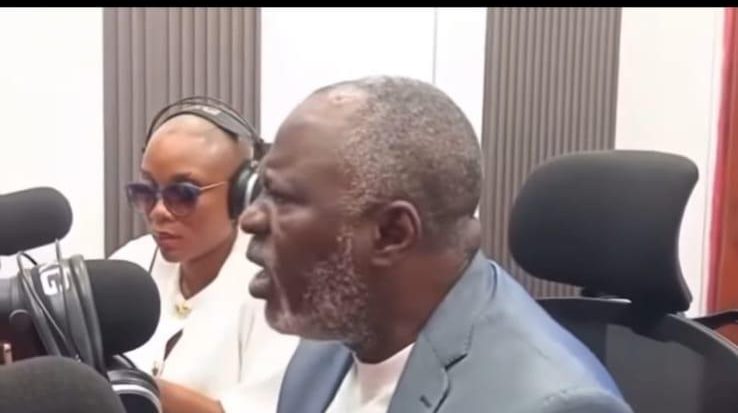
MONROVIA – Senator Nathaniel F. McGill has fired an early shot in the 2029 presidential race. The Margibi lawmaker predicts that President Joseph Boakai will lose in the first round. His charge is familiar but pointed: promises made in 2023 remain unmet. He blames young officials who, he says, shield the President from reality. McGill also warns that any attempt to rig the vote will meet popular resistance. Yet the former Minister of State is not only attacking. He concedes that the CDC made mistakes and claims it has learned. As THE ANALYST reports, he also casts his U.S. Treasury sanctions as politics, not law. The interview signals an opposition already sharpening its message for 2029.
Margibi County Senator and former Minister of State for Presidential Affairs, Nathaniel Farlo McGill, has delivered a scathing critique of the ruling Unity Party (UP) administration, predicting an outright first-round defeat for President Joseph Nyuma Boakai in the upcoming 2029 general elections. McGill cited broken promises and failed governance as the basis for his prediction.
In a wide-ranging, candid interview with a select group of journalists in Monrovia yesterday that sent shockwaves across the country’s political landscape, McGill asserted that the current administration has fundamentally failed to fulfill the promises made to the Liberian people on the 2023 campaign trail.
He warned that despite visible signs of public frustration and economic stagnation, officials around the President continue to shield him from reality, paving the way for political retribution at the ballot box.
2029 Forecast and Rigging Warning
Addressing the future of Liberian politics, McGill declared that the Unity Party’s tenure would be short-lived, arguing that the Liberian electorate will punish the ruling party for failing to translate macroeconomic statistics into household financial relief. “Boakai is my uncle, but he will lose the election,” McGill stated firmly. “He is being misled. The young people in the government are after ruining the government, they do not want him to carry them alone. Unity Party is going to lose the election in the first round, and I am telling you the fact.”
The Margibi lawmaker also issued a stern warning against any covert attempts to manipulate or rig the 2029 presidential elections, cautioning that the Liberian masses would fiercely resist any effort to undermine the democratic process.
“Warn the government against rigging the election in 2029 as it may backfire because the Liberian people will resist,” McGill emphasized. “No government that is failing will want to say they will lose an election and then attempt to cheat; that will not work. You have 15,000 policemen, but how can you resist the masses made up of more than 100,000 persons?”
CDC Admits Mistakes, Claims Lessons
Reflecting on the Congress for Democratic Change (CDC) administration’s loss in the 2023 elections, McGill admitted that the former ruling party made mistakes during its six-year tenure, but highlighted that the CDC has emerged from defeat wiser, more united, and deeply reflective.
“I know there are some things we did wrong; we are not perfect,” McGill conceded. “But the best thing is to correct yourself. We have learned from our mistakes.”
He cautioned political leaders against taking the electorate for granted, stressing that public frustration must never be ignored.
“Do not play with Liberian people,” he warned. “Do not take them for granted; otherwise, they will punish you. And that is what I am also telling the CDC people too. Even when we come back to power, if we do not listen to the people, they will treat us the same way.”
Defending Weah’s Record
Defending the development record of former President George M. Weah’s administration, McGill outlined the severe structural headwinds inherited by the CDC government upon taking office in 2018. Most notable among them, he said, were the complete withdrawal of the United Nations Mission in Liberia (UNMIL) and the global outbreak of the COVID-19 pandemic.
He recalled that while the Ellen Johnson Sirleaf administration enjoyed over a decade of billions of dollars in direct international donor support and external security funding, the CDC government assumed full financial and operational responsibility for national security, policing, and governance within its first three months.
Despite those constraints and the subsequent economic paralysis brought on by COVID-19, McGill noted that the CDC government maintained state operations, renovated the Executive Mansion, increased internal revenue collections, and kept basic commodity prices manageable for ordinary market women and small business owners.
“Look in the streets today and ask the people,” McGill urged. “They are saying although the price of a bag of rice had not gone down drastically then, they were making money. Almost everything the current administration claims to be doing was started by President Weah, the ongoing flyover bridge project came from his first trip to China, the diagnostic laboratory at the 14th Military Hospital, the ELBC annex extension, and the Roberts International Airport (RIA) highway corridor were all his projects that he started.”
Sanctions “All About Politics”
Turning to his personal political journey, McGill described his career as a steep learning curve, tracing his evolution from a youthful organizer in 1997 to becoming standard-bearer George Weah’s co-captain in building the CDC into a formidable political force in 2011 and 2017.
He spoke openly about the U.S. Treasury sanctions imposed on him while serving as Minister of State, framing the action as politically motivated rather than legally sound, while noting that the experience provided valuable life lessons.
“I have learned a lot from my mistakes, especially in the wake of the sanction placed on me,” McGill reflected. “The lesson I got is that the sanction is all about politics. I had a very good relationship with the Americans; I went to the U.S. several times, met several members of the Congressional Black Caucus, and hosted them here. Then all of a sudden, the sanction came.”
McGill revealed that opponents celebrated the sanctions, believing the CDC was permanently neutralized, but he took his case directly to the voters of Margibi County, winning a decisive Senate seat. He asserted that had he remained in executive leadership without the sanction disruption, the CDC would have strategically secured re-election in 2023.
Ready to Serve as Chairman
When asked about his future trajectory within the CDC, McGill expressed full willingness to serve in any capacity requested by the party, including returning to the national chairmanship. “I am interested in doing anything CDC wants me to do; if they want me to be the Chairman, I will accept it and do my best,” he declared.
“I always say to people that you do not make the office, the office makes you. Before I became Minister of State, many people did not know what the position was all about. My strength is to be a team player and to know how to plan; you can’t go to war without proper preparation.”
Margibi Priorities and Gibi Road
At the legislative level, McGill detailed ongoing efforts to serve Margibi County, including sponsoring legislation to establish two new magisterial courts in Schefflin Township and Duazon to expand judicial access.
He also updated constituents on plans to elevate the Booker Washington Institute (BWI) into a full-fledged technical university once administrative frameworks for its technical and vocational education and training (TVET) program are finalized.
Addressing regional infrastructure delays, McGill criticized the government’s handling of the Gibi Road project and the deployment of yellow machines without active construction work.
“There is 650 thousand dollars in the budget for the Margibi project, but since this year, the government has failed to find contractors,” McGill noted. “We have yellow machines, but the roads are still spoiled. Are the yellow machines just there to parade around? Instead of solving the problem, they are passing around dancing in yellow clothes. That is not an achievement at all.”
Closing his remarks, McGill urged the ruling administration to embrace constructive criticism rather than reacting defensively, warning that listening to citizens remains the only viable path to good governance in a democracy.
Comments are closed.