

Ellen at 88: Milestones -Coup, Exile, Nobel Shaped Sirleaf’s Path
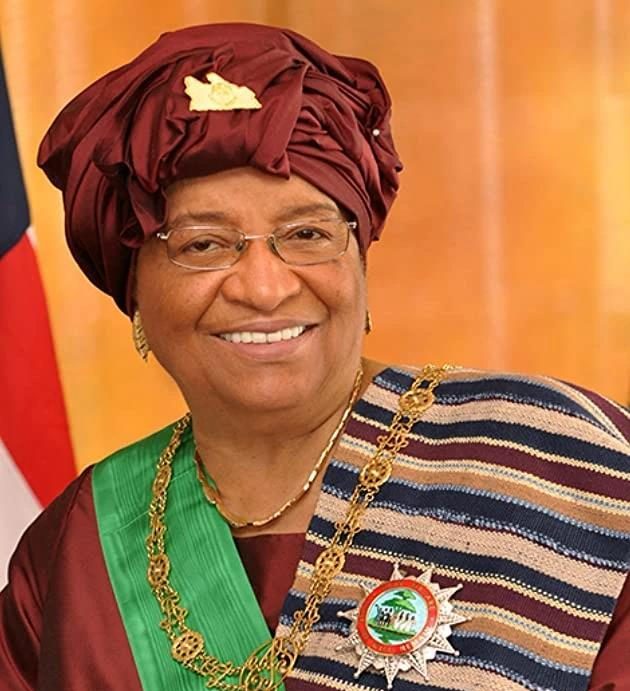
MONROVIA – Ellen Johnson Sirleaf turns 88 today, and her life maps almost exactly onto modern Liberia’s upheavals. She survived the 1980 coup that killed most of the Cabinet she served in. She was jailed, pardoned, jailed again and driven into exile. She backed a rebellion she later regretted and lost an election to its leader. Then she won the presidency, cleared a crippling debt and shared a Nobel Prize. In 2014, Ebola tested everything she had rebuilt. Her own party expelled her as she handed over power peacefully. Each turning point carried a heavy price as well as a prize. Together, they help explain why Liberians still argue over her legacy, As THE ANALYST reports.
MONROVIA – Few Liberians alive today have lived through as many of their country’s breaking points as former President Ellen Johnson Sirleaf, who turns 88 today, Thursday, October 29, 2026. Her life has run alongside the Republic’s own story, from the last years of the old order through coup, war, recovery, epidemic and a peaceful transfer of power. THE ANALYST traces eight moments that made her, and the controversy that came with each.
One: A Monrovia Girl, 1938
She was born Ellen Eugenia Johnson in Monrovia on October 29, 1938, the granddaughter, as her biographies record, of a traditional chief in western Liberia and of a market woman from the southeast. That mix of interior and coast, of chiefdom and marketplace, would become part of her political appeal decades later, when she presented herself as belonging to more than one Liberia.
She attended the College of West Africa from 1948 to 1955, married at 17 and became the mother of four sons. In 1961 she went to the United States, where she studied accounting in Wisconsin, then economics at the University of Colorado, before completing a Master of Public Administration at Harvard University in 1971. She had already started work at the Treasury in Monrovia in 1965, and by 1979 she was Minister of Finance in the government of President William R. Tolbert.
Two: Coup, Prison and Exile
On April 12, 1980, Master Sergeant Samuel Kanyon Doe seized power. Tolbert was killed, and most of his Cabinet were executed. Sirleaf survived the purge and briefly took a post heading the Liberian Bank for Development and Investment, but she fled the country in November 1980 after publicly criticizing the military government.
The break with Doe did not end there. She returned to contest the 1985 elections and was sentenced to 10 years in prison for sedition over a speech critical of the regime, before Doe pardoned her that September. Declared the winner of a Senate seat in Montserrado County, she refused to take it in protest against electoral fraud. After the failed coup attempt led by Thomas Quiwonkpa in November 1985, she was arrested again, held until July 1986, and then left secretly for the United States.
Those years made her name abroad as an opponent of military rule. They also gave her a lifelong habit she would later bring into office, of reading every gain in Liberia as reversible until proven otherwise.
Three: War and the 1997 Defeat
When Charles Taylor’s National Patriotic Front of Liberia (NPFL) launched its rebellion against Doe in December 1989, Sirleaf was among the exiles who initially supported it. She later told the Truth and Reconciliation Commission (TRC) that she had backed the uprising in its early days, and she apologized for having been deceived by Taylor. That admission would trail her through two presidential terms.
In 1992 she became Director of the United Nations Development Programme’s Regional Bureau for Africa, with the rank of Assistant Secretary-General of the United Nations. She resigned in 1997 to contest the special presidential election that closed the first civil war. Taylor won about 75 percent of the vote, and Sirleaf came a distant second with just under 10 percent. Accused of treason afterwards, she went into exile again, this time in Abidjan, Côte d’Ivoire.
Four: The 2005 Victory
The second civil war ended in 2003, with Taylor in exile and Liberian women, among others, publicly pressing the warring parties for peace. Two years later, Sirleaf stood again. She led the Unity Party into a runoff against George Manneh Weah, the former world footballer then leading the Congress for Democratic Change (CDC), and won by 59 percent to 40 percent. Weah disputed the result.
She was declared the winner on November 23, 2005, and took the oath on January 16, 2006, before guests who included United States First Lady Laura Bush and Secretary of State Condoleezza Rice. She became the first woman elected head of state anywhere in Africa. The task in front of her included a collapsed economy, a capital without public electricity and thousands of former fighters who had not yet found a place in civilian life.
Five: Debt Relief, 2010
One of the most consequential days of her presidency came in June 2010, when Liberia reached the completion point under the Heavily Indebted Poor Countries (HIPC) Initiative. The step cleared the way for relief on the country’s entire external debt, a total of about US$4.6 billion (about L$838.86 billion). In September 2010, the Paris Club of creditor nations agreed to cancel US$1.26 billion (about L$229.77 billion) of that debt owed to its members.
Supporters see in those agreements the single clearest proof of her technocratic skill. Critics have argued since that the fiscal room they created should have produced more paved roads, more electricity and better schools than ordinary Liberians eventually saw. The argument has outlived her presidency and still runs through every budget debate in the Capitol.
Six: Nobel, Second Term, 2011
On October 7, 2011, the Norwegian Nobel Committee awarded the Peace Prize jointly to Sirleaf, fellow Liberian Leymah Gbowee and Yemen’s Tawakkol Karman for their non-violent struggle for the safety of women and for women’s right to full participation in peacebuilding work. The announcement came four days before Liberians voted, and her opponents denounced its timing as interference in the election.
She took 43.9 percent in the first round against 32.7 percent for Winston Tubman of the CDC. Tubman alleged fraud and called a boycott of the November runoff. On the eve of the vote, police used tear gas and live rounds to disperse CDC supporters near the party’s headquarters, and two people died. Sirleaf won the runoff with more than 90 percent on a sharply reduced turnout, a victory that was decisive in numbers and contested in spirit. She took the oath for her second term on January 16, 2012.
The same year, in remarks recalled by United States Representative James Clyburn, she told an American audience that Liberia’s young people now “do not know a gun and do not have to run.” For a generation raised in the war, that was the promise she most wanted to keep.
Seven: Ebola, 2014
The Ebola epidemic that began in West Africa in late 2013 reached Liberia in 2014 and spread through Monrovia’s crowded communities. Schools closed. Health workers died. Markets and churches emptied, and the economy her government had nursed back to growth stalled. In October 2014, she wrote an open letter to the world warning that the virus threatened to undo more than a decade of postwar recovery.
Her government’s response was criticized at home, most sharply over the August 2014 quarantine of West Point, which ended in clashes with security forces and the death of a teenage boy. It was also credited, with international partners including the United States Agency for International Development (USAID), with eventually bringing the epidemic under control. Liberia was declared free of Ebola transmission in 2015. This week’s report that she has nominated USAID for the Nobel Peace Prize traces directly back to those months.
Eight: The Handover, 2018
Constitutionally barred from a third term, Sirleaf watched the 2017 elections from the presidential office as Weah defeated her own Vice President, Joseph Nyuma Boakai. On January 14, 2018, the Unity Party announced it had expelled her, accusing her of meddling in the election by meeting privately with election magistrates. She denied the accusation.
In her farewell message to the nation on January 17, she had asked Liberians to support the incoming government and to hold it accountable, counting two peaceful elections as proof that democracy had taken root. Five days later, on January 22, 2018, she handed power to Weah at the Samuel Kanyon Doe Sports Complex. It was the first time in more than 70 years that one elected Liberian president had passed power to another. In 2018 the Mo Ibrahim Foundation awarded her its Prize for Achievement in African Leadership for 2017, citing her leadership through unprecedented challenges.
After the Turning Points
Since leaving office, Sirleaf has built the Ellen Johnson Sirleaf Presidential Center for Women and Development and its Amujae Initiative, which prepares African women for top public office. She has also lived through private grief. Her son Charles Sirleaf, a former Deputy Governor of the Central Bank of Liberia (CBL) who was acquitted in the 2018 banknotes case, died in Ghana in June 2024.
Her former deputy, Boakai, now governs Liberia, and she has described their friendship as intact but distant. Meanwhile, the War and Economic Crimes Court that the Legislature voted to establish in April 2024 is slowly taking shape, with war crimes trials projected for 2027, bringing the TRC’s unfinished business back into public view.
A Life in Eight Chapters
Each of these turning points can be told as a triumph or as a charge sheet, and Liberians have told them both ways for 20 years. The coup made her a dissident and an exile. The war gave her a cause and a regret. The presidency brought debt relief and a Nobel Prize, along with accusations of nepotism and an election many in the opposition never accepted.
What the eight moments share is that she came through each of them still in public life. At 88, Ellen Johnson Sirleaf remains the measure against which Liberian presidents are judged, admired and argued over, and that may be the most durable turning point of all.
Comments are closed.