
IIC, CEMESP Convene Dialogue on FOI Gaps -Stakeholders Push Reforms, Stronger Enforcement
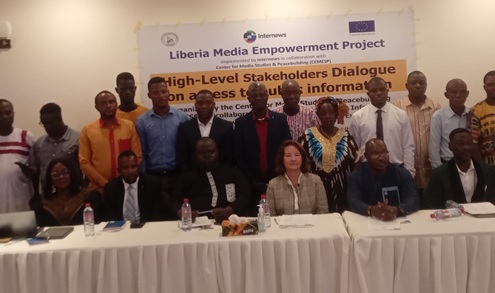
MONROVIA – More than fifteen years after Liberia enacted its Freedom of Information (FOI) Act, questions over enforcement, institutional capacity, and political will continue to shape public debate on transparency and accountability. At a high-level stakeholder dialogue in Monrovia, media actors, integrity institutions, and civil society organizations revisited the promise and pitfalls of the FOI framework, highlighting gaps between law and practice. Convened by the Independent Information Commission and the Center for Media Studies and Peace Building, the forum underscored concerns about weak inter-agency coordination, limited funding, and unresolved legal contradictions that undermine citizens’ right to information. The Analyst reports.
The Independent Information Commission (IIC), in collaboration with the Center for Media Studies and Peace Building (CEMESP) through the Liberia Media Empowerment Project (LMEP), on Thursday, January 29, 2026, held a High-Level Stakeholder Dialogue on access to public information in Liberia.
The dialogue aimed to assess discrepancies within existing laws, policies, and institutional frameworks that affect public access to information, while identifying reform priorities to strengthen inter-institutional coordination, transparency, accountability, and open governance.
Speaking at the event, CEMESP Executive Director Malcolm W. Joseph described access to public information as a cornerstone of democratic governance. He said the passage of the Freedom of Information (FOI) Act and the establishment of the Independent Information Commission marked important milestones in promoting open governance and empowering citizens to participate meaningfully in public affairs.
Despite these gains, Joseph noted that persistent challenges continue to undermine the effective implementation of Liberia’s FOI law.
“These challenges include inconsistencies across legal and policy instruments, weak inter-institutional coordination, limited compliance by public institutions, capacity gaps, and low public awareness of information rights and obligations,” he said.
He explained that as a result, journalists, civil society organizations, and ordinary citizens often encounter obstacles when seeking timely, accurate, and complete public information.
According to Joseph, addressing these gaps is essential to strengthening democratic institutions, combating corruption, improving service delivery, and rebuilding public trust in government.
He said the stakeholder dialogue was convened against this backdrop, noting that under the Liberia Media Empowerment Project—an EU-funded initiative implemented through Internews—the forum serves as a strategic platform to advance policy coherence, reinforce institutional collaboration, and promote reforms that recognize access to information as a democratic right.
Joseph said the dialogue was designed to provide an inclusive space for stakeholders to critically assess inconsistencies within laws, policies, and institutional frameworks affecting access to public information, while identifying practical solutions to strengthen compliance and coordination.
“Rather than serving as a one-off event, the dialogue is intended to contribute to ongoing national conversations and reform processes related to freedom of information, public sector transparency, and democratic governance,” he said.
He added that the initiative underscores the shared responsibility of state and non-state actors in upholding the right to information and ensuring that access to public information serves as a catalyst for informed citizen participation, responsible governance, and sustainable peace-building in Liberia.
Also speaking at the event, President of the Press Union of Liberia (PUL) Julius K. Kanubah said successive governments have failed to adequately support the operational programs of the Independent Information Commission.
He warned that without sustained government funding, the IIC risks becoming ineffective. “Thus, the Commission remains a struggling entity, and without external support, it may be the case the IIC will be an empty shell,” Kanubah said.
Although the FOI Act provides for budgetary support and guarantees the IIC operational, investigatory, and regulatory autonomy, Kanubah said these powers remain largely aspirational in practice.
According to him, the core challenge facing the IIC is not only legal inconsistencies, but the collective failure to fully test and enforce existing FOI provisions to their logical conclusion.
He cited the long-running case of CEMESP versus the Liberia Anti-Corruption Commission (LACC) concerning access to public officials’ asset declaration documents, noting that its inconclusive outcome may have weakened enforcement momentum.
Kanubah further argued that more than 15 years after the enactment of the FOI Act, changing conditions now demand a review of the law.
While describing the Act as progressive, he said it contains limitations related to leadership structure, enforcement authority, appointment of information officers, exemptions, and oversight mechanisms.
He recommended that in examining discrepancies between the FOI Act and other laws—including the LACC Act, Code of Conduct, and Central Bank of Liberia Act—diverse actors from those institutions should be engaged as panelists to provide context and perspective.
Speaking on behalf of LACC Executive Chairperson Cllr. Alexandra Zoe, the Commission’s Program Manager for Education and Prevention, John E. Tommy, said access to timely, accurate, and reliable public information is fundamental to combating corruption.
He noted that transparency thrives where information flows freely and accountability is sustained when citizens are informed and engaged.
Tommy said the Liberia Anti-Corruption Commission stands ready to collaborate with the Independent Information Commission and other stakeholders to ensure that FOI laws are not only well-crafted but effectively implemented.
He emphasized that harmonization of legal frameworks must translate into practical access, institutional compliance, and public confidence.
“As we deliberate today, let us be guided by the shared objective of strengthening transparency, reinforcing accountability, and building a governance culture that leaves no citizen behind,” he said.
Comments are closed.