
Boakai Renews OWECC-L Mandate -Charts One-Year Path to Justice
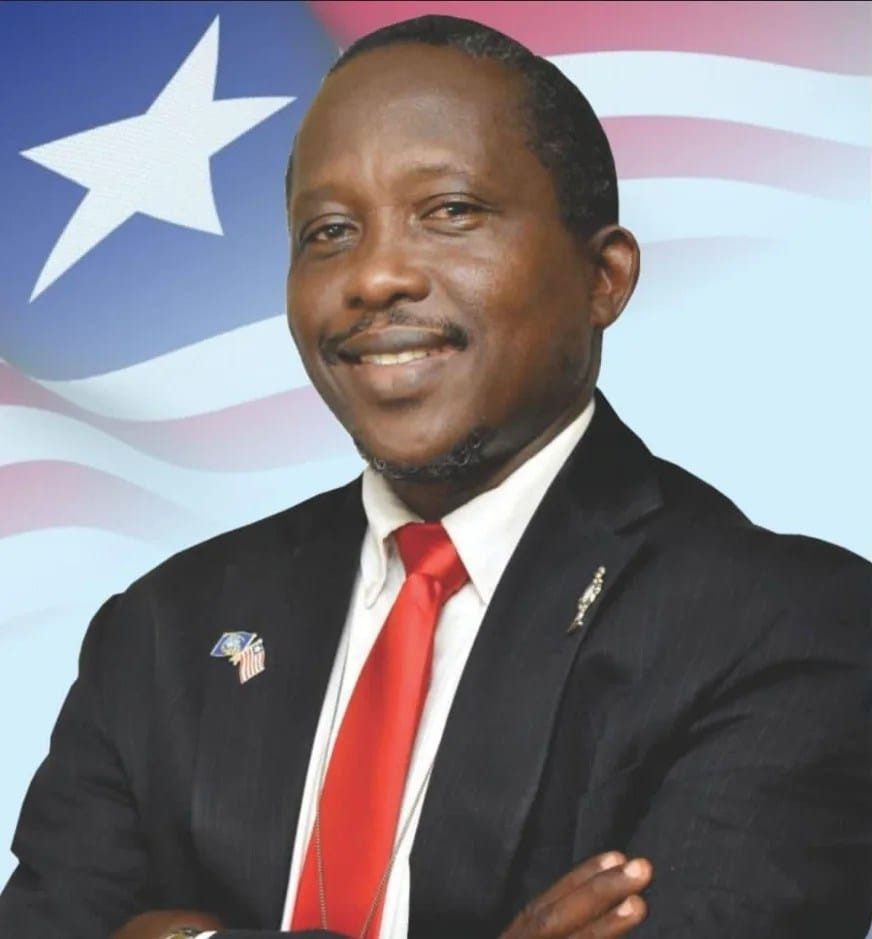
MONROVIA – In a move that signals renewed urgency in Liberia’s long and often contentious journey toward accountability, President Joseph Nyuma Boakai, Sr., has extended the mandate of the Office of the War and Economic Crimes Court for Liberia (OWECC-L), reaffirming his administration’s commitment to justice, reconciliation, and the rule of law. The Executive Order, signed on May 1, 2026, not only prolongs the life of the Office for another year but also lays out a detailed and time-bound roadmap aimed at transforming years of preparatory work into functioning judicial institutions.
The decision builds on earlier executive actions that first brought the Office into existence in 2024 and sustained it through 2025. At its inception, the Office was charged with the complex responsibility of researching, designing, and recommending the legal and operational frameworks for two landmark institutions: a War and Economic Crimes Court and a National Anti-Corruption Court. Over the past year, the Office has moved beyond concept to substance, engaging a broad array of stakeholders at home and abroad while producing two draft bills now before the Legislature. These accomplishments, as acknowledged in the President’s Order, stand as evidence of Liberia’s growing resolve to confront its past and strengthen integrity in public governance.
Yet the Order makes clear that the journey is far from complete. President Boakai underscores that the continued existence of the Office is critical at this transitional stage, particularly as Liberia seeks to mobilize international support, refine implementation strategies, and shepherd the proposed legislation through the legislative process. By renewing the mandate for an additional year, the administration is effectively bridging the gap between policy formulation and institutional realization.
The Executive Order preserves the current composition of the Office, allowing its leadership and staff to continue their work without disruption. The Office of the Executive Director remains central to operations, supported by a secretariat and professional personnel deemed necessary to carry out its increasingly demanding responsibilities. This continuity reflects a deliberate effort to maintain momentum and institutional memory as the process advances.
Within this renewed mandate, the Office is entrusted with a broad but clearly defined set of tasks that reflect both ambition and pragmatism. It is expected to deepen engagement with international partners and funding agencies in order to secure the financial and technical resources required to establish and sustain the courts. At the same time, it must provide hands-on technical support to the Legislature, helping lawmakers navigate the complexities of the draft bills and facilitating their eventual passage into law. Beyond legislative engagement, the Office is tasked with developing comprehensive implementation frameworks that address logistical, administrative, and financial realities, ensuring that the proposed courts can move from paper to practice.
Transparency and accountability are central themes running through the Order. The Office is required to closely monitor its own progress and submit quarterly operational and financial reports to the President through the Minister of Justice. These reports are to be grounded strictly in legal considerations, explicitly insulated from political influence, and reflective of measurable progress toward the courts’ establishment. To reinforce credibility, all reports will be subject to independent verification and audit by authorized government institutions.
Financially, the Executive Order provides a clear structure to sustain the Office’s work. It will continue to operate as a semi-independent entity funded through a dedicated allocation within the Ministry of Justice’s budget. An annual appropriation of two million United States dollars has been set aside, to be disbursed in equal quarterly installments by the Ministry of Finance and Development Planning. This guaranteed funding stream is intended to eliminate uncertainty and enable consistent progress throughout the year.
Perhaps the most striking feature of the Order is its emphasis on timelines, which introduces a new level of urgency and discipline into the process. The mandate, effective from May 1, 2026, to April 30, 2027, is accompanied by specific deadlines that chart the Office’s course over the coming months. Within sixty days, the Office must present a comprehensive resource mobilization and stakeholder engagement plan, identifying funding partners and outlining strategies for collaboration. Within ninety days, it is expected to formalize a structured framework for supporting legislative action on the draft bills, ensuring sustained engagement throughout the lawmaking process.
As the year progresses, the Office will be required to submit quarterly reports beginning no later than July 31, 2026, each detailing operational achievements and financial expenditures. A more comprehensive midterm report is expected within six months, offering a candid assessment of progress, challenges, and necessary adjustments. The Order also anticipates the eventual conclusion of the Office’s work, directing it to begin preparations for dissolution by March 1, 2027. This includes the submission of a final operations, financial, and administrative report, as well as a broader transition plan to guide the handover to fully operational courts or any successor institutions. The final report, due by April 15, 2027, is expected to encapsulate the entirety of the Office’s work while offering recommendations for the future.
Amid these extensive provisions, the President includes a safeguard clause that reaffirms the primacy of constitutional rights. The Order explicitly states that nothing within its framework shall be interpreted as infringing upon the rights of any Liberian citizen, a reassurance that the pursuit of justice will remain firmly anchored in the rule of law.
Taken as a whole, the renewed mandate represents more than a procedural extension; it is a carefully structured effort to convert aspiration into action. For years, the question of how Liberia should address the legacy of its civil wars and systemic corruption has lingered at the center of national discourse. With this Executive Order, the Boakai administration appears determined to move beyond debate and into implementation, setting clear expectations, allocating resources, and imposing deadlines that leave little room for inertia.
Whether this ambitious framework will ultimately deliver the long-awaited courts remains to be seen, but the direction is unmistakable. The coming year now stands as a decisive period in Liberia’s pursuit of justice, one that could finally bring closure to past grievances while laying a stronger foundation for accountability in the future.
Comments are closed.