
LERC Trains Journalists on Energy Reporting-Commission seeks stronger public sector confidence
MONROVIA – As Liberia continues struggling to rebuild and modernize a power sector devastated by years of civil conflict, the role of public information and responsible journalism is increasingly becoming central to restoring confidence in national energy reforms. Against this backdrop, the Liberia Electricity Regulatory Commission convened journalists, publishers, editors, and media practitioners in Monrovia for a specialized engagement aimed at strengthening understanding of Liberia’s electricity regulatory framework and improving public awareness surrounding energy governance. The initiative reflects growing recognition that beyond infrastructure expansion alone, public trust, transparency, consumer education, and informed reporting remain essential ingredients in stabilizing Liberia’s fragile electricity sector. As THE ANALYST’S MATTHEW TURRY reports, the engagement also highlights broader national concerns regarding access, affordability, accountability, and sustainability in energy distribution nationwide.
The Liberia Electricity Regulatory Commission (LERC) has intensified efforts to strengthen collaboration with the Liberian media through a specialized training engagement aimed at improving public understanding of Liberia’s electricity regulatory framework while encouraging more informed and responsible reporting on developments within the country’s energy sector.
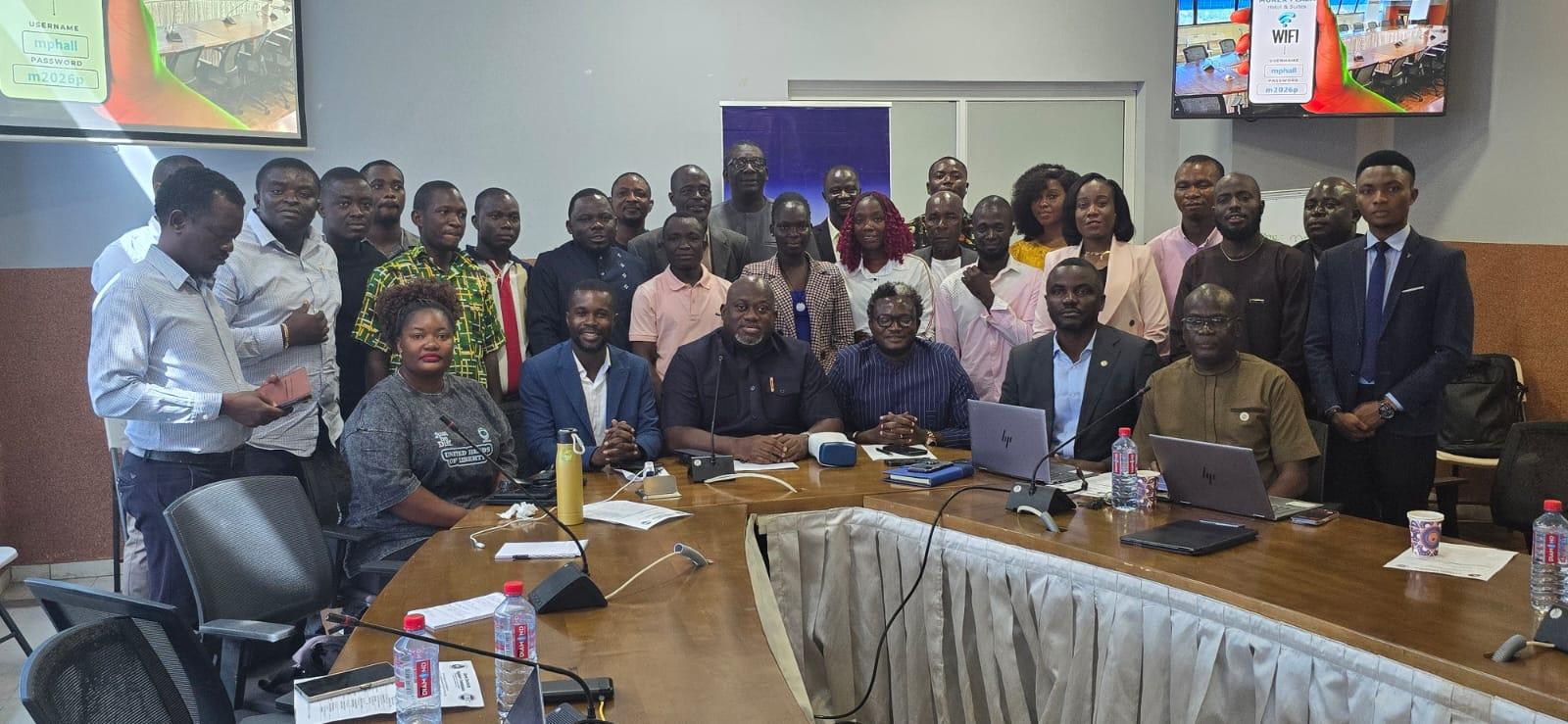
The daylong workshop, held Thursday in Monrovia, brought together journalists, publishers, editors, reporters, media practitioners, and communication professionals from various media institutions across the country to deepen awareness surrounding the functions, responsibilities, and operational structure of the Liberia Electricity Regulatory Commission and the broader energy sector.
The initiative comes at a time when Liberia continues facing enormous energy challenges decades after civil conflict severely damaged national electricity infrastructure, leaving large portions of the population without reliable and affordable access to electricity.
Officials at the engagement emphasized that rebuilding the electricity sector requires more than technical infrastructure projects alone. According to them, strengthening public confidence, increasing transparency, combating misinformation, and educating consumers about their rights and responsibilities are equally important components of national energy reform.
LERC Seeks Stronger Media Partnership
Delivering special remarks at the opening of the workshop, LERC Board Chairman Claude J. Katta stressed that the Commission views the media as an indispensable partner in efforts to strengthen public confidence in Liberia’s evolving electricity sector.
According to Chairman Katta, the workshop reflects the Commission’s deliberate commitment to building a stronger working relationship with journalists and media institutions capable of effectively communicating electricity sector developments to the broader public.
“The media plays a critical role in the electricity sector by informing the public, raising awareness on consumer rights and responsibilities, and helping to build public confidence in ongoing efforts and reforms within the electricity sector,” Katta stated.
He explained that the workshop was specifically designed to expose journalists to the Commission’s operational framework while simultaneously providing a broader understanding of current realities affecting Liberia’s electricity landscape.
“This workshop is intended to create awareness and inform journalists about the Commission’s operating framework, while also providing information on the current state of the electricity sector,” he added.
Observers noted that the engagement reflects growing awareness among public institutions that effective communication and public education remain critical to sustaining support for major national infrastructure reforms.
Building Public Trust Through Information
Chairman Katta repeatedly emphasized that misinformation, public confusion, and inadequate understanding of electricity regulations often undermine public confidence and create unnecessary tensions between consumers and service providers.
According to him, the Commission intends to work closely with journalists in ensuring that consumers receive timely, balanced, and accurate information concerning electricity services, tariffs, complaint mechanisms, regulatory policies, and sector reforms.
“We will work closely with the media to help educate the public on the work of the Commission, including the remedies available to electricity customers, especially when they feel aggrieved or dissatisfied with services provided,” Katta stated.
He further stressed that informed journalism remains essential to promoting transparency and accountability within Liberia’s electricity sector.
“We are committed to providing timely information and maintaining transparency in our engagement with the public through the media,” he declared.
According to him, the Commission expects journalists to assist by accurately reporting developments in the energy sector, educating consumers about regulatory policies, encouraging public participation, and countering misinformation surrounding electricity services and tariffs.
Analysts say such collaboration has become increasingly important as Liberia gradually expands electricity access while simultaneously confronting public complaints regarding affordability, service reliability, infrastructure limitations, and billing concerns.
Postwar Energy Reconstruction Challenges
A major focus of the workshop centered around Liberia’s difficult journey toward rebuilding a functioning national electricity system following the massive destruction caused by years of civil conflict.
Earlier during the engagement, LERC Managing Director Augustus W. Goanue reportedly delivered a detailed presentation outlining how Liberia is attempting to reconstruct and modernize its electricity infrastructure after the war left much of the country’s power systems devastated.
Liberia’s electricity sector remains one of the country’s most challenging development areas despite ongoing investments and reforms supported by government and international partners.
Large sections of rural Liberia still lack access to electricity, while urban consumers frequently complain about high tariffs, unstable supply, and infrastructure weaknesses.
The Commission therefore appears increasingly conscious that public understanding of the complexities surrounding electricity generation, transmission, regulation, and pricing remains necessary to reducing tension and improving consumer confidence.
PUL Calls Energy Reporting National Priority
Also speaking during the workshop, Press Union of Liberia President Julius Kanubah underscored the enormous national importance of the electricity sector, arguing that access to energy lies at the center of national development and societal sustainability.
According to Kanubah, the work of LERC directly affects the availability, affordability, accessibility, and overall utility of energy services across Liberia.
“How the LERC operates has significant consequences on the availability, accessibility, affordability, and utility of energy in Liberia,” Kanubah stated.
The PUL President further emphasized that the Commission cannot effectively engage every Liberian citizen individually without relying heavily upon the media as an intermediary platform for public communication.
“It is impossible for the LERC to speak with or engage every Liberian citizen and non-Liberian about its work and policy decision making which impacts access to energy without the media,” he noted.
Kanubah stressed that reporting on specialized sectors such as energy requires journalists to possess deeper technical understanding, sector knowledge, and investigative capacity capable of informing the public responsibly.
“To disseminate information on a specialized issue like energy requires knowledge, ideas, and practices about the sector,” he stated.
Push For Investigative Energy Journalism
The PUL President also challenged Liberian journalists to increase serious reporting on energy-related issues, describing the sector as a matter of overwhelming public interest deserving sustained media scrutiny and public accountability coverage.
“The energy sector constitutes a public interest in journalism,” Kanubah stressed. “If our daily survival and sustainability depend on access to energy then we ought as journalists to focus on providing quality information by increasing the quality of stories on the energy sector.”
He urged reporters to embrace investigative journalism capable of holding both regulators and service providers accountable concerning electricity distribution, sector governance, tariffs, and infrastructure implementation.
“We are confident that in the coming days, we will witness increased reporting on the energy sector as a matter of public interest,” he added.
His comments come amid broader conversations within Liberia’s media landscape regarding the need for more specialized journalism capable of critically examining complex policy sectors including energy, health, agriculture, infrastructure, mining, and governance.
Participants Praise Engagement
Participants attending the workshop reportedly praised the Commission for organizing what many described as an informative and impactful engagement intended to strengthen journalists’ understanding of Liberia’s electricity sector and regulatory environment.
Several journalists noted that electricity reporting often suffers from limited technical understanding, making such engagements necessary for improving the quality and accuracy of public information surrounding the sector.
Others observed that greater cooperation between regulatory institutions and the media could help reduce misinformation while improving public trust concerning ongoing reforms and infrastructure initiatives.
Energy Remains National Development Priority
The workshop also underscored the broader reality that energy remains one of Liberia’s most strategic national development priorities.
Reliable electricity access continues to affect virtually every sector of the Liberian economy, including healthcare delivery, industrial growth, education, communications, commerce, agriculture, and public services.
Government officials have repeatedly emphasized that expanding electricity access remains essential to attracting investment, stimulating economic activity, and improving living conditions nationwide.
Yet despite notable progress in certain areas, Liberia still confronts major structural obstacles involving generation capacity, infrastructure financing, rural electrification, transmission expansion, and affordability.
Against that backdrop, the growing partnership between the media and institutions like LERC may increasingly shape how effectively the public understands ongoing reforms, challenges, and opportunities within Liberia’s evolving electricity sector.
For LERC, Thursday’s workshop appeared to represent more than a simple training exercise. It reflected a broader institutional recognition that transparency, communication, public trust, and informed journalism are becoming as important to energy sector reform as transformers, transmission lines, and power generation itself.
Comments are closed.