

Former Ethiopian Leader Courts Liberia-Calls for peace and inclusive development
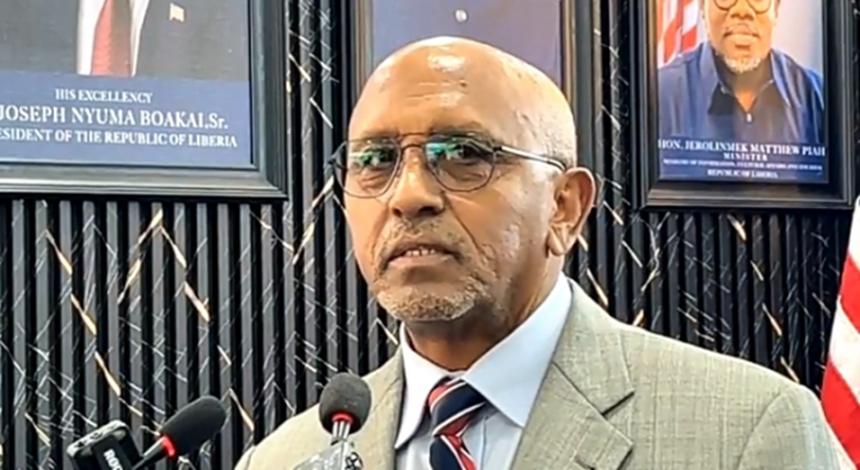
MONROVIA – Former Ethiopian Prime Minister Tamrat Layne Admassu’s visit to Liberia arrives at a moment when African nations continue grappling with the intertwined burdens of postwar recovery, youth frustration, governance fragility, and economic inequality despite vast natural wealth. His remarks in Monrovia extended beyond ceremonial diplomacy and instead touched deeply on questions of accountability, leadership transition, disability inclusion, and the future direction of African development. Drawing parallels between Liberia’s painful civil conflict experience and Ethiopia’s own political turmoil, the former Ethiopian leader delivered a message blending personal reflection, continental concern, and cautious optimism. As THE ANALYST’S GEORGE C. FLOMO reports, his comments also carried implicit warnings about violence, division, and failed leadership across Africa today.
Former Ethiopian Prime Minister Tamrat Layne Admassu has pledged broad support for Liberia’s disability community, youth leadership development initiatives, and inclusive investment partnerships, while urging African governments and young people to reject violence, strengthen national unity, and embrace accountable leadership capable of transforming the continent’s immense natural wealth into meaningful prosperity.
Speaking Tuesday during the Ministry of Information’s regular press briefing in Monrovia, the former Ethiopian leader described Liberia as a country possessing enormous human and natural potential despite the devastating scars left behind by years of civil conflict and national instability.
His visit, observers noted, comes at a period when Liberia continues confronting difficult questions surrounding governance reform, economic revitalization, youth unemployment, institutional rebuilding, disability inclusion, and long-term national recovery.
For Admassu, however, Liberia represented more than another diplomatic stop. His remarks suggested a deeply personal and emotional connection to the country’s historical struggles and democratic transition journey.
“I’m very much delighted to be here in Liberia. This is my first time though I have been longing to come here for a long period of time,” he stated. “I very much believe that this is only the first time, but not the last time.”
Shared Histories Of Conflict
A substantial portion of the former Ethiopian Prime Minister’s remarks focused on the similarities between Liberia’s postwar challenges and Ethiopia’s own painful historical experiences involving political turmoil, civil conflict, democratic struggles, and national reconstruction.
According to him, both countries emerged from periods of instability that profoundly tested their institutions, governance structures, and social cohesion.
“Liberia and Ethiopia have a common kind of journey,” Admassu observed. “We both passed through very difficult times of civil wars, and we both were challenged by transition periods and coming out of conflict toward democracy and freedom.”
His comments carried added significance given Ethiopia’s own modern political history and the former Prime Minister’s controversial political past, including his later imprisonment following political changes in his country.
Yet rather than avoiding difficult reflections, Admassu openly acknowledged Africa’s continuing governance and accountability challenges, emphasizing that post-conflict nations must deliberately strengthen institutions capable of preventing future instability.
According to him, the future of Africa depends heavily upon whether governments learn from the mistakes of the past while building systems rooted in responsibility, transparency, and national cohesion.
“The challenge this generation and the next generation must deal with,” he stressed, “is why Africa remains poor despite possessing enormous wealth and resources.”
Africa’s Wealth, Africa’s Contradiction
Throughout his remarks, Admassu repeatedly returned to one central theme: Africa’s paradoxical coexistence of extraordinary natural wealth and persistent poverty.
Reflecting on his arrival in Liberia, he said he was deeply moved by the country’s beauty, natural resources, and human resilience, but equally troubled by the broader reality that many African nations continue struggling economically despite possessing vast mineral, agricultural, and environmental wealth.
“We Africans are full of wealth and resources,” he declared. “For hundreds of years we have been exploited by others, but the resources are here.”
He argued that Africa’s future would ultimately depend on whether the continent succeeds in creating accountable institutions, empowering young people, and ensuring that economic growth directly benefits local populations rather than external interests alone.
Analysts attending the briefing noted that his comments reflected a broader continental frustration increasingly expressed by African intellectuals and former leaders concerning extractive economic systems, weak governance structures, and dependency models that continue affecting many developing nations.
Praise For President Boakai
During his stay in Liberia, Admassu disclosed meetings with President Joseph Nyuma Boakai and several senior government officials where discussions reportedly focused on governance reform, economic development, leadership training, and opportunities for long-term partnership.
The former Ethiopian leader described President Boakai as “wise” and “humble,” asserting that the Liberian leader appears genuinely committed to improving conditions for ordinary Liberians.
“I found out that His Excellency the President is a wise humble person who always wants to do something very good for his people, and his people are in his heart,” Admassu remarked.
He also revealed discussions with Liberia’s Chief Justice and other institutional leaders concerning governance reforms, leadership capacity building, and institutional strengthening initiatives.
Political observers interpreted the engagements as part of broader attempts by the Boakai administration to deepen international partnerships around governance, institutional reform, and development cooperation.
Disability Community Deeply Moves Former Premier
One of the most emotional aspects of Admassu’s remarks centered around Liberia’s disability community, which he said profoundly impacted him shortly after his arrival in the country.
According to him, one of his earliest engagements in Liberia involved a dinner meeting with members of the disability community where he listened to their personal stories, struggles, aspirations, and concerns regarding exclusion and opportunity limitations.
The experience, he admitted, deeply affected him emotionally.
“I don’t believe there is disability in the eyes of God,” Admassu declared passionately. “There may be lack of opportunities, but there is no disability.”
He subsequently announced intentions to collaborate with the Liberian government, humanitarian institutions, and civil society organizations to strengthen empowerment initiatives and create greater opportunities for persons living with disabilities across Liberia.
His comments drew strong reactions from several disability advocates present at the briefing who later described the remarks as encouraging, particularly given longstanding complaints from Liberia’s disability community regarding exclusion, unemployment, accessibility challenges, and inadequate policy attention.
Transform Leadership Network Expanding Into Liberia
Admassu further disclosed that his organization, Transform Leadership Network, has operated across East Africa since 2013 focusing primarily on leadership training, human capacity development, and youth empowerment initiatives.
According to him, Liberia now represents the organization’s entry point into West Africa.
The former Ethiopian leader explained that the organization’s central objective involves preparing the next generation of African leaders through mentorship, institutional training, and civic education initiatives designed to strengthen governance and responsible leadership across the continent.
“The young generation of Africa is responsible for carrying their nations into the future,” he emphasized. “They must learn from the successes and failures of former African leaders and take Africa forward.”
Observers noted that his comments resonated strongly within Liberia where youth unemployment, migration pressures, political frustration, and limited economic opportunities continue generating serious national concern.
Warning Against Violence
Perhaps the most striking section of the former Prime Minister’s appearance emerged during the question-and-answer segment when he reflected candidly on Ethiopia’s violent political history and his personal regrets concerning events that contributed to instability in his own country.
Responding to questions surrounding youth responsibility and national peacebuilding, Admassu issued a direct warning to African youths against embracing violence, political extremism, and destructive unrest.
“Their time is now over; it is the young people’s time,” he stated. “Young people should not get involved with violence.”
He proceeded to recount painful memories involving political decisions and unrest that reportedly affected tens of thousands of people during Ethiopia’s turbulent years.
Sharing those reflections publicly, he acknowledged deep regret over actions that contributed to instability and suffering.
“I don’t ever want to go back there, neither do I want to see such again,” he cautioned.
His warning carried particular relevance within a broader African context where several countries continue facing political unrest, military takeovers, electoral tensions, and violent conflicts often involving frustrated youth populations.
Inclusive Investment Philosophy
Beyond governance and humanitarian discussions, Admassu also used the platform to discuss economic partnerships and impact investment opportunities involving Liberia.
He disclosed serving as Senior International Representative for the Koula Group, an international impact investment company focused on supporting development initiatives while prioritizing community participation and local empowerment.
Unlike traditional extractive investment models frequently criticized across Africa, Admassu insisted the Koula Group seeks to ensure that local populations directly benefit from projects implemented within their communities.
“The main principle of our company is not to extract, but to empower the local people,” he explained. “We want local people to be part of the governance and decision-making process of every project.”
According to him, the company is interested in exploring investments across sectors including agriculture, mining, energy, construction, and infrastructure development.
Analysts say such comments reflect growing pressure on international investors operating in Africa to adopt more community-centered development approaches amid longstanding criticism surrounding exploitation, environmental damage, and unequal resource distribution.
Message To African Governments
Admassu also directed strong advice toward African governments, urging leaders to prioritize peace, national unity, and social cohesion over divisive politics and internal conflict.
“They should not create divisiveness within the country and must fight to maintain peace no matter what the system is,” he advised.
The comments come at a time when numerous African countries continue confronting deep political polarization, constitutional disputes, economic instability, and governance tensions.
Observers noted that the former Ethiopian leader’s remarks reflected both warning and reflection — the perspective of a former African leader who experienced the devastating consequences of political instability firsthand.
Liberia’s International Visibility Expanding
The visit additionally highlights Liberia’s growing diplomatic and international engagement under the Boakai administration as the government continues pursuing foreign partnerships around governance reform, investment, infrastructure, youth development, and institutional rebuilding.
For many observers, however, the deeper significance of Admassu’s appearance rested less in diplomacy and more in the symbolism of an African leader publicly confronting difficult historical lessons while encouraging another post-conflict nation to prioritize peace, accountability, inclusion, and long-term institutional development.
Whether Liberia ultimately succeeds in overcoming the structural weaknesses and governance challenges repeatedly referenced during the engagement may depend largely on how effectively its leaders, institutions, youths, and development partners translate such conversations into sustained national action.
Comments are closed.