
Who Protects Liberia’s Sacred Dead? -Monrovia Cemetery Plan Ignites Backlash
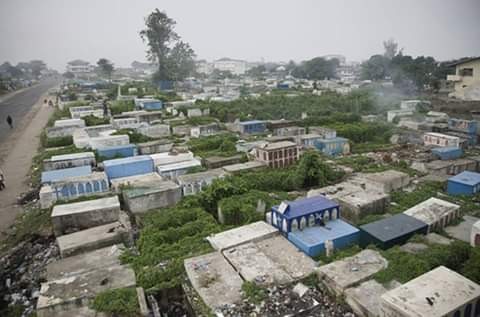
MONROVIA – A growing controversy surrounding possible redevelopment discussions involving some of Liberia’s most historic cemeteries is rapidly evolving into a deeply emotional national debate over dignity, memory, legality, and the moral obligations owed to the dead. What may have begun as quiet conversations about urban redevelopment and tourism expansion has now triggered widespread concern among families, legal observers, religious communities, and cultural advocates fearful that sacred burial grounds could be transformed into commercial spaces without consultation or respect for ancestral heritage. At the center of the storm are disturbing questions that reach far beyond land use alone: Can a government or city authority disturb the dead for development? And if so, who has the legal and moral authority to decide? THE ANALYST reports.
Growing public concern over possible redevelopment discussions involving the Paynesville–Duport Road Cemetery and the historic Palm Grove Cemetery in Monrovia has ignited a fierce national conversation about the sanctity of burial grounds, the legal rights of families, the responsibilities of government, and the dangerous moral implications of converting sacred resting places into potential commercial properties.
What initially surfaced as whispers within public circles has now exploded into a broader public controversy following mounting allegations that authorities linked to tourism and city administration may be considering plans connected to commercial redevelopment around cemetery spaces, including suggestions involving hotels, resorts, or other business establishments.
Although no fully detailed official redevelopment blueprint has yet been publicly released, the mere possibility of disturbing some of Liberia’s most emotionally and historically significant burial grounds has already triggered outrage, grief, legal questions, and growing calls for transparency and public consultation.
The issue cuts far deeper than urban planning.
For countless Liberian families, cemeteries are not empty parcels of land awaiting economic conversion. They are sacred spaces carrying emotional, spiritual, historical, cultural, and ancestral significance stretching across generations.
“Beneath every grave lies more than human remains,” the commentary introducing the controversy declares. “There lies a family’s sacrifice, a community’s history, and memories too sacred to be priced.”
That emotional framing has resonated widely because both Palm Grove Cemetery and the Paynesville–Duport Road Cemetery occupy sensitive places within Liberia’s national memory. Palm Grove in particular holds the graves of prominent national figures, religious leaders, political actors, and ordinary Liberians whose families view the cemetery not merely as a burial site but as part of the country’s historical identity.
Families who purchased burial plots over decades did so with what many legal and cultural observers describe as a reasonable expectation of permanence.
“When families purchase burial plots, they do so with the expectation of permanence,” the article states. “This understanding carries legal, emotional and moral weight.”
That expectation now sits at the heart of the controversy.
Critics argue that any effort to redevelop cemetery land without meaningful public consultation could expose authorities to serious legal, constitutional, and human rights challenges, including potential class action litigation by affected families.
The issue has been amplified further by a strongly worded public intervention authored by Amb. Cllr. Medina Wesseh and Jonah K. Nyenpan Jr., who framed the debate not merely as a land-use dispute, but as a national moral crisis touching the dignity of both the dead and the living.
“There is a quiet promise we make when we lay our loved ones to rest,” the authors write. “A promise not written in law alone, but etched into culture, tradition, memory, and dignity.”
The commentary argues that cemeteries represent an unwritten social covenant — a solemn understanding that the dead will remain undisturbed and that burial grounds will remain protected as spaces of peace, remembrance, and respect.
But according to the authors, that covenant now appears under threat.
“What happens when the promise of rest is apparently and obviously threatened?” they ask.
At the same time, the article acknowledges the very real deterioration affecting several cemetery sites across Monrovia and other urban centers.
The writers paint a disturbing picture of graveyards overtaken by disorder, insecurity, neglect, criminal activity, and public health concerns. According to the article, some cemetery areas have become shelters for disadvantaged youth and street dwellers, while other portions reportedly suffer from overgrown vegetation, damaged graves, open defecation, and widespread environmental degradation.
“Even more distressing is the use of cemetery spaces for open defecation and as informal toilet areas,” the commentary laments.
The writers argue that such conditions reflect not merely maintenance failures, but a broader erosion of societal values and collective responsibility.
“A cemetery overtaken by neglect reflects not only a failure of maintenance but a deeper erosion of societal values,” the article states.
Yet even while acknowledging the severe deterioration affecting cemetery conditions, the authors strongly reject the idea that commercial redevelopment represents an appropriate or morally defensible solution.
Instead, they argue that any proposal involving disturbance, relocation, or conversion of burial grounds raises profound legal and ethical concerns.
“The idea that a cemetery overrun by chaos could now be cleared to make way for commercial development, such as a hotel or resort, raises serious legal and ethical concerns,” the article warns.
The controversy now raises several critical legal questions.
Do families possess enforceable rights regarding the graves of their relatives?
Can government authorities legally redevelop cemetery land without prior consultation or consent from descendants?
What obligations exist under Liberian law concerning exhumation, relocation of remains, or preservation of burial grounds?
Could authorities face civil liability for disturbing family burial sites? Legal analysts say those questions are far from theoretical.
Although Liberia’s legal framework governing cemetery preservation remains underdeveloped compared to some jurisdictions, the commentary points to several international legal precedents that increasingly recognize burial grounds as spaces protected by legal, cultural, and ethical obligations.
Among the international references cited is the United Kingdom’s Burial Act of 1857, which criminalizes unauthorized disturbance of human remains and establishes broad legal protections for gravesites.
The article also references the landmark American case Gamage v. Masonic Cemetery Association, which affirmed that cemeteries are held under special trust-like obligations and cannot simply be converted to commercial uses without strict legal justification.
Other cited precedents include South African and British court decisions emphasizing the “permanence of burial” principle and requiring extensive procedural safeguards, consultation, and legal authorization before disturbing gravesites.
For many observers, however, the controversy extends beyond technical legal questions into the realm of national morality and cultural identity.
The article repeatedly returns to the symbolic meaning of cemeteries within society itself.
“The state of a graveyard can become a mirror of the state of society itself,” the authors argue.
That observation has struck a chord in a country where memory, history, religion, and ancestral respect continue to carry enormous cultural weight across communities and generations.
Critics of potential redevelopment plans argue that converting burial grounds into commercial spaces risks communicating a deeply troubling message: that economic interests now outweigh dignity, memory, and reverence for the dead.
Others caution that the controversy could quickly trigger intense social backlash if families begin to believe decisions are being made secretly without public consultation.
The issue also exposes broader urban governance failures.
Many observers argue that if cemetery conditions have indeed deteriorated so severely, authorities should focus first on restoration, sanitation, security, fencing, landscaping, and preservation rather than discussions of redevelopment.
Indeed, even within the article itself, the writers acknowledge that cities owe families basic obligations concerning cemetery maintenance, order, safety, and dignity.
“What do they owe the deceased and their families?” the article asks. “At minimum, there is an obligation to maintain order, cleanliness, and security.”
As the controversy grows, pressure is now mounting for government authorities, tourism officials, and city administrators to publicly clarify whether redevelopment proposals are actively under consideration and, if so, what consultation processes — if any — are being planned for affected families and communities.
Failure to provide those answers could deepen already growing suspicion and public anxiety.
For now, however, one question increasingly dominates public discussion:
Can a nation truly claim to honor its future while disturbing the final resting places of its past?
That question — emotional, legal, cultural, and profoundly human — now hangs heavily over a controversy that appears destined to intensify in the days ahead.
Comments are closed.