
Samuel Tweah Escalates Political Counterattack -Rejects Fresh Corruption Allegations, as AREPT Probe Sparks
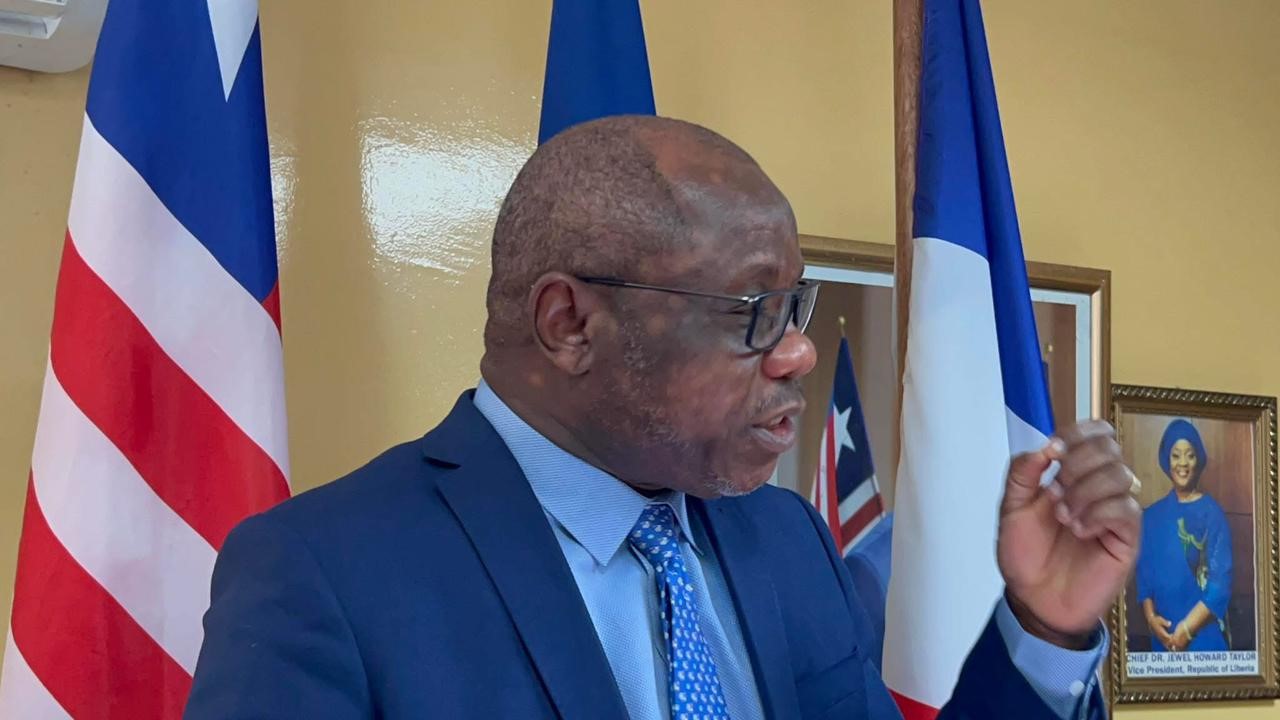
MONROVIA – Barely days after emerging politically energized from a landmark courtroom acquittal, former Finance and Development Planning Minister Samuel D. Tweah Jr. now finds himself thrust back into another escalating confrontation with the Unity Party government, this time over allegations tied to a controversial US$20.5 million rice subsidy program. But rather than retreat under renewed scrutiny, Tweah has launched an aggressive counteroffensive, portraying the latest investigation as political persecution designed to cripple his growing public momentum and silence an increasingly vocal opposition figure. As THE ANALYST reports, the standoff is rapidly evolving beyond a simple corruption probe into a broader political battle over governance, accountability, public trust, and the weaponization of state institutions in Liberia’s fragile democratic landscape.
Former Finance and Development Planning Minister Samuel D. Tweah Jr. has mounted a fierce and increasingly defiant political and legal response against fresh corruption allegations linking him to an alleged US$20.5 million rice subsidy scandal now under investigation by Liberia’s Asset Recovery and Property Retrieval Task Force (AREPT), setting the stage for what could become one of the most politically explosive confrontations yet between the former Weah administration and the ruling Unity Party government.
The latest controversy emerges only days after Tweah secured a major acquittal in another high-profile corruption prosecution that had dominated national attention for months. That courtroom victory had already elevated his political visibility and emboldened his supporters, many of whom viewed the verdict as evidence that the government’s anti-corruption campaign was increasingly struggling to secure convictions against senior former officials.
Now, however, the former Finance Minister finds himself once again at the center of another intensifying legal storm.
In a series of strongly worded public statements released over the last twenty-four hours, Tweah accused government officials of orchestrating what he described as a deliberate campaign of political intimidation, misinformation, and character assassination aimed at undermining his rising political momentum following his recent acquittal.
The controversy centers on allegations involving public funds reportedly allocated to Liberia’s rice subsidy program between September 2021 and October 2022 — a politically sensitive period marked by rising economic pressures, inflation concerns, and national debates over food prices and cost-of-living challenges.
According to formal communication issued by AREPT, investigators are probing allegations involving theft of property, economic sabotage, criminal conspiracy, criminal facilitation, and the possible misapplication of entrusted public funds associated with approximately US$20.5 million reportedly earmarked for rice subsidy interventions.
The task force claims that documentary evidence and financial records in its possession allegedly suggest that government payments intended to reduce the market price of rice may have been diverted without producing the intended public impact on rice prices during the relevant period.
Investigators further allege that Samuel Tweah, in his capacity as then-Minister of Finance and Development Planning, may have participated in authorizing or processing payments connected to the subsidy program alongside other individuals currently under investigation.
The probe is reportedly being conducted under Executive Order No. 161, which established AREPT’s authority to trace, investigate, and recover allegedly stolen or suspicious public assets.
But if government officials expected the latest investigation to place Tweah politically on the defensive, the former minister’s immediate reaction suggested the opposite.
Instead of retreating quietly behind legal counsel, Tweah launched a highly public counteroffensive that rapidly transformed the investigation into a broader political confrontation over governance, power, and alleged state intimidation.
Addressing media executive Stanton Witherspoon, who had reportedly publicly referenced the pending investigation before official communication reached him, Tweah sharply denied allegations that he authorized or transferred US$21 million to the Ministry of Commerce and Industry for rice subsidy purposes during his tenure at the Ministry of Finance.
“My dear brother Stanton Witherspoon, the government folks are lying to you again,” Tweah declared publicly. “At no time as Minister of Finance did I transfer US$21 million to the Ministry of Commerce for rice subsidy. No such records exist at the Ministry of Finance and Development Planning.”
The former Finance Minister further argued that all subsidy-related financial disbursements undertaken during the relevant period were lawfully processed, formally approved by then-President George Manneh Weah, authorized by the National Legislature, and conducted in consultation with the International Monetary Fund.
According to Tweah, the Finance Ministry’s legal responsibility for processing public expenditures should not automatically translate into personal criminal liability for transfers executed under lawful governmental authority.
He also accused the current administration of attempting to manipulate public attention away from his recent courtroom acquittal by launching another politically charged investigation.
“I welcome any bogus investigation,” Tweah asserted defiantly.
The rhetoric escalated dramatically after Tweah disclosed that his lawyer, Arthur Tamba Johnson, had informed him that AREPT officials intended to formally summon him for questioning in connection with the allegations.
In response, the former minister issued one of his strongest public statements yet against the Boakai administration.
“I, Samuel D. Tweah Jr., will never kowtow to political intimidation,” he declared, invoking Liberia’s historical freedom fighters and political martyrs in what appeared to be an effort to frame the investigation within a broader narrative of political resistance and democratic struggle.
Observers say the tone and structure of Tweah’s public messaging reveal a deliberate political strategy unfolding in real time.
Rather than limiting the controversy to a technical legal dispute over financial transactions, Tweah appears intent on converting the investigation into a larger national referendum on governance, democracy, opposition politics, and what he portrays as selective state persecution.
That strategy became even clearer after Tweah confirmed that he would appear before AREPT investigators on Tuesday, May 19, accompanied by his legal team, while simultaneously announcing plans to address the nation publicly later the same day at the Center for Intellectual Exchange and Orientation, widely known as CIEO.
According to the former minister, that public address will extend far beyond the subsidy allegations themselves.
Tweah disclosed that he intends to speak broadly on what he described as the “decline of governance, democracy, and development” under President Joseph Nyuma Boakai and the Rescue Mission administration.
“We will collectively reflect on the reversal of gains made in the last twenty years since the end of the war,” Tweah stated.
Political analysts say the language signals that the former Finance Minister may now be positioning himself not merely as a defendant resisting investigation, but increasingly as a major opposition political figure seeking to consolidate anti-government sentiment around claims of institutional abuse and economic decline.
The political stakes surrounding the matter are especially sensitive because rice pricing remains one of Liberia’s most emotionally charged economic issues. Historically, rice subsidy controversies have carried enormous political consequences in Liberia due to the commodity’s direct relationship to household survival, inflation pressures, and social stability.
Any allegations involving misuse of rice subsidy funds therefore carry immediate political resonance capable of inflaming public sentiment across class and party lines.
At the same time, the investigation places renewed pressure on the Boakai administration’s broader anti-corruption agenda.
Since taking office, the government has repeatedly pledged aggressive action against corruption, public sector theft, and alleged abuse of state resources by former officials. AREPT itself was established as part of those wider accountability and asset recovery efforts.
Yet critics of the administration increasingly argue that some investigations risk appearing politically selective, particularly when they disproportionately target prominent figures associated with the former Coalition for Democratic Change government.
Supporters of the government reject those accusations, insisting that investigations are evidence-driven and necessary for restoring public confidence in state institutions after years of alleged financial abuse.
Still, the optics surrounding the latest probe are politically delicate.
Coming immediately after Tweah’s acquittal in another major corruption case, the new allegations have already fueled competing narratives across Liberia’s polarized political landscape. Opposition supporters increasingly frame the investigations as a coordinated campaign intended to politically neutralize prominent former officials, while government supporters argue the investigations demonstrate a refusal to grant immunity to politically connected individuals.
The situation is further complicated by the fact that AREPT’s allegations remain investigative at this stage, with no formal criminal indictment yet publicly announced.
That distinction may prove important politically and legally.
Under Liberian law, investigative inquiries themselves do not constitute proof of criminal conduct. However, in politically charged environments, even preliminary investigations often carry significant reputational consequences long before courts determine legal liability.
For Samuel Tweah, the confrontation may ultimately become as much about political survival and public image as legal defense.
The former minister’s increasingly confrontational posture suggests he believes the political costs of appearing passive or intimidated may outweigh the risks of direct public confrontation with the government.
And with Liberia’s political climate already tense over governance concerns, economic frustrations, and competing narratives about accountability, the rice subsidy investigation now appears poised to evolve into far more than a technical financial inquiry.
Instead, it is rapidly becoming another battleground in Liberia’s widening struggle over corruption, political power, institutional credibility, and the future direction of the country’s fragile postwar democracy.
Comments are closed.